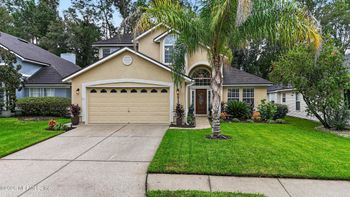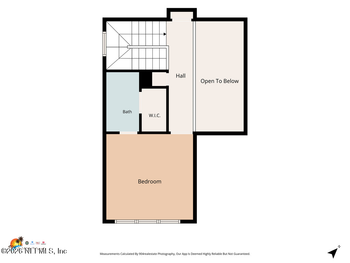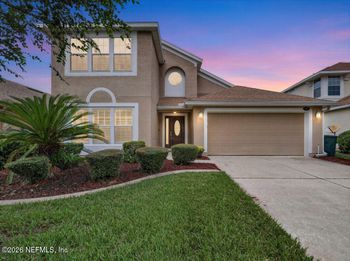
Listings
Market Stats
Popular Searches
Information

Fleming Island, FL Homes for Sale – Planned Suburban Living in Clay County FL

Home

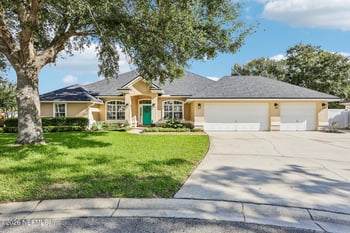
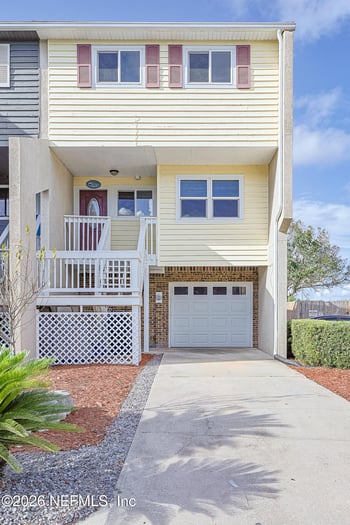
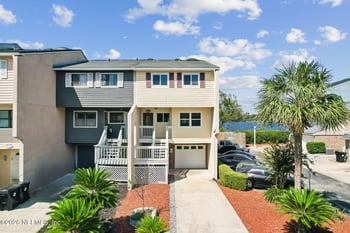
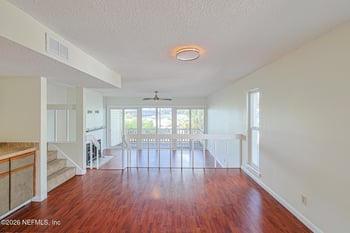
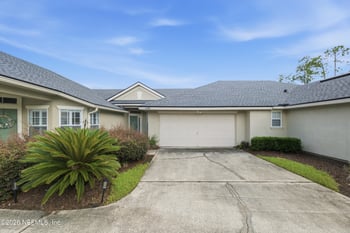
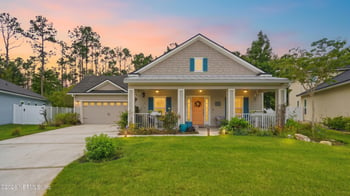
Fleming Island is a master-planned suburban community in Clay County where daily life follows a steady, familiar flow shaped by US-17 and CR-220. Schools, grocery stores, parks, and neighborhood amenities stay close to home, while access north toward Orange Park and Jacksonville remains straightforward when needed. The area’s organized neighborhoods and golf communities support a pace of life that stays consistent week to week, appealing to buyers who value predictable routines and a calm, well-structured suburban environment. Scroll below to explore the latest Fleming Island homes for sale and see which neighborhoods align with your daily rhythm.

Latest Homes for Sale in Fleming Island FL

164 Properties Found
Sort By:

Current Real Estate Statistics for Homes in Fleming Island, FL

164
Homes Listed
57
Avg. Days on Site
$216
Avg. $ / Sq.Ft.
$505,671
Med. List Price

Fleming Island, FL Real Estate: Quick Things to Know Before Home Hunting

When you shop for Fleming Island homes for sale, the “best fit” usually comes down to three real-life things: the community name on the listing, the drive you’ll repeat, and what you can verify by address. Once those pieces are clear, it gets a lot easier to spot which homes are actually worth touring.

Fleming Island Homebuyer Quick Facts

What “Fleming Island” means on listings
It’s not always a clean “town line.” Listings often use the label while relying on a community name (like Eagle Harbor) for the real details. Always confirm the recorded subdivision. Verify: Clay County Property Appraiser
HOA vs CDD (define it once)
HOA is management/rules. CDD is a public financing bond on the tax bill. Not every home has both. Examples: FIP CDDCrossings CDD
The two roads you’ll feel quickly
Life revolves around US-17 (north/south) and CR-220. Road work changes weekly—check active projects before testing your commute. Check: Clay County road projects
A practical “center-of-week” reference
If you’re trying to picture daily life, Town Center Blvd is a helpful anchor point—library, YMCA, and services you use on ordinary Tuesdays.
“Near Doctors Lake” meanings
Some listings mean view, others just mean “general area.” If water access matters, confirm the closest public park before assuming. Start here: Doctors Lake Park
The “verify-by-address” checklist
Before showing: Parcel record, school zone, flood map, and internet options. It saves you months of second-guessing. Parcel: CCPAO • Schools: Zone Finder

Quick Fit Check

Fleming Island tends to fit you if…
  • You like planned-neighborhood living where upkeep and rules are part of the package.
  • You want a dependable errand setup close to home.
  • You’re willing to verify HOA/CDD details early.
  • Your normal drives line up with US-17 / CR-220 comfortably.
You may feel better elsewhere if…
  • You prefer no HOA rules and maximum freedom for parking/projects.
  • You want a walk-to-dining setting as your main lifestyle feature.
  • You need to avoid US-17 for your daily commute.
  • You want larger-lot or rural options as the default.

If you’re on the fence, the HOA/CDD homework plus one real drive test usually clears it up fast.

Community Names You’ll See Often

Eagle Harbor
Shorthand for amenity-forward planned living. Always confirm the specific address and layered HOA documents. Verify: Eagle Harbor
Fleming Island Plantation
Commonly structured with both HOA and CDD fees. Verify documents for the specific address you view. Check: FIP CDD
Pace Island
Recognized as a gated community. Confirm gate/amenity rules and the HOA’s official disclosures before assuming.
Crossings at Fleming Island
Signals specific governance. Confirm via parcel record and tax assessments for CDD fees.

If a listing feels vague, the parcel record is what makes the community label precise.

Before You Tour: 7 Fast Checks

  1. Confirm subdivision by address. (CCPAO)
  2. Verify school assignment. (Zone tool)
  3. Spot HOA/CDD clues. Look for CDD references.
  4. Run flood map check. (FEMA Map)
  5. Confirm internet options. (FCC Map)
  6. Test your real drive windows. (FL511)
  7. Stand in the driveway and listen. Check for road noise/lighting.

Schools: Stay Certain

The buyer-safe approach
Don’t shop by neighborhood name alone. Use the district’s address lookup, then re-check closer to offer time. Verify: Find Your School Zone
What to pair it with
Pair the zone check with a drive test at school-run times. The pickup line and traffic are what you’ll remember most.

Drive Reality (Plain English)

US-17
The main north/south thread. Feel how it behaves during your actual commute times—not just a random Saturday drive.
CR-220
A key connector. If a listing is "close to everything," CR-220 is likely why. Drive the intersections you’d use weekly.
Road work and incidents
Conditions change weekly. Check active projects before deciding a commute "works." Check: FL511

Next step: pick two listings and run the drive test for each.

How to Shortlist Fleming Island Homes (Rules + Drive + Layout)

In Fleming Island real estate, the shortlist usually gets decided by three things you feel fast once you start touring: rules you can live with, drive direction you won’t resent, and a layout that fits your day-to-day. The mistake most homebuyers make is building a list from photos, then discovering the rule set or commute reality later. Use this method to narrow your search to homes that actually work for you. Be sure to contact us if you need help.

The Fleming Island Shortlist Method (Step-by-Step)

1) Confirm the Official Community Name
A listing can say “Fleming Island” and still be vague about the specific neighborhood rules. Start with the County Property Record to find the recorded Subdivision Name.
  • Search the address on the Clay County Property Appraiser site.
  • Write down the "Subdivision" or "Legal Description" exactly as shown.
  • Use this official name when you search for HOA rules or fees.
2) Check the Recorded Rules (The "Docs")
Many communities have recorded documents that set the baseline rules. This won’t tell you every current policy, but it confirms the structure.
  • Use the Clay County Official Records search using that Subdivision Name you found.
  • Look for "Declaration," "Covenants," or "Restrictions."
  • Save the Document ID number (Book/Page) so you can reference it later.
3) Verify Fees & Debts (The "Estoppel")
An Estoppel is just the official "payoff letter" from the HOA. It confirms what the seller owes and what rules apply. If parking, fences, or rentals matter to you, verify this early.
  • While shortlisting: Ask for the HOA name and a current "Rules Packet."
  • Under contract: Ensure the Estoppel is ordered early so you see any hidden fees.
  • Deal-breaker check: If you have a boat or RV, check the parking rules before you offer.
4) Test the "Real World" Drive
Fleming Island looks compact, but traffic timing changes everything. Run the same drive test for every home using your real destinations.
  • Pick your anchors: NAS Jax, Downtown, or the Medical Center.
  • Use "Depart At": Set your map app to your actual commute time (e.g., 7:45 AM).
  • Check the Bridge: If you cross the Buckman Bridge, check FL511 to see typical delays.
5) Shortlist by Layout & Lot Feel
Photos rarely capture the daily friction points. Look for the things you interact with every single day.
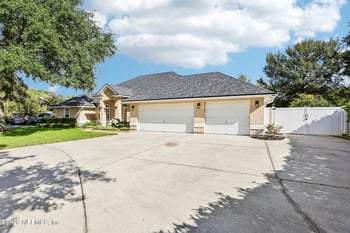
  • Driveway Logic: Can you actually park two cars and back out easily?
  • Backyard Privacy: What does the yard back up to? (Fence, pond, or a busy road?)
  • Daily Flow: If you hate stairs, filter for "Primary Bedroom on Main" immediately.
  • Noise Check: Stand in the driveway for 2 minutes and just listen.
6) Use Community Names as Shortcuts
Names like Eagle Harbor or Pace Island signal a specific lifestyle package (Amenities + Rules). Use the name to predict the lifestyle, then verify the details.
  • Compare homes within the same community to get an apples-to-apples price check.
  • If two homes have the same "Fleming Island" label but different community names, expect different fees.
  • Verify school zones by address, not just by the neighborhood name.
You’re “done” shortlisting when:
  • You know the official recorded community name for your top picks.
  • You know if there is an HOA or CDD fee to verify.
  • You’ve run the drive time test for your actual morning commute.
  • You’ve checked the "Deal Breakers" (Parking, Stairs, Backyard).
  • Your list is small enough that you can tour them all in one focused morning.

Next step: Pick your top two destinations (Work/School) and map them from your favorite listings right now. If the drive hurts on screen, it will hurt in real life.

What Counts as “Fleming Island” on Listings (And How to Confirm It)

When you’re browsing Fleming Island homes for sale, the “Fleming Island” label is often a region callout, not a hard boundary that tells you which community rules, fees, and daily routes come with the address. In Fleming Island real estate, the clean way to get clarity is simple: use the listing label as a starting hint, then confirm what the property is recorded as before you build a shortlist around it.

The 30-second mental model (no map stress)

“Fleming Island” = a broad place label
You’ll see it used across multiple well-known communities. That’s normal here, and it’s why two “Fleming Island” listings can feel like two different lifestyles once you read the rules and drive the routes.
Community names carry the practical details
Names like Eagle Harbor, Fleming Island Plantation, and Pace Island tend to signal “rules + fees + amenities” more than the city-style label does. If you care about storage rules or parking, the community layer is where the truth lives.
Your week is shaped by a few repeat routes
On a map, you’ll keep seeing US-17 and CR-220. That doesn’t mean every trip is “traffic,” it just means those connectors decide your errands. Pair that with the Town Center Blvd area, and you’re thinking like a local.

How to make the label precise (verify the recorded subdivision)

If a listing says “Fleming Island” but you’re trying to compare apples-to-apples, use the address to confirm what it’s recorded as. This is especially useful when you’re cross-shopping Eagle Harbor vs Fleming Island Plantation.

  1. Pull the parcel record by address on the Clay County Property Appraiser site.
  2. Look for the recorded subdivision so you know which community framework the home is actually tied to.
  3. Scan for special assessment lines on the property’s tax records (often “non-ad valorem”) so you know what deserves a deeper read.
  4. If you need the official documents, use the Clay County Clerk of Court resources to find recorded declarations.

You’re done when you can say: “This home is recorded in [community], and my normal routes are mostly US-17 / CR-220—so I know what I’m really comparing.”

Two quick examples that keep people from shortlisting the wrong home

Example 1: “Fleming Island” doesn’t tell you the rule set
Two homes can look similar in photos, but land under different community documents. If you care about things like parking, fences, or boat/RV storage, don’t guess—confirm the recorded subdivision.
Example 2: “Close” can mean different drives
A house that feels “close to everything” on paper can still create a daily hassle if your real life is pulled north or south along US-17 at busy times. Before you over-tour, map your most common stops at your real hours.

Fleming Island Neighborhoods: What the Names Actually Mean

When you’re browsing Fleming Island real estate, you’ll notice names like Eagle Harbor, Fleming Island Plantation, and Pace Island showing up constantly. These aren't just marketing labels; they usually determine your amenities, your fees, and your daily commute layout.

The important part: a listing label is just shorthand. To know exactly what you are buying into, use the Clay County Property Appraiser to check the official Property Tax Record. That is the only way to stop guessing and start shortlisting with confidence.

The “Big Names” You’ll See (And What to Verify)

Eagle Harbor

Signals a "resort-style" planned community. Expect a master association fee plus potential sub-association fees depending on the specific neighborhood.

Verify by address:
  • Is it inside the official Eagle Harbor subdivision?
  • Which association issues the Estoppel (HOA Status Letter)?
  • Check rules for: Parking, Rentals, Fences, and Boat Storage.
Fleming Island Plantation

A master-planned community that often includes both HOA fees and CDD (Community Development District) fees on the tax bill.

Verify by address:
  • Confirm the subdivision name on the Property Record.
  • Check tax records for "Non-Ad Valorem" (Special Assessments).
  • Request the CDD fee amount early so it doesn't surprise you.
The Crossings at Fleming Island

Often appears as its own distinct community. This is a good reminder that "Fleming Island" has multiple different district/fee setups.

Verify by address:
  • Does the property fall inside the CDD boundary?
  • Check for recorded restrictions tied to the specific parcel.
  • Ask the listing agent: "Who issues the estoppel for this house?"
Pace Island

Usually signals a gated setup with strict HOA rules. The name implies security, but you must verify what the rules actually allow.

Verify by address:
  • Request the HOA rules for: Parking, Storage, and Exterior Changes.
  • Don't assume "gated" equals "quiet"—drive it during rush hour.

The Simple Tie-Breaker: Don't Guess, Verify

If a listing says “Fleming Island” but you’re unsure about the fees or rules, follow this path:

  1. Pull the Property Tax Record. Use the Clay County Property Appraiser to find the official recorded subdivision name.
  2. Search for Recorded Docs. Use the Clay County Clerk of Court to find "Covenants" or "Declarations" for that subdivision.
  3. Get the "Payoff Letter". Ask which association issues the Estoppel Letter. This confirms exactly what fees are owed on the home.
  4. Use the name as a clue, not a fact. Marketing names are helpful, but the legal record is what you are actually buying.

You’re done when you can say: "This home is legally recorded in [Subdivision], and I have the fee sheet from [Association Name]."

HOA vs. CDD Fees: How to Spot the Difference (And Avoiding Surprise Bills)

In Fleming Island, the biggest financial surprise isn’t usually the mortgage—it’s the hidden monthly assessments. The buyer-safe approach is to treat every home as a specific "address check," not just a guess based on the neighborhood name.

The Simple Difference
HOA is a private bill you pay to the association (for rules & amenities). CDD is a public bond that appears on your property tax bill. A home can have one, both, or neither.
How to Spot Them Early
  • Listing Clues: Look for "CDD Fee," "Master Association," or "Bond Portion."
  • Tax Bill Clues: Look for the line item "Non-Ad Valorem Assessment." That is usually the CDD.
The "Done" Condition
You are safe when you can answer: (1) Who do I pay? (2) How much is the monthly HOA? (3) How much is the annual CDD tax? and (4) Is the CDD bond paid off or ongoing?

The 5-Step Verification Chain (Do This Before Offering)

Use this sequence to avoid budget shock. It clarifies exactly what you are "subscribing" to.

1) Pull the Parcel Record
Confirm the legal description. Start here: Clay County Property Appraiser.
2) Find the "Rules Packet"
Search for "Covenants" or "Restrictions" using the Clay County Clerk Records.
3) Check the Tax Bill (For CDD)
Look for "Non-Ad Valorem Assessments." If it's there, verify if it's a CDD fee. Check via: Clay County Tax Collector.
4) Verify CDD Details
If a CDD exists, find out when the bond matures (ends). Reference: FIP CDD or Crossings CDD.
5) Order the Estoppel
Once under contract, the Estoppel Letter is the final "truth document" that lists every penny owed.
Practical Note
"Clear on paper" beats "Sounds about right." If you can't find the fee in writing, assume it's higher than the listing says.

Protecting Resale Value in Fleming Island (Thinking Ahead)

In Fleming Island, "resale confidence" isn't about guessing the market—it's about avoiding the specific headaches that turn buyers away later: surprise HOA rules, uninsurable roofs, or a commute that looks short on a map but feels long in traffic. Use this checklist to filter out the homes that might trap you.

The Resale Safety Checklist (Checkable, No Guessing)

1) Flood & Water Risk
"Near Doctors Lake" is vague. Before you love the view, check the specific risk.
  • Run the address through the FEMA Flood Map.
  • Ask your insurance agent: "Does this specific zone require a separate flood policy?"
2) The "Restrictive" Rules Check
Don't rely on the listing description. Communities like Eagle Harbor or Pace Island have specific rules recorded with the county.
  • Search the subdivision name on the Clay County Clerk site.
  • Look for "Covenants" to see rules on fences, sheds, and rentals.
3) The "Real Time" Commute Test
US-17 and CR-220 change drastically at 8:00 AM vs 11:00 AM.
  • Pick your real destinations (NAS Jax, Downtown, Medical Center).
  • Drive the route at your actual commute time, not on a Sunday afternoon.
  • Check FL511 for construction delays.
4) Neighborhood Vibe Check
Drive the street twice: once on a weekend morning and once after dark. You are checking for lighting, cut-through traffic speed, and noise levels when everyone is actually home.
5) RV, Boat & Work Truck Rules
A 3-car garage doesn't help if the HOA bans your work truck from being parked in the driveway. Treat parking rules as a "Week 1" question, not a "closing day" surprise.
6) Insurance & Roof Age
In Florida, the roof age determines your insurance rate. Ask your agent for a quote before you offer, based specifically on the roof's installation year (found in the permit records).
7) School Zones (Even if you don't have kids)
Schools drive resale value. Verify the zone by specific address using the Clay County District Tools. Boundaries can shift, so always check the official source.
The "Done" Condition
You are ready to offer when you can answer: (1) Does the HOA allow my vehicle/lifestyle? (2) Is the flood risk acceptable? and (3) Did I survive the commute test at 8:00 AM?

Getting Around Fleming Island: US-17, CR-220, and the Traffic Reality

When you’re house hunting in Fleming Island, the "commute feel" usually comes down to two specific roads. Not because every day is chaos—but because most routes rely on them. If you understand US-17 and CR-220 early (and know how to check for road work), you stop guessing which homes will actually be easy to live in.

The Two Main Roads You'll Use Constantly
  • Treat US-17 as your main north–south line for getting in and out of Fleming Island.
  • Use CR-220 as your east–west shortcut for shopping, appointments, and getting toward Orange Park.
  • If a listing says "close to everything," map it to US-17 and CR-220 to see if it's actually convenient.
Known Traffic Bottlenecks to Watch
  • The Doctors Inlet Bridge area is a specific spot locals watch because it can back up when lanes shift or during school hours.
  • Check the Clay County project updates—treat it as your unbiased source for "what is actually being fixed this week."
  • Look for active work like the CR-220 / Town Center Blvd paving. Dates change, so check the official update before you drive.
How to "Fact Check" the Drive
  • Check official traffic info first (start with FL511) so you know if today is a normal day or an accident day.
  • Use the Clay County Road Projects page if a listing is near a main road.
  • If you hit traffic on your first tour, don't write the house off immediately—check if it's just temporary construction.
Test During "Real Life" Hours
  • Do at least one drive during School Drop-off/Pick-up times. That is when "easy" roads can feel crowded.
  • Build the same simple loop: The House → US-17 → CR-220 → Grocery Store. Keeping the route consistent makes comparing homes fair.
  • The home that feels predictable during rush hour is usually the winner.
You’re “done” with this step when:

You can explain—without guessing—how the address connects to US-17 and CR-220, and you know exactly where to check for road work updates.

Test the Drive: Comparing Commutes to Downtown & NAS Jax

When you’re comparing Fleming Island homes for sale, the "Test Drive" is the only way to keep your search honest. Listings look similar on screen, but your week feels very different depending on which direction you head on US-17. This isn’t about chasing a perfect commute time—it’s about avoiding a drive that frustrates you every single day.

Step 1: Pick Your "Test Destinations" (And Stick to Them)

NAS Jacksonville (The Westside Test)
Use this if you need a consistent military or west-side commute test.
Address to use:
6801 Roosevelt Blvd, Jacksonville, FL 32212
Downtown Jacksonville (The City Test)
Pick one central point and keep it the same for every home you test.
Address to use:
117 W Duval St, Jacksonville, FL 32202 (City Hall)
Orange Park Medical (The Errand Test)
A great way to test "local traffic" for appointments and shopping.
Address to use:
2001 Kingsley Ave, Orange Park, FL 32073

Pro Tip: Don't just trust the GPS estimate. Drive these routes yourself to feel the turns, the lights, and the school zones.

Step 2: How to Run the Test (Repeatable Method)

  1. Test "Real" Windows: Drive during rush hour (7:30 AM or 5:00 PM), not on a quiet Sunday afternoon.
  2. Don't "Cheat" the Route: Take the exact route you would take to work. Don't take shortcuts just to make the house seem closer.
  3. Check for Accidents First: Use FL511 before you leave. If traffic is bad, verify if it's normal volume or a one-time crash.
  4. Rate the Drive: After you park, write down one word: "Fine," "Annoying," or "Deal-Breaker." Then write down exactly why.

You’re “done” when you can say: "I like Home A better than Home B because the morning turn onto US-17 is easier."

Why This Matters for Fleming Island

Fleming Island house-hunting is about choosing a routine, not just a floorplan. A ten-minute difference isn't the headline—predictability is. When you know your drive is predictable, you stop worrying about "what if we picked the wrong location?" and start enjoying the search.

A Normal Week in Fleming Island: Groceries, Errands & Utilities

When you’re looking at Fleming Island homes for sale, clarity comes from one simple mental switch: stop asking “Is it a good house?” and start asking “Will my normal week feel easy here?” Use these three checks to test the actual daily convenience of any address.

Test Your "Quick Errands" Route

"Close to everything" is vague. You need a consistent "Anchor Point" to test every house against. In Fleming Island, the Library is a perfect central test point.

The Anchor Point: Fleming Island Library

Map every home to this address to see if your "quick library run" is actually quick. Get Address & Hours

How to "Fact Check" the Errand Run
  • Morning Test: Map the route at 8:00 AM (School Traffic).
  • Evening Test: Map it at 5:00 PM (Rush Hour).
  • The Verdict: If the "quick run" takes 20 minutes, is that a deal-breaker?
Test Your Appointment Drives

If you are planning for the long term, proximity to medical care matters. Don't guess—check the actual drive time to the major hubs.

Baptist Medical Center Clay

Use this as your benchmark for "Hospital Access." Check Location

Dept. of Health (Fleming Island)

A good secondary checkpoint for general wellness appointments. Check Location

The "Done" Condition

You are done when you have tested both destinations from your top 3 homes.

Check Your Utilities (Who Provides What?)

This is the boring part that saves you a headache on move-in day. Providers change by address here. Don't assume—verify.

Clay County Utilities Lookup

Use this official page to see who services the home. Open Utilities Info

Quick Check: Who Do I Pay?
  • Water/Sewer: Is it Clay County Utility Authority or a private provider?
  • Electric: Is it Clay Electric or JEA? (Rates differ!)
  • Action: Write down the provider names before you make an offer.

Parks & Water Access: Where You'll Actually Go

"Near Doctors Lake" is a common phrase in listings, but it can mean anything from a distant view to a 20-minute drive to the nearest ramp. Use this guide to separate marketing fluff from actual water access.

Doctors Lake Park (The "Easy" Spot)

If you just want a quick sunset walk or a place to fish from the pier, this is your go-to spot. It's easy, accessible, and doesn't require a boat.

Check Park Details & Pier Info

Boat Ramps: The Reality Check

Being "close to the water" doesn't help if the nearest public ramp is 30 minutes away in traffic. If you own a boat, map the drive from the house to the ramp with a trailer in mind.

See Ramp Location & Parking

Moccasin Slough (The Nature Fix)

Sometimes you just need a quiet trail loop or a playground for the kids. This is the local favorite for a quick "nature reset" without leaving town.

Find Park Info

The Boater's Checklist (Don't Skip This)

Before you offer, verify: (1) Does the HOA allow trailer storage in the driveway? (Most don't!) (2) Where is the closest off-site storage lot? (3) How long is the waitlist for that lot?

Bottom Line: If a listing sells the "Lake Lifestyle," make sure you can actually access the lake without a headache.

Schools in Fleming Island: The "Address Check"

In real estate, "School Zoning" isn't determined by the neighborhood name—it's determined by the exact street address. Listings often get this wrong. Use this method to verify exactly where your kids will go to school before you fall in love with a house.

Why it matters: Even if you don't have kids, school zones drive resale value and dictate traffic patterns at 8:00 AM and 2:30 PM.

Step 1: Use the Official Zone Finder

Don't trust Zillow or the listing agent's description. Plug the specific house number into the official Clay County tool.

Open Clay County Zone Finder →

Step 2: Screenshot the Result

Take a screenshot of the result and save it. Zones can have weird boundaries—one side of the street might go to Fleming Island High, while the other goes to Ridgeview.

Step 3: Re-Check Before You Offer

School boundaries change. If you looked at the house three months ago, check it again today. Never assume the zone is "locked in."

Step 4: The "Listing Error" Check

If the listing says "A-Rated Schools" but the map shows something else, trust the map. Listing agents sometimes copy/paste old info or guess based on nearby homes.

Bonus: The Traffic Reality Check

Drive by the house at 8:00 AM or 2:30 PM. Is the street blocked by a line of parents waiting for pickup? This is something you won't see on a Sunday tour.

You're ready to tour when:
  • You have verified the zone on the Official Zone Finder.
  • You have a screenshot of the result.
  • You know if school traffic blocks the driveway.

Flood & Insurance: Check the Address, Don't Guess

If you’re home hunting in Fleming Island, this isn't about "scary storm talk"—it's about protecting your monthly budget. The rule is simple: don't assume a home is safe just because it's high up, and don't assume it's risky just because you see water. Run these checks by address before you fall in love.

Step 1: The "Official Map" Check

"Flood Zone" is a specific legal status, not a vibe. Two neighbors can have totally different requirements.

  • Type the address into the FEMA Flood Map Center.
  • Look for: "Zone X" (usually lower risk) vs "Zone AE" (usually requires insurance).
  • Save the map image so you can show it to your insurance agent later.
Step 2: Get the Price Tag Early

In Florida, the monthly payment isn't just mortgage + taxes. Insurance can double your payment if you aren't careful.

  • Ask for a Quote: Get a rough number for both "Wind/Hurricane" AND "Flood" (they are often separate).
  • Check the Deductible: Ask "What do I pay out of pocket if a storm hits?" (This is often 2% or 5% of the home value).
  • Resource: Florida Insurance Guide.
Step 3: The "Storm Ready" Basics

Don't overthink this—just know the basics for the specific house.

Step 4: The "Wet Yard" Walkthrough

You don't need to be an engineer to spot obvious water issues.

  • Look Down: Do the gutters dump water right next to the foundation?
  • Look Out: Does the backyard slope toward the house or away?
  • Ask Directly: "Do you carry flood insurance right now?" (If the seller says yes, assume you will have to as well).

You’re done when you have the FEMA map saved on your phone and a rough insurance quote in your inbox.

Utilities & Internet: Who Do I Call? (The Setup Guide)

This is the boring part that saves you a headache on move-in day. Two homes can look identical but have different providers, different trash days, and different internet speeds. Use this guide to verify the setup before you close.

Step 1: Water & Sewer (CCUA)

Most of Fleming Island is served by the Clay County Utility Authority. Verify service availability for your specific address and see the deposit requirements.

Start Service at CCUA →

Step 2: Electric Service (Clay Electric)

You will likely use Clay Electric Cooperative. Confirm the address is in their service territory (some border areas differ) and check the "Start Service" steps early.

Clay Electric Setup →

Step 3: The "Trash Day" Lookup

Don't ask the neighbor—check the official map. This tool tells you your exact Garbage, Recycling, and Yard Waste days based on your address.

Find My Trash Day →

Step 4: The Work-From-Home Check

"Available" doesn't mean "Fast." Use the official government map to see what speeds are actually reported for that specific house before you sign a contract.

Check Internet Speeds (FCC Map) →

You’re done when:

You have a list of the 3 providers you need to call, and you know exactly which day to put the bins out. No guessing required.

The Home Tour Checklist: Noise, Traffic & "Street Feel"

This is where you stop trusting the photos and start trusting your eyes and ears. Use this practical method to spot the things you can't change: road noise, dark streets, and speeding drivers.

The "3-Time Rule"

Never buy a house after seeing it once. To know the truth, verify the vibe at three specific times:

When to go:
  • Rush Hour: (5:00 PM) Is the street a shortcut for commuters?
  • Friday Night: Are there parties or loud cars?
  • Sunday Morning: Is it peaceful when you want to relax?
The 60-Second "Silence Test"

Stand in the backyard and stop talking for one full minute. You aren't listening for birds—you are listening for the drone of highway noise or AC units.

What to verify:
  • Is there a constant "hum" from US-17 or a nearby bridge?
  • Do you hear neighbors' dogs barking constantly?
  • Does the noise level annoy you after just 60 seconds?
The "After Dark" Drive-By

Streets look totally different at night. Drive through the neighborhood at 8:30 PM to check visibility and safety vibes.

What to look for:
  • Are there working streetlights, or is it pitch black?
  • Would you feel safe walking from your car to the front door?
  • Are people out walking dogs (a good sign), or is it deserted?
The "Stop Sign" Watch

If the house is near a corner, watch the nearest stop sign for 5 minutes. You are checking for "Shortcut Drivers."

The Red Flags:
  • Do cars roll through without stopping?
  • Do they accelerate hard (loudly) after the turn?
  • Is there heavy traffic cutting through to avoid a main road?
Crime & Safety Check (Official Data)

Don't rely on rumors. Check the official logs to see what is actually happening in the neighborhood.

You’re “done” when:

You can honestly say: "I know what this street sounds like at 5 PM on a Tuesday." If you can't say that yet, go back and check again.

Fleming Island vs. The Neighbors: Orange Park, Middleburg & Green Cove

When you cross-shop Fleming Island against nearby towns, stop comparing "vibes" and start comparing your actual weekly routine. Use this guide to spot the trade-offs between drive time, monthly costs, and lifestyle rules.

The "Fair Comparison" Drive Test

Don't guess. Pick your three "Real Life" destinations and map them from a house in each town to see the true difference.

  • Commute Pin: Map to NAS Jax or your office.
  • City Pin: Map to Downtown Jacksonville.
  • Errand Pin: Map to your preferred hospital or grocery store.

Pro Tip: Check FL511.com to see if your route has chronic construction delays.

HOA & Monthly Costs (The "Hidden" Price)

Fleming Island often has higher fees (CDD + HOA) compared to older parts of Orange Park or rural Middleburg. Always verify:

  • Subdivision Name: Check the Property Appraiser.
  • HOA Rules: Search for "Covenants" on the Clay Clerk site.
  • CDD Fees: Check district sites (e.g., Fleming Island Plantation CDD).
  • Estoppel: Ask for the payoff letter before closing.

Traffic Flow & Daily Vibe

Your location determines which traffic jam you sit in. Know the trade-offs:

  • Orange Park: Closer to the city, but heavier Blanding Blvd traffic.
  • Middleburg: More land for your money, but longer commute times.
  • Green Cove Springs: Quiet and south, but a longer haul to NAS Jax.

The "Must-Check" Basics (Every Time)

Regardless of the town, never skip the address-level diligence:

The "Confidence" Check

You're ready to choose when you can say: "I picked Fleming Island because the commute fits my morning routine, and I'm okay with the HOA rules." If you're still guessing, go back and drive the route one more time.

Fleming Island Real Estate: The "Must-Ask" Questions

Don't rely on rumors. Here are the address-level checks you need to run before you sign a contract, with direct links to the official tools.

Is Eagle Harbor "considered" Fleming Island?

"Considered" is marketing; "Recorded" is legal. Eagle Harbor is often marketed as Fleming Island, but the HOA rules and fees are specific to the Eagle Harbor community.

  • The Check: Search the address on the Property Appraiser Site.
  • The Clue: If the legal description says "Eagle Harbor," you are subject to their specific CDD and HOA rules.

How do I know which community a house is actually in?

Ignore the listing description. The buyer-relevant details (Rules, Fees, Amenities) are tied to the Recorded Subdivision Name.

  • Step 1: Go to the Clay County Property Appraiser.
  • Step 2: Look for the field labeled "Subdivision." That is the name you use to find the official rules.

How do I find the HOA Rules & Fees?

Don't guess—verify the "paper trail."

  • Find the Rules: Search "Covenants" on the Clay Clerk Official Records.
  • Find the Price: Ask for an Estoppel Letter. This is the official "balance due" sheet from the HOA.
  • Check the Taxes: Look for "Non-Ad Valorem" assessments on the tax bill. This is usually where the CDD fee hides.

How do I verify the School Zone?

Listing agents make mistakes. Use the official district tool to be 100% sure.

How do I check Flood Risk without panic?

Make it routine homework: Check the map, then get a quote.

  • The Map: Run the address on the FEMA Flood Map Center.
  • The Price: Ask your insurance agent for a "Flood Quote" specifically (it's separate from your main policy).

How do I "Test Drive" the commute to NAS Jax?

Don't rely on Sunday traffic. You need to see the "Tuesday Morning" reality.

  • The Method: Drive from the listing to the NAS Jax Yorktown Gate at 7:30 AM.
  • The Sanity Check: Use FL511 to see if traffic is normal or if there's a crash.

Who provides Utilities & Internet?

It changes by address. Here is the standard lineup:

Fleming Island vs. Orange Park vs. Middleburg?

Compare your routine, not just the house.

  • Orange Park: Closer to the city, older homes, heavier Blanding traffic.
  • Middleburg: More land, lower prices, much longer commute.
  • Fleming Island: Structured communities, higher fees, good schools, distinct "Island" traffic.
Get Your Home’s Real Value — Verified by a Local Expert
Have a top local Realtor give you a FREE Comparative Market Analysis
How We Helped Our Clients
Panel only seen by widget owner
Raleigh Realty HomesRaleigh Realty Homes
Company
Home904.com logo

United Real Estate Gallery – Park Ave
1832 Park Avenue, Orange Park, FL 32073
First Coast Cities

Home904.com was built to make home searching in Jacksonville and across Northeast Florida clearer, calmer, and more accurate—pairing real-time MLS data with on-the-ground local context so decisions feel grounded, not rushed.

The site is run by Susie Takara, REALTOR®, a Northeast Florida real estate professional with United Real Estate Gallery known for steady communication, strong negotiation, and a relationships-first approach.

Whether you’re comparing communities in Jacksonville, Orange Park, Fleming Island, Middleburg, St. Johns, or Green Cove Springs, Home904 is designed to help you understand how a home and neighborhood will actually function day to day—at your pace, with guidance available when you want it. Home904.com is owned and operated by Susan Takara, LLC


© 2026 Northeast Florida Multiple Listing Service, Inc. All rights reserved. The data relating to real estate for sale on this web site comes in part from the Internet Data Exchange (IDX) program of the Northeast Florida Multiple Listing Service, Inc. Real estate listings held by brokerage firms other than United Real Estate Gallery are marked with the listing broker’s name and detailed information about such listings includes the name of the listing brokers. Data provided is deemed reliable but is not guaranteed.