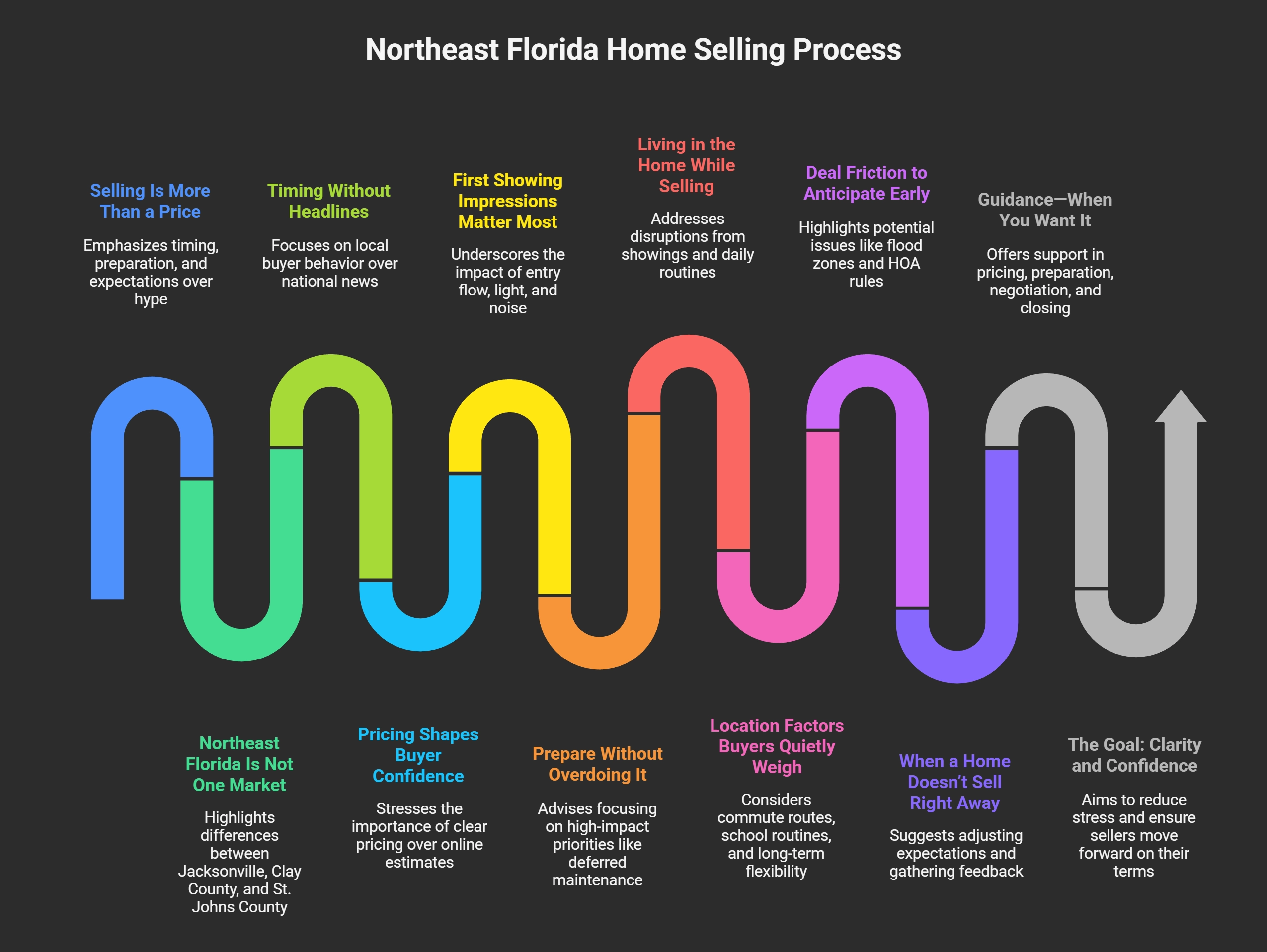
How We Help Home Sellers in Northeast Florida
Selling a home in Northeast Florida isn’t just a pricing question. It’s a timing question, a preparation question, and—more than anything—a “what happens once we list?” question. Most sellers aren’t looking for hype. They want to understand the landscape, avoid costly mistakes, and move forward with fewer surprises.
Home904.com is built to help sellers get oriented before making big decisions—using local market visibility, neighborhood context, and optional professional guidance when you decide it’s helpful.
Understanding How Your Local Market Actually Behaves
Northeast Florida does not move as a single market. Jacksonville, Clay County, and St. Johns County often behave differently depending on neighborhood, home type, and season. What works in one area may not translate directly to another.
A home in Orange Park can attract a different buyer profile than a similar home in Fleming Island. Middleburg often appeals to buyers prioritizing space and flexibility, while Green Cove Springs draws those looking for a slower pace and a walkable downtown feel near Spring Park. These differences affect how buyers respond once your home hits the market.
Deciding When to Sell Without Relying on Headlines
Many sellers ask whether they should list now or wait. The challenge is that national market headlines rarely reflect what’s happening at the neighborhood level.
Instead of predicting outcomes, we help sellers focus on practical indicators: how similar homes are being received, what buyers are reacting to right now, and whether your home’s condition and location support the timing you’re considering. The goal is not to time the market perfectly, but to list when expectations are clear and positioning feels intentional.
How Pricing Influences Buyer Confidence
Online estimates can provide a general reference point, but they often miss the details buyers respond to in person—layout flow, natural light, updates, and how a home feels during a showing. In Northeast Florida, these factors can outweigh square footage or recent sales alone.
Pricing is less about hitting a number and more about creating confidence. When buyers understand a listing quickly, they move forward. When they feel uncertainty, they hesitate. We help sellers think through pricing in a way that reduces questions rather than creates them.
What Buyers React to During the First Showing
Buyers often decide how they feel about a home within the first few minutes. Entry flow, light, noise, and overall condition tend to matter more than individual upgrades.
Preparing for showings is about removing friction, not over-improving. A home that feels clean, calm, and well cared for is easier for buyers to imagine living in—and easier to move forward on.
Preparing Your Home Without Overdoing It
One of the most common seller mistakes is spending money in the wrong places before listing. Not every update pays off, and some projects add stress without changing buyer perception.
We help sellers prioritize what buyers actually notice: obvious deferred maintenance, curb impression, and functional systems. Just as importantly, we help identify what can safely be left alone so preparation doesn’t become overwhelming or counterproductive.
Selling While Living in the Home: What to Expect
Many sellers worry about how disruptive the selling process will feel day to day. Showings, cleaning routines, pets, and work-from-home schedules all factor into the experience.
Understanding how showings are typically scheduled and how long the active phase often lasts can reduce stress. Planning ahead—rather than reacting—helps sellers stay in control and avoid burnout during the listing period.
Location Factors Buyers Consider Even If They Don’t Say It
Buyers often filter quietly. School routines, commute routes, and long-term flexibility tend to influence decisions even when they aren’t discussed openly during a showing.
In Clay County, buyers frequently think about how Blanding Boulevard traffic affects weekday flow. In parts of St. Johns County, CR-210 becomes part of the conversation. For others, the First Coast Expressway (SR-23) shapes how they think about access and future convenience. These factors influence how buyers interpret value.
Flood Zones, Insurance, HOA Rules, and Other Deal Friction
Some of the biggest surprises during a sale are practical, not cosmetic. Flood zones can affect insurance requirements. HOA rules can limit buyer plans. Late-discovered issues often lead to renegotiation or delays.
Helping sellers anticipate these questions early reduces last-minute stress and keeps transactions moving more smoothly once a buyer is serious.
If the Home Doesn’t Sell Right Away
Not every listing moves immediately. When that happens, sellers often worry that something is “wrong.”
In reality, a slower response usually points to a mismatch between expectations and buyer perception—not failure. Understanding what feedback means, when to adjust, and when patience makes sense helps sellers respond thoughtfully rather than react emotionally.
Guidance Available When You Choose to Involve It
Some sellers want full support from the beginning. Others prefer to gather information first and involve a professional once the decision feels real. Both approaches are valid.
When guidance is helpful, support is available from licensed real estate professionals working locally in Northeast Florida when sellers choose to involve them. That support can include pricing approach, preparation priorities, negotiation context, and next steps through closing—without pressure to rush decisions.
Agents associated with Home904.com are affiliated with United Real Estate Gallery.
A Selling Experience Built Around Clarity and Confidence
Selling a home is often emotional, even when the decision is practical. Clear expectations and a realistic plan make the process feel more manageable.
Home904.com is designed to help you understand your options, reduce surprises, and move forward on your terms. You don’t need to have everything decided today. Start by getting clarity, then choose the level of support that fits where you are.
Seller FAQ: Northeast Florida Home Selling Questions
How long does it usually take to sell a home in Northeast Florida?
It depends on the neighborhood, the type of home, and how clearly the listing is positioned from day one. Most sales follow a simple flow: prep and photos, an initial showing window, offer negotiations, then a contract-to-close period. What matters most is not guessing a perfect timeline—it’s reducing friction early (pricing clarity, condition, and presentation) so the market can respond cleanly.
Do I need to make repairs or renovations before listing?
Not everything needs to be updated. Buyers tend to react first to obvious maintenance issues, cleanliness, and whether the home feels cared for. Basic fixes that remove doubt—small repairs, touch-ups, and anything that reads as “deferred maintenance”—usually matter more than big projects. If you’re considering a larger upgrade, it’s often smarter to weigh whether it truly changes buyer perception or just adds stress and delays.
What do buyers notice first during showings?
Most buyers make an early decision based on feel: entry flow, light, smells, noise, and overall condition. They also notice the “effort signals” right away—does the home feel easy to live in, or does it feel like a list of weekend projects? A home that shows clean, calm, and simple to maintain usually earns more confidence than one that feels cluttered or unfinished.
What if my home doesn’t sell right away?
A slower start doesn’t automatically mean something is wrong with your home. More often, it means buyers are hesitating because expectations and perception aren’t aligned—usually around price, condition, or how the listing is being understood relative to nearby options. The key is responding thoughtfully instead of emotionally: interpret feedback, look at what buyers are comparing you to, and decide whether the best move is a small adjustment, better presentation, or patience.
What issues commonly delay a sale in Northeast Florida?
Delays often come from practical items that show up late: flood zone and insurance questions, HOA rules or restrictions, inspection items that aren’t addressed early, or unclear disclosures. These aren’t always deal-breakers, but they can slow momentum if they surface after a buyer is already deep into the process. Getting ahead of these factors early helps keep the transaction smoother once you have a serious buyer.
Do I need to work with an agent to sell my home?
Some sellers prefer full professional support from the start, while others want to gather information first and stay independent until they’re ready. Both approaches are valid. If and when you want guidance, licensed real estate professionals working locally in Northeast Florida can help you think through pricing, preparation priorities, negotiations, and the steps from listing through closing—without pressure to move faster than you’re comfortable with.
When should I start talking to a professional if I’m only thinking about selling?
Earlier than most people think—especially if you want to sell on a specific timeline or you’re unsure what preparation is worth doing. You don’t need to be “ready” to benefit from clarity. Even a simple conversation about priorities, timing considerations, and common deal friction can help you plan without feeling rushed.