New - 1 Day Ago


$415,000
Active
4
Beds
2
Baths
1639
Sqft
1.01
Acres
17101 Cross Branch Rd, Hilliard, FL 32046
MLS#: 2165190


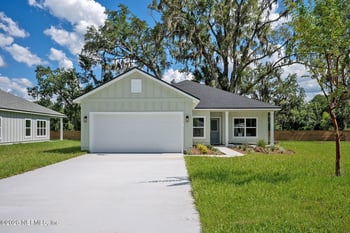


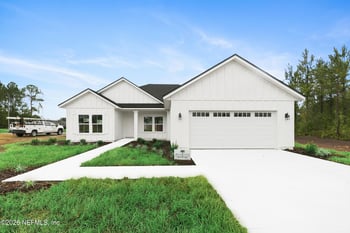

Hilliard, FL homes for sale fit buyers who want a quieter, small-town pace along the US-1 corridor, with everyday errands on CR 108 and the pine backdrop that defines this part of Nassau County. Afternoon light falls through longleaf pines near Hilliard Elementary, Friday-night noise rises from the high school stadium, and most homes sit on wider lots where neighbors keep RV pads, garden sheds, and weekend projects going. The rhythm is rural but still connected, with Jacksonville and Amelia Island close enough for work or beach days while in-town streets stay calm and familiar.
Hilliard sits in northwest Nassau County along US-1, surrounded by open land, timber stretches, and quiet rural roads with a small-town center.
A slow-paced, tight-knit community where daily life feels practical and familiar, with local businesses and a quieter rhythm than the coastal suburbs.
A mix of older ranch-style homes, newer builds, and acreage parcels that allow room for gardens, workshops, animals, or flexible property use.
Buyers who want quieter streets, bigger lots, and a rural feel, and who are comfortable trading convenience for space while staying within driving distance of Jacksonville.
Open skies, quiet evenings, and country-road routines, with easy day trips toward Amelia Island, Fernandina Beach, and the wider Jacksonville area.
Core amenities stay close to town—schools, a community center, a public library, small businesses, and day-to-day services within a compact area.
US-1 handles most daily movement. Drives are longer but typically straightforward, with common routes toward Yulee, Callahan, and Jacksonville job centers.
Fewer nearby amenities and more rural maintenance realities, balanced by breathing room, privacy, and a calmer day-to-day pace.
Living in Hilliard means embracing small-town calm, wide open skies, and a slower rhythm away from urban rush. Most mornings begin with quiet streets branching off US-1, morning coffees near the old town center, and neighbors greeting each other at the post office or library before heading to work. On weekends many locals enjoy country drives, explore forested areas, or head toward Amelia Island or Jacksonville beaches — close enough for a half-day getaway. Nights fall gently here: porch lights, neighborly waves, and a calm that feels rare in bigger towns.
The trade-off is fewer conveniences: limited shopping, sparse nightlife, and longer commutes for those working in Jacksonville or beach areas. But for many, the trade is worth it — lower cost of living, more land, less noise, and childhoods spent under open skies and quiet streets outweigh the bustle most ever knew.
Hilliard centers on US-1 and County Road 108 (CR-108), which form the town’s main arteries. Homes cluster around these corridors on quiet side roads or scattered acreage roads, giving a mix of rural and small-town layouts. County-maintained roads connect toward larger cities, while local roads often remain lightly trafficked and tree-lined. Town infrastructure, community services, and fire/EMS coverage are discussed publicly by the town government at townofhilliard.com :contentReference[oaicite:13]{index=13}.
Because properties are widely spaced and land is more open, many residents rely on cars — the average commute in town tends to be longer (roughly 36 minutes). :contentReference[oaicite:14]{index=14} That said, low traffic density makes daily drives less stressful than in suburbs closer to Jacksonville.
Hilliard offers one of the widest housing and land-use mixes in Nassau County — from older modest ranch-style houses, mid-century homes, to newer builds on multi-acre lots and homes backing to timber or rural land. Buyers can often find parcels large enough for outbuildings, workshop space, or even horse pens. :contentReference[oaicite:15]{index=15}
This variety appeals to people wanting flexibility: whether a first-time buyer looking for something affordable, a family wanting space, or someone wanting acreage. Home values remain generally lower than in coastal or urban zones, which gives a financial edge — though condition and upgrades often vary widely.
Hilliard has deep roots and a tight-knit identity. Founded in the 1880s, and formally incorporated in 1947, it combines rural heritage — from logging, timber, and agriculture — with a small-town civics vibe that carries into today. :contentReference[oaicite:16]{index=16} Generations of families, stable local government, a volunteer fire station, and a local library all contribute to a sense of continuity. Many residents still know neighbors by name, and community events draw a crowd.
For buyers who value history, privacy, and slower rhythms over constant development, Hilliard offers authenticity: not polished subdivision uniformity, but lived-in homes, open land, and a sense of belonging rooted in decades of local life.
Cost of living in Hilliard tends to run below metro-area benchmarks, with lower housing costs, lower property taxes (on many rural/larger-lot parcels), and reduced pressure on local services. Median household income hovers around $60,000, which keeps living expenses relatively manageable. :contentReference[oaicite:17]{index=17}
The trade-offs: fewer amenities, longer commutes for workers in Jacksonville or coastal zones, fewer entertainment or retail options, and reliance on cars for most errands. Some rural-property maintenance (well water, septic, land upkeep) comes with the territory. But for many, the trade-in for space, quiet, and affordability is worth it.
Yes — Hilliard offers affordable housing, a small-town feel, and open space that many families value over city crowds. The town has quiet streets, lower cost of living, and a mix of property types suitable for growing families or first-time buyers.
Homes range from older ranch-style houses and mid-century layouts to newer builds on larger, rural parcels — many with acreage or enough land for customization. This variety gives flexibility to buyers who want modest housing or larger lots. :contentReference[oaicite:18]{index=18}
Commute times tend to be longer than urban suburbs, averaging around 35–40 minutes for many workers heading toward Jacksonville or coastal job centers. Roads are mostly rural or lightly trafficked, but residents rely heavily on cars and highways like US-1 or I-295 for most commutes. :contentReference[oaicite:19]{index=19}
Yes — Hilliard’s cost of living, property values, and household expenses tend to be lower than coastal or metro-adjacent areas. With a median household income around $60,000 and lower price points compared with beach or city zones, it offers value for buyers who want space and economy. :contentReference[oaicite:20]{index=20}
Limited amenities, longer commutes, and more rural-style maintenance (wells, septic, larger lots) come with Hilliard’s rural-suburban mix. Entertainment, retail, and nightlife are limited; most errands require driving; and large lots require upkeep. :contentReference[oaicite:21]{index=21}