New - 2 Days Ago


Baldwin homes for sale offer a small-town pace along the US-90 corridor, where quiet residential streets sit close to the Baldwin Rail Trail, local schools, and everyday errands in the town center. Many homes are ranch or block-style builds on wider lots, shaded yards, and stretches of land that appeal to buyers who want room for vehicles, gardens, or workshop projects. The rhythm feels rural but still connected, with quick routes to I-10 for Jacksonville commutes and calm afternoons when traffic softens past the edge of town. Scroll below to see the latest listings and get a sense of what daily life looks like in Baldwin.






Baldwin sits 20–25 miles west of Downtown Jacksonville at the junction of I-10, US-90, and US-301, with residential pockets extending toward Brandy Branch, Whitehouse, and the Duval–Baker line.
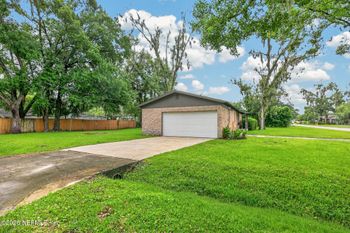
The in-town grid features mid-century block and frame homes, while rural corridors along SR-228 and Brandy Branch hold acreage properties with workshops, barns, and wide side yards.
In-town parcels run roughly 0.15–0.25 acres; rural sites offer 1–5+ acres. Most properties use septic—buyers verify tank age, drain-field health, and soil drainage early in due diligence.
The core grid near Yellow Water Rd, older mixed-stock blocks near the rail-trail, deeper parcels near Brandy Branch, and east-of-town pockets positioned between Whitehouse and rural Duval.
I-10 provides direct access to the Westside, Downtown, and logistics corridors. Drive times depend more on departure timing and interchange flow than distance alone.
Home to the western terminus of the Jacksonville–Baldwin Rail Trail (≈14.5 miles) with cycling, walking, and equestrian paths, plus rural loops and utility easement routes.
Mamie Agnes Jones Elementary and Baldwin Middle-Senior High form a unique 6–12 pipeline central to the town’s social life, events, and athletics.
Conveniences line US-90 and US-301; larger errands generally involve Normandy Blvd, the I-295 corridor, or Macclenny’s SR-121 retail hub.
Baldwin sits on higher inland ground with minimal river flooding; some older ditches and culverts create isolated pooling after heavy storms. FEMA parcel checks are recommended.
Buyers wanting functional homes, space for trucks/trailers, no HOA restrictions, rural-edge quiet, and workable commutes—not those seeking clubhouse amenities or master-planned suburbs.
Baldwin’s day-to-day rhythm comes from its grid layout, school campus, rail-trail terminus, and position where three major highways meet. Mornings bring school drop-offs near Yellow Water Road and early traffic from US-301. A few blocks away, evening walks pass older block homes, metal workshops, fenced yards, and occasional horse pastures as the town transitions into rural Duval and the Brandy Branch area.
The town’s footprint is compact: a short cluster of civic buildings, the school complex, and a residential ring that quickly dissolves into acreage. Locals know when US-301 backs up during freight cycles and when the rail-trail lot fills with cyclists preparing for the 14.5-mile ride to Jacksonville. Most errands stay within a few minutes, while bigger trips follow I-10 east or SR-121 west into Macclenny.
Baldwin separates into distinct micro-zones that live differently on the ground. The central grid—Orange Ave, Central Baldwin streets, Yellow Water Rd—leans older and practical, with modest block and frame houses, carports, and simple rooflines. Near US-90 you’ll hear occasional freight horns; deeper in the grid, sound drops off.
North and west toward Brandy Branch, lots widen and homes sit farther back. This is where you see barns, metal shops, and multi-vehicle setups on deeper parcels. Eastward, between Baldwin and Whitehouse, property types vary more widely—older homesteads mixed with manufactured homes and a few new infill builds tucked between pine rows.
Because each micro-area has its own traffic and noise pattern, buyers typically drive their preferred streets at rush hour and after dark before making an offer.
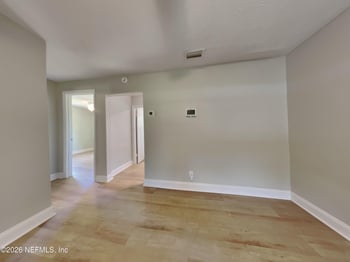
Baldwin’s housing stock centers on mid-century practicality rather than modern finishes. Most homes fall into the three-bedroom, modest-footprint category. Materials lean toward concrete block, simple frame construction, and metal or shingle roofs with wide age ranges. Manufactured homes appear throughout Baldwin—buyers review tie-downs, roof age, insulation, and understructure ventilation.
Mechanical systems matter. Septic inspections are routine, and buyers evaluate tank age, drain-field health, and yard slope. Detached metal buildings are common; inspections often include checking subpanels, slab condition, and roof metal gauge. Work-from-home buyers verify internet availability early, since speeds and providers vary between the grid and the Brandy Branch/SR-228 corridors.
The Jacksonville–Baldwin Rail Trail defines outdoor life here more than any single park or civic space. The western terminus sits just outside town, drawing cyclists, runners, and equestrian riders. Weekend mornings see steady trailhead activity—loading bikes, staging groups, and prepping for long-distance rides toward Jacksonville.
Outside the trail, rural recreation is the norm: evening rides down two-lane roads, dog-walking along wide easements, and outdoor work on acreage properties. Space for equipment, RVs, boats, and project vehicles is typical because most parcels fall outside HOA oversight.
Baldwin’s combined Middle-Senior High campus shapes much of the town’s social structure. School events—sports, performances, fundraisers—fill parking lots more than commercial venues do. Families with long local ties often span multiple grade levels, creating continuity teachers and staff rely on. Newcomers integrate quickly if they participate in school events; those wanting anonymity often choose denser suburbs east of I-295.
Job access is straightforward because three major corridors run directly through Baldwin. I-10 connects to Jacksonville’s Westside logistics parks, Cecil Commerce Center, and Downtown. Many residents work in Macclenny, Sanderson, or at regional job sites accessed via US-301. Drive times vary: morning eastbound congestion at the interchanges affects timing more than distance.
A JTA park-and-ride adds a transit option for workers, students, and seniors. For retail and larger errands, residents head toward Normandy Blvd, the 295 loop, or Macclenny’s main commercial corridor along SR-121.
Baldwin sits on higher inland terrain with minimal river-related flooding, but localized stormwater behavior varies street by street. Older culverts and ditches can produce temporary pooling during heavy rain, especially along original grid streets. Updated culverts, cleared swales, and re-graded yards often improve drainage significantly.
FEMA generally places Baldwin in low-risk zones, but buyers still review parcel-level data, any prior insurance claims, and elevation information—especially for manufactured homes or older frame structures where underwriting requirements differ.
Baldwin works well for commuters needing yard space, equipment parking, and quick highway access. I-10 provides direct routing to the Westside and Downtown, with travel time shaped mostly by interchange flow during peak hours.
Most in-town homes are modest mid-century block or frame builds, while rural areas include acreage sites, manufactured homes, barns, and metal workshops. Layouts lean three-bedroom, with larger living space more common west toward Brandy Branch.
River flooding is uncommon due to Baldwin’s inland elevation, but some older streets can hold water after heavy storms. Buyers evaluate ditch condition, culvert age, yard grading, and parcel-level FEMA information rather than relying only on map coloring.
The trail is roughly 14.5 miles of paved path with an adjacent equestrian track. Baldwin’s western terminus acts as a launch point for cyclists and runners heading east toward Jacksonville, with parking and staging areas at the trailhead.
The K–12 structure centered on Mamie Agnes Jones Elementary and Baldwin Middle-Senior High creates strong continuity for families. School events often serve as the primary social gatherings for residents across the area.
Baldwin appeals to buyers who want space for vehicles, equipment, and outdoor projects without HOA rules. It is less suited for anyone wanting gated entries, clubhouses, or amenity-driven suburban environments.