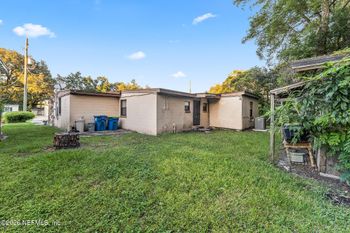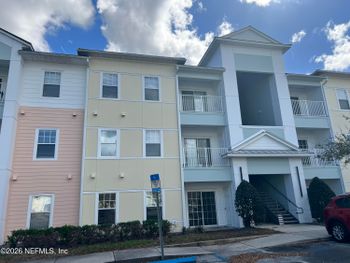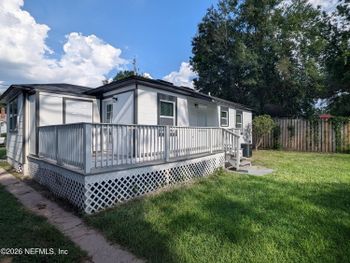


A home near San Marco Square, another near Five Points, and one close to Beaches Town Center might have something important in common: the possibility of walking to dinner instead of driving.
But those are three very different parts of Jacksonville. And even within the same neighborhood, a house a few streets away from the shops can change the experience.
Now add the trip to work. Maybe it's Downtown, Mayo Clinic, Naval Air Station Jacksonville, or somewhere across the St. Johns River. Suddenly, the neighborhood that sounded perfect over the weekend needs a second look.
That's why choosing where to live in Jacksonville works better as a comparison than a ranking.
The city has historic districts, coastal towns, established residential areas, shopping and employment corridors, and newer planned communities. Some names describe broad sections of the city. Others identify one particular development. And a few familiar area names even cross county lines.
What matters is how those differences affect the homes you can buy, the places you'll use and the costs you'll take on.
Here are the Jacksonville areas worth comparing, organized around those choices rather than somebody else's list of winners. If you're still getting oriented, the Jacksonville Area Map can help you place them in relation to one another.
Historic Jacksonville: When Walking to Local Businesses Is Part of the Appeal
Jacksonville's historic neighborhoods offer something that newer residential developments don't always have: recognizable shopping and dining districts woven into established streets.
But a neighborhood known for walkability doesn't make every address equally walkable. The useful question is which destinations you can comfortably reach from a particular home.
San Marco, Riverside and Avondale
San Marco is a natural place to begin if San Marco Square is one of those destinations.
The square sits on Jacksonville's Southbank near Downtown, with restaurants, shops and galleries. For someone who expects to use those businesses regularly, the difference between walking there and driving there can be a significant part of the housing decision.
Look beyond the neighborhood name. Check the route from a prospective home to the square, including crossings and sidewalks. That tells you more about everyday access than a general description of San Marco.
Explore San Marco homes for sale.
Across the river, Riverside and Avondale present a related choice, with two distinct commercial centers.
Riverside's Five Points has shops, restaurants and entertainment destinations. The Shoppes of Avondale, farther along St. Johns Avenue, form another established district for shopping and dining.
It's tempting to characterize one neighborhood as lively and the other as quiet. That oversimplifies both.
A property close to a commercial intersection may put more businesses within walking distance, while another location may provide a different residential setting. Traffic, parking, pedestrian routes and nearby activity can change within a few blocks.
If the commercial districts are part of the attraction, visit the streets around homes you're considering at the times you'd normally use them.
Compare Riverside homes for sale with Avondale homes for sale.
Springfield and Murray Hill
Springfield, immediately north of Downtown, brings historic houses, parks and businesses around the Main Street corridor into the comparison.
Here, the property itself can become as important as the neighborhood.
Consider the difference between a house that has already undergone substantial renovation and one where you plan to restore original architectural features. Both might appeal for similar reasons, but the work, maintenance and possible approval requirements can be quite different.
That makes it more useful to examine a home's condition and renovation history than to assume Springfield is a lower-cost substitute for San Marco or Riverside.
Explore Springfield homes for sale.
Murray Hill has another recognizable commercial destination along Edgewood Avenue South, including its theater and local businesses.
It's worth exploring on its own terms rather than treating it as a smaller version of Riverside. If you're attracted to the businesses along Edgewood, look at how a particular house connects to them. The neighborhood offers different residential locations, and their walking routes aren't interchangeable.
Explore Murray Hill homes for sale.
The Historic-Property Question Buyers Shouldn't Miss
Historic architecture and legally designated historic property aren't necessarily the same thing.
Jacksonville has locally designated historic districts, including Riverside–Avondale, St. Johns Quarter and Springfield, along with individually designated landmarks. Covered properties can require a City Certificate of Appropriateness for exterior changes, including work that may seem routine.
The City provides a historic-property lookup by address and explains its Certificate of Appropriateness process.
Before making plans for windows, siding, fencing or other exterior work, establish whether the specific property is covered and what the proposed project requires.
The character of an older house may be what attracts you. Its condition and any applicable requirements help determine whether it's the right purchase.
Jacksonville's Beaches: Ocean Access Changes the Equation
The Beaches offer a different starting point. Instead of asking how close you can get to a historic shopping district, you might be asking how often you want the ocean to be part of your routine.
But there's a geographic distinction newcomers sometimes miss.
Jacksonville Beach, Neptune Beach and Atlantic Beach are separate municipalities within Duval County. They retained their own governments when Jacksonville and Duval County consolidated in 1968. They aren't simply three Jacksonville subdivisions with different names.
And the places you'd visit don't always respect those boundaries.
Jacksonville Beach
Jacksonville Beach has its own oceanfront dining, entertainment and event destinations.
That creates an obvious comparison between homes near those attractions and residential locations farther away.
If you imagine walking to dinner after spending time at the beach, investigate that route from the house. You may find that two Jacksonville Beach addresses involve very different decisions about driving, parking and how often you'd use the oceanfront businesses.
The goal isn't to assume that every part of Jacksonville Beach has the same activity level. It's to choose how you want your home positioned in relation to the destinations you enjoy.
Explore Jacksonville Beach homes for sale.
Neptune Beach and Atlantic Beach
One of the most useful facts about Neptune Beach and Atlantic Beach is that they share Beaches Town Center.
At Atlantic Boulevard and the ocean, Beaches Town Center brings together restaurants, shops and other destinations where the municipalities meet.
So if your idea of coastal living includes walking out for dinner, don't automatically choose Atlantic Beach over Neptune Beach—or the reverse—based on which town you associate with the district.
Look at homes on both sides of the municipal boundary and compare their actual walking routes to the places you'd use.
Beyond the Town Center area, residential streets and beach-access locations can create different experiences within each municipality.
Browse Neptune Beach homes for sale and Atlantic Beach homes for sale.
What Happens When You Need to Go Inland?
The ocean may be close, but many of Jacksonville's major destinations are inland.
A weekday trip toward Downtown, Southside or Mayo Clinic introduces a different set of roads from a trip to the beach. Naval Station Mayport presents another route consideration, with its main approach using Atlantic Boulevard and Mayport Road.
That distinction is particularly important if you're comparing the Beaches with Intracoastal West, the mainland area west of the Intracoastal Waterway rather than one of the separate beach municipalities.
You may decide that living near the ocean is worth additional travel for certain destinations. Or you may find that a home farther inland provides a better balance.
Neither conclusion follows automatically from the beach-town name. Test the trip from the home you're considering, using the actual destination and the time you'd need to arrive.
Coastal homes also deserve property-level research into insurance, flooding and storm planning. We'll return to those ownership questions below.
Lakewood, San Jose, Mandarin and Ortega: Established Streets With Different Tradeoffs
Move away from the coastal towns and historic commercial districts, and another set of Jacksonville choices comes into focus.
Lakewood, San Jose, Mandarin and Ortega include established residential areas, recognizable landmarks, river-related settings and public parks.
What they share doesn't make them interchangeable. In these locations, the house's condition and position relative to roads, shopping and the river can carry more weight than a general neighborhood description.
Lakewood and San Jose
Lakewood and San Jose are separate search areas along the San Jose Boulevard side of Jacksonville.
A Lakewood search may bring you into established residential streets where the property's layout, construction history and maintenance are central questions.
The wider San Jose area includes well-known landmarks such as the Bolles School and San Jose Country Club, along with residential locations closer to or farther from the river.
Those landmarks help orient the area. They don't establish which public school serves a home or whether club membership is included.
If you're looking at an older house, pay attention to its major systems, renovation work and condition. If you're looking near the river, investigate the particular property's water-related considerations.
Compare Lakewood homes for sale and San Jose homes for sale.
Mandarin and Ortega
Mandarin adds a mix of residential areas, shopping corridors and places connected to the St. Johns River.
Walter Jones Historical Park and the Mandarin Museum are recognizable destinations that help explain part of the area's appeal. If visiting riverfront parks and local historical sites matters to you, they're worth exploring.
But a Mandarin home near a shopping corridor presents a different location decision from one farther into a residential area. Compare the roads you'll use for errands, the specific home's condition and how often you'd visit the nearby destinations.
Explore Mandarin homes for sale.
Ortega has its own established streets, tree canopy and river-oriented settings. Stinson Park offers a public destination to investigate.
Here, a beautiful street can easily become the first thing you notice. It's worth looking beyond that first impression.
Two homes in Ortega may differ in water proximity, elevation, drainage, maintenance needs and insurance considerations. A neighborhood name doesn't establish that a property has river frontage or a particular flooding history.
Explore Ortega homes for sale.
Across all four areas, there's a useful distinction to keep in mind: enjoying an established neighborhood and choosing an established house are related but separate decisions.
One is about the location. The other is about the particular property's condition, obligations and long-term maintenance.
Southside, Baymeadows, eTown and Bartram Park: Destinations Versus Community Amenities
Southside illustrates one of Jacksonville's biggest geographic traps.
It sounds like a neighborhood. In practice, it's a broad search area containing offices, shopping, residential development and major roads.
St. Johns Town Center, Tinseltown and The Avenues are all recognizable Southside destinations. They're not interchangeable addresses.
So someone looking primarily for access to St. Johns Town Center may be solving a different housing problem from someone whose regular destination is farther south.
Southside and Baymeadows
Southside is useful as an initial geographic search, especially when shopping and employment destinations are driving the decision.
Baymeadows narrows the focus to a more specific corridor within the larger Southside discussion.
That sounds like a small distinction until you compare two houses.
The route out of a neighborhood, the road connections to your workplace, and the shopping centers you actually use may differ substantially. A broad claim that Baymeadows or Southside has predictable commutes doesn't tell you enough.
Map your regular destinations from the specific address rather than assuming convenience based on the listing's area label.
Compare Southside homes for sale with Baymeadows homes for sale.
eTown
eTown changes the comparison again.
Unlike the broad Southside label, eTown identifies a planned Jacksonville community with residential neighborhoods and shared amenities.
Its Recharge amenity center includes pools, fitness facilities, gathering spaces and outdoor recreation areas. Those features may appeal if you expect to use amenities close to home rather than relying entirely on public or commercial facilities.
But the important buying question is not simply whether the community has a pool.
It's whether the home you're considering qualifies for access, what charges apply, and which rules govern use.
The developer's Recharge information restricts access to qualified residents under applicable Cypress Bluff Community Development District policies. Not every property associated with the broader eTown name should be assumed to carry identical amenity rights.
Verify eligibility and governing documents for the home before including those facilities in your buying decision.
Bartram Park
In southern Jacksonville's Bartram Park, a townhome may involve different maintenance responsibilities and association obligations from another type of home you're considering.
Bartram Park also sits in a part of Jacksonville where buyers may consider homes across the St. Johns County boundary. Being geographically close to that county doesn't change the jurisdiction of a home in Duval County.
Compare the actual property types, ownership obligations and travel routes before treating Bartram Park and nearby St. Johns County communities as substitutes.
Explore Bartram Park homes for sale.
These four searches show why “convenient location” and “amenity-rich community” are different selling points. One may reduce the effort involved in your usual trips. The other may put facilities you want within the development. A particular home may offer some of both—or require a compromise.
San Pablo and Queen's Harbour: When a Specific Destination or Amenity Leads the Search
Some Jacksonville housing decisions begin with a very precise destination.
Mayo Clinic is a good example.
The Mayo Building and Hospital is at 4500 San Pablo Road. If you're making regular trips there, the address gives you a much better starting point than a general preference for eastern Jacksonville.
The San Pablo corridor is one area to investigate. It also gives buyers a way to compare proximity to the Beaches without necessarily living inside a separate beach municipality.
But even here, distance on a map doesn't settle the question. Compare the home's road connections and the actual trip to the Mayo campus. Another location may work as well or better depending on its access and your schedule.
Explore San Pablo homes for sale.
Queen's Harbour offers a different reason to focus on a particular community.
It's a gated development with a lagoon and water-related amenities, including access to navigable water. For someone interested in boating or club activities, that introduces questions that don't come up in an ordinary neighborhood comparison.
Does the home have water frontage? Are dock or slip rights included? What restrictions or boat-clearance conditions apply? What membership and recurring charges would be involved?
The community's association information provides a starting point, but the rights attached to a particular home need to be checked in the current documents.
Country-club membership is optional rather than automatically included with homeownership. Nor should the community's water-oriented setting be taken as proof that every property has a private dock, a boat slip or suitable access for a particular vessel.
Explore Queen's Harbour homes for sale.
A San Pablo home may rise to the top because of its route to a medical campus. A Queen's Harbour home may appeal because of community features or water access. Both choices require looking beyond their location labels, but for very different reasons.
Arlington, Argyle Forest, Oakleaf and the Northside: Don't Reduce Large Areas to “Value”
Jacksonville's Arlington, western and northern areas sometimes get grouped together in discussions about affordability, lot sizes or newer housing.
Those are property and market questions, not permanent characteristics of entire parts of the city.
A better way to compare these places is to start with their actual destinations and available housing choices.
Arlington and Fort Caroline
Arlington includes residential areas, shopping destinations and access to parts of Jacksonville's outdoor landscape.
The Fort Caroline area connects to sites within the Timucuan Preserve. The National Park Service's Theodore Roosevelt Area, for example, has wooded trails and wetlands.
That's a real destination to explore if you'd use public natural areas. But a home described as being near Fort Caroline doesn't automatically have a trail entrance nearby, just as an Arlington address doesn't establish a lower purchase price.
Compare the particular home's position relative to shopping, parks and the roads you'd use most.
Explore Arlington homes for sale.
Argyle Forest and Oakleaf
On the western and southwestern side, Argyle Forest and Oakleaf offer separate starting points for a home search.
One practical consideration is access to Naval Air Station Jacksonville.
The air station is on the west side of the St. Johns River, and the Navy's driving directions include the U.S. 17 approach. That means you shouldn't automatically assume a trip to NAS Jacksonville requires crossing the Buckman Bridge.
The actual home, installation entrance, travel time and route are what matter. This applies whether you're considering Argyle Forest or another part of Jacksonville.
Explore Argyle Forest homes for sale.
Oakleaf adds a different wrinkle. The broader development and area name is used around the Duval–Clay county boundary, while Oakleaf Plantation as a census-designated place is in Clay County.
That distinction can have direct consequences for school assignment, property taxes and local jurisdiction.
Two listings described as being in Oakleaf may not be in the same county. Before comparing their schools or tax bills, verify which county each home is in using its property record, then check its address-specific school information.
Explore Oakleaf homes for sale.
Oceanway and the River City Marketplace Area
North Jacksonville has another set of recognizable destinations, including Jacksonville International Airport and the shopping around River City Marketplace.
The marketplace, at 13141 City Station Drive, is a concrete place to put on your map if you expect to shop in that area regularly.
Oceanway and Yellow Bluff are among the residential locations buyers may encounter across this broader part of Jacksonville.
But airport proximity, access to shopping, housing age and lot characteristics vary from one location to another. A broad Northside designation won't tell you how a particular home compares.
Look at Oceanway homes for sale and homes in the River City Marketplace area, then compare the actual properties and routes.
The same principle applies to military destinations. Naval Station Mayport, reached via its own eastern Jacksonville connections, is not interchangeable with NAS Jacksonville on the west side of the river. Use the correct installation and entrance when evaluating any home.
Two Jacksonville Homes Can Have Similar Prices and Very Different Ownership Costs
By this point, you may have found a few areas that make sense.
Then comes the question that can change your comparison again: what will it actually cost to own the homes you're considering?
An established detached house may have different maintenance needs from a townhome with association responsibilities. A planned-community home may have access to shared amenities but also assessments and governing restrictions. Two properties with similar asking prices won't necessarily carry the same ongoing expenses.
Use the same cost categories for each property: taxes, insurance, maintenance, homeowners association (HOA) or condominium association charges, and any applicable Community Development District assessments.
Don't Confuse HOA Dues With CDD Assessments
A homeowners association or condo association charge is distinct from a Community Development District (CDD) assessment.
A CDD assessment may appear as part of the property's tax bill. If you're already including it in your tax figure, adding that assessment again would overstate the expense.
Check the property's current bill, applicable community documents and the way charges are collected. Our Northeast Florida CDD fees guide explains the distinction in more detail.
The Seller's Property Taxes May Not Be Yours
Florida's property tax system creates another potential surprise.
After a property changes ownership, its assessed value can be reset under state rules, and the previous owner's exemptions and assessment limitations may not carry forward to the buyer. Consequently, the current tax bill may be a poor estimate of what you'll eventually owe.
The Florida Department of Revenue's homebuyer guidance explains the reassessment rules. Use information from the applicable county property appraiser to estimate taxes for the home you're considering, accounting for any exemptions that may apply to you.
Flood Zones and Hurricane Evacuation Zones Aren't the Same
Flood and storm questions aren't limited to Ortega, riverfront estates or homes facing the ocean.
Jacksonville has coastal, Intracoastal and river-related areas, and flood exposure also needs investigation for properties that don't appear obviously waterfront.
JaxReady's flood information explains that flood zones and hurricane evacuation zones are separate designations. The City directs residents to property-level mapping for flood research and separate evacuation information.
Our Northeast Florida flood-zone guide walks through checking an address.
Review the home's flood information, available flood history, storm-related considerations and insurance options. An area name or flood-zone label by itself is not an insurance quote or a complete assessment of the property's exposure.
How to Compare Jacksonville Neighborhoods Without Relying on Rankings
Once you've explored these areas, resist the temptation to keep adding neighborhoods to a favorites list.
Choose a few actual homes in locations that interest you and put them through the same comparison.
Suppose you're deciding between a property near Five Points and one farther south in Mandarin. One might put you closer to a commercial district you expect to visit regularly. The other might offer a different house and a different relationship to shopping, parks and major roads.
Start with the places you truly need to reach. Use the home addresses to test those trips at the times you'd normally make them. Jacksonville's river crossings and spread-out destinations make this more revealing than a general mileage comparison.
Then visit the streets around the homes. If walkability is important, follow the route to the specific shop, restaurant or park—not just the district boundary. If you're comparing a planned community, find out which facilities you would actually be entitled to use.
Finally, look at the properties themselves: construction and maintenance, taxes, insurance, association or CDD obligations, flood information and any applicable restrictions.
That's how two promising locations become two meaningful buying choices.