New - 13 Hours Ago


Callahan real estate offers a mix of small-town neighborhoods, rural acreage, and convenient routes along US-301 and SR 200, giving buyers both space and easy access toward Jacksonville, Yulee, and the Georgia line. Most Callahan homes for sale sit on wider parcels or quiet residential streets near the local schools, with everyday life shaped by courthouse activity downtown, steady two-lane traffic, and the open-country feel that surrounds the fairgrounds and Veterans Memorial Park. Mornings start early with farm trucks on the road, afternoons slow around the parks and ballfields, and evenings settle into a calm rhythm under wide Nassau County skies. Scroll below to see current listings and get a sense of what daily life looks like in Callahan.


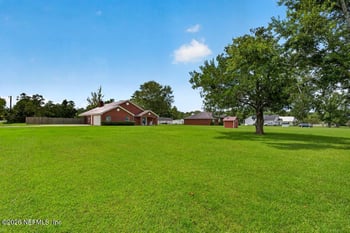
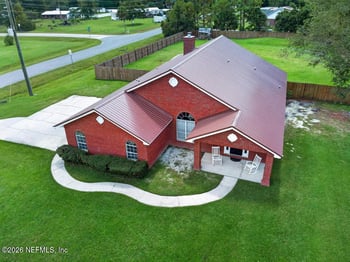
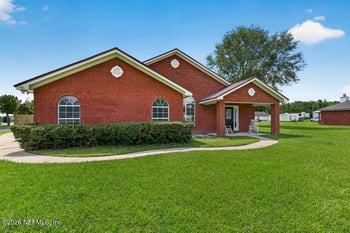


Town center at the US-301/SR-200 crossroads with commercial frontages, the train line, and the full K–12 school cluster. Acreage begins within minutes along River Road, Ratliff, Lem Turner, and CR-108.
Paved grid in the core; limerock, hard-packed sand, and dirt roads on outskirts. Drainage shifts by corridor—upland sand dries fast, shaded clay pockets stay soft after storms.
Block homes and mid-size subdivisions near SR-200; acreage with wells, septic, fencing, barns, and outbuildings beyond the paved grid. Most areas sit outside HOAs.
Wells/septic dominate; cable internet near the core, fixed wireless and Starlink farther out. Mail delivery depends on road surface; some homes use roadside boxes.
Callahan Elementary, Intermediate, Middle, and West Nassau High sit within a compact zone, shaping predictable morning and afternoon traffic flows.
Convenience and quick commutes balanced against train noise near crossings, heavier truck flow on 301, and rural utilities on outer corridors.
Town grid offers convenience; outer corridors shift quickly to larger lots and rural setups.
The in-town grid around 301, 200, and Mickler Street anchors most daily errands—groceries, schools, pharmacy stops, and local diners. Move beyond the paved blocks and Callahan changes fast: pine-framed stretches along Ratliff, open pasture edges west of 301, and long setbacks along Lem Turner or CR-108. These quick transitions define Callahan’s hybrid identity—connected where needed, quiet and spacious where wanted.
Noise varies—train and school activity in town; low ambient sound on acreage corridors.
Daily noise depends heavily on location. Paved streets near the K–12 cluster hear routine school traffic and scheduled train movement. SR-200 sees commuter flow during peak windows. Outskirts roads settle into low ambient sound—wind across pasture, wildlife at dusk, and occasional truck noise drifting from 301 depending on distance and tree cover. Buyers sensitive to noise often test routes at different times of day.
In-town paved streets for convenience; SR-200 for newer homes; outer corridors for acreage.
Buyers often gravitate to different pockets based on priorities—paved streets near the school cluster for short morning drives, the SR-200 corridor for mid-2000s and newer subdivisions, and River Road, Ratliff, CR-108, or Lem Turner for acreage, privacy, and flexible land use. Each area carries distinct road surfaces, lot sizes, and drainage characteristics.
Town streets stay paved; limerock and sand appear quickly on outlying corridors.
Paved roads hold through the commercial grid and school zone. Beyond that, roads taper into graded limerock or hard-packed sand, with texture shifting based on shade, traffic, and recent county work. Sandy ridges east of town shed water fast, while low clay-influenced pockets west of 301 stay softer after storms. Delivery access also varies—some parcels receive doorstep delivery; others rely on boxes at the paved segment.
Open pasture on high ground; clay depressions and timber edges require soil checks.
Callahan’s land use reflects long agricultural history—pasture lines on higher ground, timberland stretches with mixed soils, and scattered parcels where fencing, barns, and equipment sheds are common. Soil type matters: upland sand drains well and supports standard septic sizing; clay-leaning pockets may require larger drain fields or updated perc tests. Buyers planning horses, goats, gardens, or multiple outbuildings typically review AG allowances and soil maps during due diligence.
Wells and septic dominate; internet and delivery vary by corridor.
Most homes in Callahan operate on private wells and septic systems, reinforcing a self-sufficient routine where residents manage maintenance, fencing, and outbuildings without HOA oversight. Internet reliability depends on location—cable near the core, fixed wireless on mid-corridors, and Starlink for deeper acreage. Cell strength can shift quickly between upland ridges and shaded timber sections. RV pads or new structures may require updated soil checks or electrical planning.
Convenient in town; quiet, spacious, and land-focused a few minutes out.
Living in Callahan blends everyday convenience with rural edges. Mornings follow predictable traffic rhythms near schools and train crossings; afternoons settle into quieter stretches once corridor flow softens. Subdivisions along SR-200 offer quicker commutes and modern layouts, while acreage corridors bring space for RVs, livestock, gardens, and sheds. The pace is practical and grounded—neighbors wave, trucks pass during peak hours, and evenings often quiet down into wildlife movement and tree-line breeze.
Acreage supports horses, livestock, gardens and flexible outbuilding setups.
Callahan is well-suited for horses and small homesteads—open pastures, sandy access roads, and established fencing patterns appear throughout outer corridors. Most parcels allow RVs, trailers, barns, chicken coops, gardens, and multiple outbuildings, though zoning standards vary by road segment. Buyers planning livestock often confirm parcel history, fencing type, and AG exemptions.
Upland sand often sits in minimal-risk zones; lower pockets may need elevation checks.
Flood zone conditions vary across Callahan. Upland sandy ridges east of town sit in minimal-risk areas, while lower terrain west of 301 or near shaded depressions may require flood insurance or updated elevation certificates. Storm effects follow predictable inland rhythms—wind funnels through pine corridors; sandy ground firms up quickly; clay pockets need longer to recover.
Quick access to Jacksonville, Yulee and Amelia Island via 301 and SR-200.
Callahan’s crossroads identity gives it one of the more efficient commute patterns in Nassau County. Most residents reach Jacksonville’s Westside in 20–30 minutes, Yulee in 20–25 minutes, and Amelia Island in 35–45 minutes depending on time of day. The town also sees steady truck flow along 301, so buyers often test routes during morning or evening peak periods.
All K–12 schools sit in one compact zone with predictable routing.
Families benefit from Callahan’s unusually compact school layout—Elementary, Intermediate, Middle, and West Nassau High all sit within minutes of each other. Morning routines are predictable, with parents choosing in-town streets or paved pockets for quick drop-offs. Bus routes extend across outer corridors, with longer drives common on limerock and sand roads.
Reliable along main corridors; slower on long unmarked drives.
Fire and EMS access is strongest along US-301, SR-200, and paved streets near the school cluster. Response times extend on long dirt roads, unmarked driveways, or parcels set deep behind timber lines. Buyers often confirm routing from nearby stations and note driveway visibility for emergency vehicles.
Verify utilities, road type, soil behavior, delivery, school routing, and emergency access.
Yes. The US-301/SR-200 crossroads gives quick access to Jacksonville, Yulee, and Amelia Island. Commute times depend on traffic near the school cluster and truck flow on 301.
No. Most Callahan homes sit outside HOAs, especially on the outskirts, giving residents more flexibility for outbuildings, fencing, livestock, and RV or trailer parking.
Yes. Acreage parcels commonly support horses, livestock, gardens, and barns. Buyers planning homesteads often check fencing, soil type, and AG exemptions along their chosen corridor.
Coverage is strongest near the town grid. Mid-corridors often rely on fixed wireless, while deeper acreage uses Starlink. Cell signal varies by ridge height, tree cover, and provider.
In-town streets are paved. Outer corridors shift to limerock or packed sand, with drainage and firmness varying by shade, elevation, and recent county grading.
Buyers typically confirm road surface and maintenance, culvert condition, soil behavior, internet availability, school routing, and Fire/EMS access for longer driveways.