
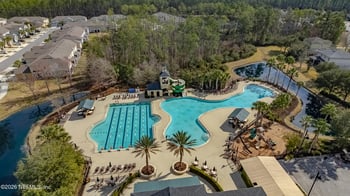

Fruit Cove FL homes for sale sit in that river-side stretch of northwest St. Johns County where SR-13 (the Bartram Scenic Highway) and Race Track Road quietly shape how people run errands, get to school, and get home at the end of the day. The area reads as settled and practical—mature trees, established neighborhoods, and pockets that feel calm once you turn off the main routes—yet you’re still close to the daily flow around Julington Creek. Homes for sale in Fruit Cove often include larger lots, shaded yards, and a mix of updated interiors and classic Florida layouts, with a “tucked away but not isolated” feel that’s hard to fake. For weekend air and a real river view, Alpine Groves Park is a local favorite, and families often orient around nearby school options like Fruit Cove Middle and Julington Creek Elementary when narrowing down streets. Fruit Cove real estate tends to fit buyers who want quiet evenings, porch lights coming on, and a neighborhood where people are out walking—without giving up the convenience of the main corridors. Scroll below to view current Fruit Cove listings.

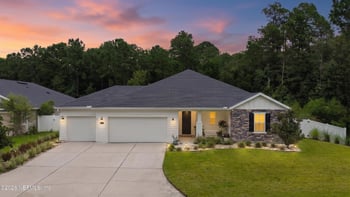

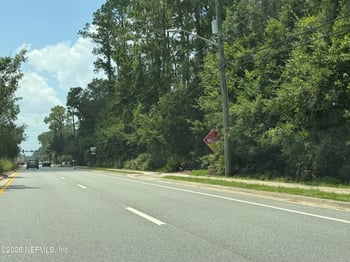








Daily life in Fruit Cove follows SR-13 (Bartram Scenic Highway). It’s greener and slower than expressway corridors, which adds calm—but also means most errands and school runs funnel through a few familiar routes.
Race Track Road concentrates schools, traffic enforcement, and peak-hour congestion. Buyers who learn which neighborhoods bypass it usually feel less day-to-day friction.
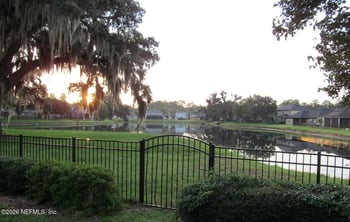
Being closer to the St. Johns River brings shade, breezes, and quieter surroundings—especially near Alpine Groves Park—along with flood-zone details buyers should verify early.
Fruit Cove is often split between the master-planned world of Julington Creek Plantation (pools, CDD fees, uniform look) and the independent streets off SR-13. Buyers usually decide early if they want the amenity center lifestyle or the freedom of no-HOA river roads.
Buyers focused on St. Johns County schools, predictable routines, and established neighborhoods tend to settle in comfortably here.
Fruit Cove often attracts buyers stepping away from denser corridors who want quieter streets, more space, and fewer daily variables.
This is a drive-first area. If cafés, nightlife, or spontaneous foot traffic matter daily, Fruit Cove can feel quiet to the point of limiting.
Locals use the names interchangeably, but HOA rules, amenity access, and traffic patterns vary street by street. Those differences matter after move-in.
Flood exposure isn’t uniform. Elevation, lot placement, and insurance strategy matter more than proximity alone.
Fruit Cove trades nightlife for predictability. For many buyers, that means calmer evenings and smoother routines once routes are learned.
The biggest difference you feel moving to Fruit Cove is the physical change in the drive the moment you cross the Julington Creek Bridge.
On the Mandarin side, it’s six lanes of commercial traffic and stoplights. Once you hit the Fruit Cove side, the road narrows, the speed limit drops, and you drive into a tunnel of massive oaks hanging over State Road 13. It’s noticeably darker and greener here. For locals, that tree canopy isn't just scenery—it’s the signal that the workday is over. You aren't fighting cut-through traffic from other parts of the city because there is nowhere else to go; if someone is driving on SR-13, they likely live here.
The daily rhythm is dictated almost entirely by the school bells. Between 8:00 AM and 9:00 AM, the intersections along Race Track Road and the entrances to Creekside or Bartram Trail fill up tight. Locals learn quickly to run their errands at the Publix at the split during the mid-day lull or after the buses have cleared. It’s a small-town habit: you stop checking GPS for traffic and start checking the clock for school dismissal.
Evenings feel very different depending on which side of the road you choose. In the master-planned cul-de-sacs of Julington Creek Plantation, you’ll see golf carts, kids on sidewalks, and manicured lawns. On the river side of the highway, there are often no sidewalks or streetlights at all—just long driveways and quiet woods. Either way, the noise of the highway disappears fast, and the area shuts down early.
Getting around Fruit Cove is simple, mostly because the geography keeps things streamlined. Instead of a complex city grid, daily life moves along just a few familiar corridors.
State Road 13 is the heart of the area. It runs the length of the community along the river, shaded by massive oak canopies that naturally slow the pace. For much of the drive south, it stays a two-lane road, and locals don’t treat that as a drawback. The drive is widely seen as the scenic route home—where a few extra minutes behind a school bus is usually a fair trade for the view and the quieter feel.
Race Track Road acts as the main connector. It links the river side to shopping, schools, and I-95, which makes it the most active stretch during weekday mornings and afternoons. Because it feeds Fruit Cove Middle and nearby plazas, traffic shows up in predictable windows. Residents quickly learn the timing—running errands just before or after dismissal instead of fighting the pickup lines.
The Julington Creek Bridge is the gateway north into Jacksonville. Most of the time, it’s a short, straightforward crossing into Mandarin for work or dinner. It can slow during peak rush hour, but it lacks the constant pressure of the downtown bridges. Locals usually check their navigation app before heading out, a small habit that keeps the drive consistent rather than stressful.
One of the first real decisions buyers make in Fruit Cove is whether they want the structure of Julington Creek Plantation or the independence of the river roads along SR-13.
Julington Creek Plantation is built around amenities and repetition. Homes follow a more uniform look, streets loop predictably, and most daily activity orbits the central pools, fields, and sports courts. Kids bike to the same gathering spots, neighbors recognize each other from the amenity center, and weekends often mean scheduled practices or casual meetups at the facilities. There are fees and rules that come with that structure, but for many families, the trade is worth it because everything feels organized and close at hand.
The river roads tell a different story. Along SR-13 and its side streets, homes sit on deeper lots under heavier tree cover, and no two stretches feel quite the same. You’ll see older ranch homes next to newer custom builds, long driveways, and yards that feel more private than planned. There are fewer rules, fewer shared spaces, and less uniformity—which is exactly what draws buyers who don’t want HOA oversight or amenity schedules dictating their routines.
Locals tend to know which side they prefer almost immediately. Some want sidewalks, neighborhood pools, and kids running between houses without crossing major roads. Others want quiet mornings, less visual sameness, and the freedom to park a boat or trailer without asking permission. Both lifestyles exist within Fruit Cove, but they feel very different once you’re living there day to day.
Outdoor time in Fruit Cove centers on the river, but not in the resort-style way people often expect.
Alpine Groves Park is the anchor locals actually use. It’s not a sports complex and it’s not busy most days. People come for the shade, the long river views, and the quiet fishing pier that stretches out over the St. Johns. On weekday afternoons, you’ll see a few cars spaced far apart under the oaks, parents letting kids run ahead toward the water, and neighbors sitting still long enough to watch boats pass instead of rushing back home.
The river itself shapes how weekends feel, even for people who aren’t on the water. Mornings tend to start slower along SR-13, with joggers and cyclists using the multi-use path under the trees before traffic picks up. In the evenings, it’s common to see residents take the long way home just to stay near the river a few minutes longer. It’s less about organized recreation and more about having open space nearby that doesn’t demand anything from you.
Families with kids often split time between the park and neighborhood streets rather than formal fields. Pickup games happen in cul-de-sacs, bikes get leaned against mailboxes, and outdoor plans stay flexible. Fruit Cove doesn’t push people into activities—it gives them room to choose how much or how little they want to do outside on any given day.
School conversations come up early in Fruit Cove, often because the St. Johns County school district is the primary reason many families move here in the first place.
The daily rhythm is dictated by the big campuses: Creekside High School, Bartram Trail, and Fruit Cove Middle. Because these schools sit right on the main arteries like Race Track Road, they shape the morning commute for everyone, not just parents. Locals learn quickly that a 2:45 PM errand on a weekday means sitting in dismissal traffic, so most people plan their day around the bell schedules.
The Critical Step: Experienced buyers know that "being close" to a school doesn't guarantee a seat. St. Johns County redraws boundaries frequently to manage growth. A home across the street from a campus might actually be zoned for a different school three miles away.
Don't rely on Zillow listings or neighbors' advice, as zones can change year to year. The only way to be 100% sure is to enter the specific street address into the St. Johns County School District (SJCSD) Attendance Zone Locator before making an offer. It’s the single most important check you can do to avoid a surprise after closing.
The housing stock in Fruit Cove is defined by a sharp divide: the "Land Era" and the "Planned Era."
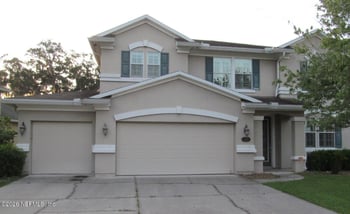
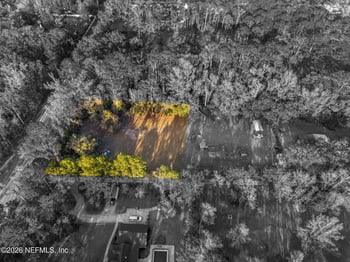
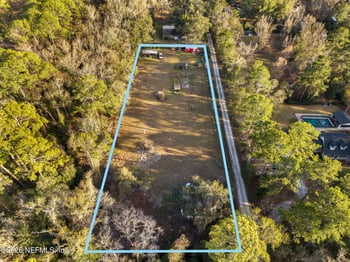
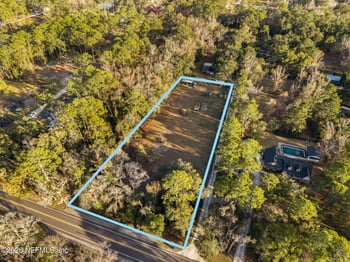
Along the river side of SR-13, you are buying history and dirt. This is where you find 1980s brick ranches and custom builds sitting on half-acre or full-acre lots. The value here isn't just the square footage; it’s the massive Live Oaks draped in moss that cover the driveway and the freedom to build a detached garage or park a boat without an HOA letter. It feels private, unpolished, and uniquely Floridian.
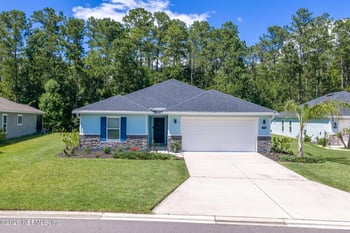
Cross into Julington Creek Plantation, and the script flips. Here, the value is in the uniformity. Homes are primarily stucco, built in the late 90s and 2000s, with manicured lawns and continuous sidewalks. The lots are smaller and the setbacks tighter, but the trade-off is a neighborhood that feels "finished." You know exactly what your street will look like in ten years because the deed restrictions ensure it stays that way.
What catches buyers off guard is how quickly the vibe shifts. You can turn off a road lined with horse fences and unpaved driveways and, thirty seconds later, be in a cul-de-sac with streetlights and community sprinklers. In Fruit Cove, you aren't just choosing a house; you are choosing how much land maintenance you want to take on versus how many neighborhood rules you want to follow.
Living near the St. Johns River or its tributaries (like Julington Creek and Cunningham Creek) brings incredible views, but it demands specific due diligence.
Flood exposure here is a game of inches. It is common to find a street where the homes on the water side are in Flood Zone AE (requiring mandatory insurance), while the homes across the street sit in Zone X (where insurance is optional and cheaper). This often comes down to natural elevation and how the land was graded before the 1990s. Locals know that a "river view" doesn't automatically mean a high premium, but you have to check the specific parcel to be sure.
For the older homes along SR-13, the most critical document you can ask for is an Elevation Certificate. Because many of these custom homes were built before modern flood maps were drawn, this certificate proves exactly how high the living floor sits above the risk line. It is often the difference between a manageable insurance bill and a deal-breaker.
Longtime residents will tell you this isn’t a reason to avoid the area—it’s just part of the math of living in Northeast Florida. The key is to verify the FEMA map designation during your inspection period, not after closing. When you treat flood checks as routine math rather than a scary variable, buying near the water becomes predictable.
Fruit Cove is the specific landing spot for buyers who want St. Johns County schools but don't want the "clear-cut" feel of the newer mega-developments further south.
It fits people who value tree cover and established character over brand-new construction. The typical resident here is someone who looked at places like Nocatee or SilverLeaf and felt they were too open or busy, then looked at Mandarin and liked the trees but wanted newer infrastructure. Fruit Cove is the sweet spot in the middle—settled, green, and stable, with a school system that anchors property values.
It is also a strong fit for buyers comfortable with a binary lifestyle choice. You either choose Julington Creek Plantation for the sidewalks and pools, or you choose the River Roads for the privacy and boat parking. Both lifestyles work here, but they attract very different people. The one thing they share is a preference for evenings that revolve around the home, the grill, and the cul-de-sac rather than the city.
Buyers who often feel frustrated here are those who expect walkability. If you want a morning coffee shop you can walk to, or a nightlife scene that doesn't require an Uber across the bridge, neighborhoods like San Marco or the Beaches are a better match. Fruit Cove is unapologetically a driving destination—it is about coming home, not staying out.
Yes—Fruit Cove is in St. Johns County, and that school district is a primary reason many families choose Fruit Cove over nearby Duval County areas like Mandarin. That said, school assignments can vary by street and can change as boundaries are updated, so it’s smart to verify the specific address before making an offer.
The most reliable method is to use the St. Johns County School District Attendance Zone Locator for the exact street address: St. Johns County School District (SJCSD).
Buyers most commonly ask about Fruit Cove Middle School, Julington Creek Elementary, and the high school options that serve this part of St. Johns County, including Creekside High School and Bartram Trail High School. What matters most is not the nearest campus you can see from the road, but the address-based attendance zone for the property you’re considering.
Verify the address through the district’s official tools rather than relying on listing sites or word-of-mouth: SJCSD official site.
In Fruit Cove, it’s common to see parcel-by-parcel differences where one property is mapped in Flood Zone AE (often triggering lender-required flood insurance) and another nearby property is in Zone X (where flood insurance is typically optional). The difference is often elevation, grading, and proximity to the St. Johns River or tributaries like Julington Creek and Cunningham Creek—not just “being near water.”
The buyer-protective move is to confirm the FEMA flood map designation for the exact property early in the process: FEMA Flood Map Service Center.
If you’re buying an older home near the river corridors or lower-lying creek areas, requesting an Elevation Certificate can be a high-value due diligence step. It documents the elevation of key parts of the structure relative to flood risk, and it can materially affect insurance requirements and premiums depending on the property’s mapped zone and construction details.
If you need help understanding flood terminology and documentation, FEMA’s official resources are the safest place to start: FEMA flood insurance guidance.
Not exactly. People use the names interchangeably in conversation, but Julington Creek Plantation is a specific planned community within the broader Fruit Cove area. Fruit Cove also includes river-road pockets and non-HOA neighborhoods along and off SR-13 where homes, lots, and rules can feel very different from the Plantation.
A practical way to shop is to decide which lifestyle you want first: planned amenities and deed restrictions, or more independence with larger lots and fewer neighborhood rules. Then narrow listings accordingly.
SR-13 is typically slower by design (and many residents like it that way), while Race Track Road is where “busy” shows up in predictable school-run windows. Most locals don’t view it as constant gridlock—more like timing that you learn quickly, especially if you’re running errands near Julington Village or crossing toward I-95.
If your schedule is sensitive, do a real test drive during morning drop-off and afternoon dismissal times before committing to a specific neighborhood.
Some do, some don’t. Planned communities (including parts of Julington Creek Plantation) commonly have HOA rules and fees tied to amenities and neighborhood standards, while many river-road and older pockets along SR-13 may have no HOA at all. The only safe approach is to confirm the HOA status, dues, and any community development district (CDD) obligations for the exact property before you negotiate.
For buyer-protective clarity, ask for the HOA disclosure package and review deed restrictions during your inspection period, not after closing.
Many buyers focus on Fruit Cove because it’s in St. Johns County and feels stable and residential, but “safe” is always neighborhood- and street-specific. If safety is a deciding factor, use official sources for the most reliable information and compare the exact areas you’re considering rather than relying on general impressions.
A good starting point for official public safety information is the St. Johns County Sheriff’s Office: St. Johns County Sheriff’s Office.