

_0003.jpg)
.png)
New - 15 Mins Ago



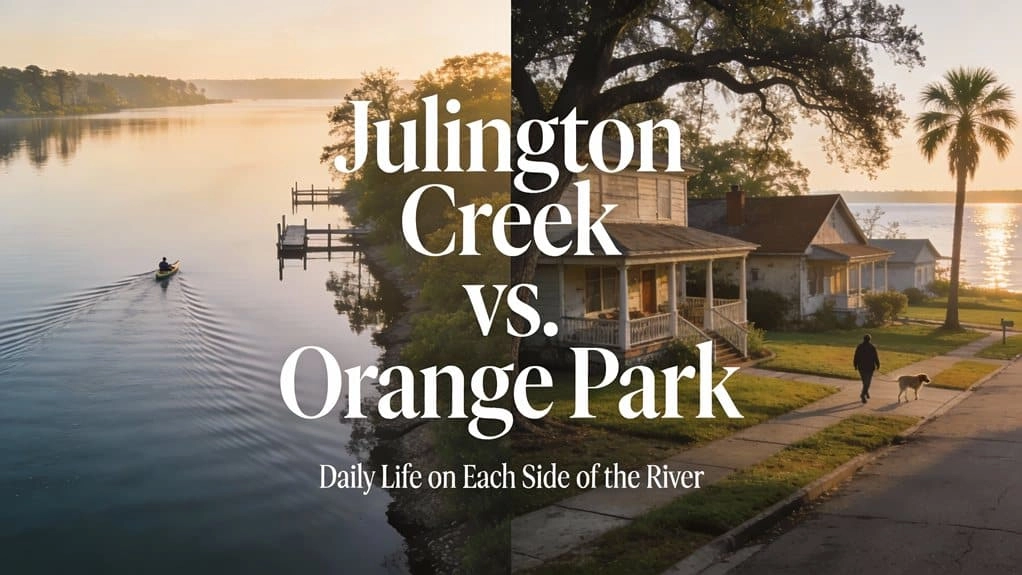
If you’re comparing Julington Creek and Orange Park, you’re probably past the point of “which house looks nicer.” This choice usually comes down to how everyday life will actually feel once the move is over. We’re talking about the practical realities: school mornings, bridge traffic, errands, and whether your location supports your routine or quietly works against it.
In this guide, “Julington Creek” refers to Julington Creek Plantation and the surrounding neighborhoods clustered along SR 13 and Race Track Road that locals commonly group under that name. “Orange Park” refers both to the town itself and, in how people actually use the term, the broader Clay County side of the river shaped by corridors like US-17, Park Avenue, and Blanding Boulevard.
Both places work well for a lot of people. The difference isn’t quality — it’s how daily life unfolds once routines take over, and how often you find yourself dealing with the river crossing in between.
What this guide helps you figure out:
Locals compare Julington Creek and Orange Park because both function as practical hubs for family life — just organized differently. Julington Creek sits in St. Johns County along the SR 13 and Race Track Road orbit, where neighborhoods tend to feel planned and school routines shape many decisions. Orange Park, in Clay County, feels more like a working town, with daily life flowing through established corridors rather than a single master plan.
When people say “Orange Park,” they’re often describing more than one setup: older town pockets closer to Park Avenue and US-17, and newer areas farther west. That distinction matters when you’re thinking about errands, traffic, and how much structure you want built into daily life.
Here’s the honest local truth: if your routine regularly requires crossing the Buckman Bridge on I-295, that crossing becomes part of your day whether you want it to or not. Some people adapt quickly. Others find the unpredictability slowly wears on them.
On the Orange Park side, most routines funnel onto US-17, Park Avenue, or Blanding Boulevard. On the Julington Creek side, daily movement typically centers on SR 13 and Race Track Road. If your work, school drop-off, or regular errands stay mostly on one side of the river, living on that same side usually feels calmer long-term.
A simple test helps more than any map: do one weekday drive at the exact time you’ll actually be commuting. Morning school run or late afternoon return. That single drive often makes the right side of the river obvious.
In Julington Creek, daily life tends to run in a tighter loop. Groceries, schools, parks, and after-school activities usually sit close to the SR 13 and Race Track Road spine, making it easier to stack errands without constantly navigating heavy traffic.
Orange Park daily life is more corridor-based. Blanding Boulevard and Wells Road are part of the routine for many households, and locals learn quickly that timing matters. The upside is convenience and variety. The trade-off is that the wrong errand at the wrong hour can add friction to an otherwise simple day.
Julington Creek generally feels more systemized. Neighborhood layouts, entrances, and expectations tend to follow similar patterns, which supports a predictable weekday flow. If you like the idea that the neighborhood itself helps organize daily life, this side often feels comfortable quickly.
Orange Park feels more varied from street to street. Some pockets are quiet and tucked back, others sit closer to busier roads. Home styles and neighborhood character change more noticeably as you move around, which appeals to buyers who value flexibility and choice.
Many buyers quietly start here. Julington Creek falls under the St. Johns County School District, while Orange Park is largely served by Clay County District Schools. For most families, the real decision isn’t the district name — it’s confirming the specific school zone tied to the address you’re considering.
Boundaries can be street-specific and change over time, so verifying zoning early helps avoid surprises later.
Safety is usually experienced before it’s measured. Many buyers get clarity by noticing everyday signals first — lighting, activity levels, how an area feels during school drop-off and after dark — and then using official resources to confirm what they observed in person.
Julington Creek tends to feel consistent across neighborhoods. Orange Park varies more by corridor and subdivision, which makes checking the specific block more important than relying on the city name alone.
Julington Creek weekends often revolve around nearby parks and river access. Julington Creek Plantation Park is a common after-practice stop, while Alpine Groves Park off SR 13 offers quiet river views and a slower, Old Florida feel that surprises newcomers.
Orange Park weekends feel more town-based. Clarke House Park and the Park Avenue area act as natural gathering spots when events are happening. The flexibility is part of the appeal — you can keep things simple close to home or head out without feeling locked into one lifestyle pattern.
One reason buyers lean Julington Creek is the sense of structure built into many neighborhoods. That often comes with HOA expectations and, in some planned areas, additional community fees tied to shared amenities and maintenance.
Orange Park varies more widely. Many older neighborhoods have fewer ongoing fees and looser day-to-day rules, though that can differ by subdivision. Confirming HOA and fee reality early helps avoid mismatched expectations later.
From a resale standpoint, both sides tend to remain desirable for the same basic reason: river crossings and main traffic corridors limit where people can realistically live. Neighborhoods that make daily routines easier usually stay appealing, because future buyers are solving the same problems you are.
Julington Creek fits best if you value predictable routines, a planned suburban feel, and St. Johns County school zoning. It works well for buyers who want weekdays to feel organized and repeatable.
Orange Park fits best if you want flexibility, a more established town feel, and options that aren’t all part of one master plan. It’s often a practical choice when work and errands stay west of the river, or when you’re comfortable planning around traffic corridors.
When you do that, the right side of the river usually becomes clear — because you’re choosing based on lived reality, not just listings.
If you’re leaning Julington Creek, start by browsing Julington Creek homes for sale and noting how each pocket relates to SR 13 and Race Track Road. If you’re leaning Orange Park, focus on how close each neighborhood sits to US-17, Blanding Boulevard, and your real commute routes.
Either way, the best choice is the one that makes your normal weekdays feel easier.
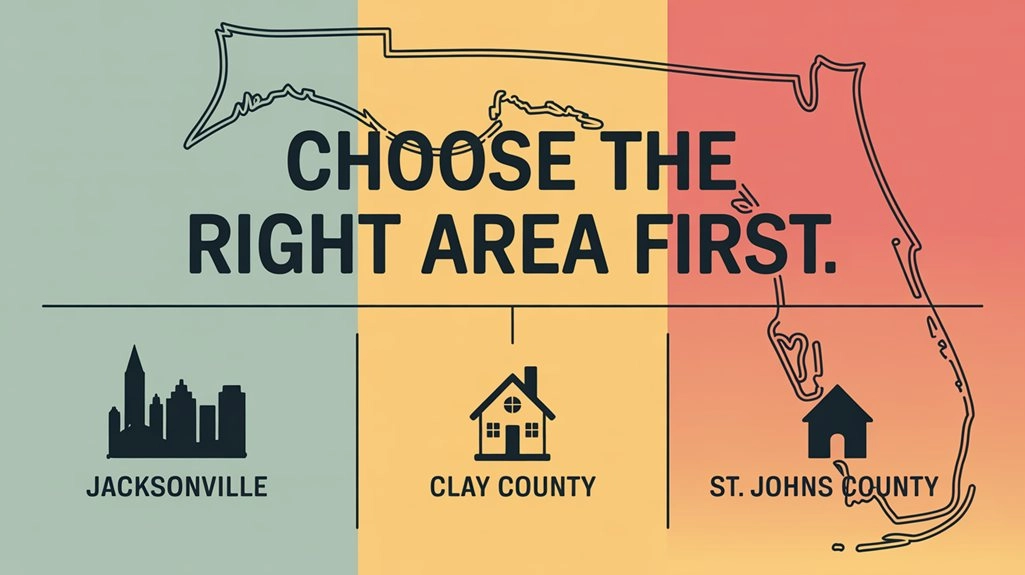
If you’re moving to Northeast Florida, one of the fastest ways to waste time is to look at homes before you’ve decided where your day-to-day life actually works. Jacksonville, Clay County, and St. Johns County sit close together on a map, but they feel very different once you’re commuting, running errands, and settling into a routine.This guide is meant to help you make a location-first decision.
Clay County attracts people who want more space, calmer routines, and a different daily rhythm than Jacksonville proper—without leaving Northeast Florida. This guide isn’t about “best” neighborhoods. It’s about how different parts of Clay County actually live day to day, so you can narrow your search before clicking through listings.Orange Park works well for buyers who want to stay close to Jack
St. Johns County attracts buyers for very specific reasons: schools, space, newer homes, and long-term stability. What it does not offer is a single, unified lifestyle. Where you live here will shape your daily routine far more than the county name itself.Instead of ranking places “best to worst,” this guide breaks St. Johns County into lifestyle lanes — practical groupings based on how people ac


