

_0001.jpg)
Nocatee gets talked about like it’s a town, but that assumption is where most confusion starts. It isn’t a city, and it doesn’t function like a traditional neighborhood. Nocatee is a large, master-planned community made up of multiple villages that share a common design philosophy, governance structure, and amenity system. Understanding that difference upfront saves a lot of second-guessing later.
Part of the problem is how Nocatee shows up online and in conversation. You’ll see listings tied to Ponte Vedra, others associated with St. Johns County more broadly, and a few that even reference Jacksonville. That doesn’t mean those homes all offer the same experience. It just means administrative labels don’t always match how people mentally group the area.
Buyers often arrive feeling like they already understand Nocatee because they’ve heard the name so often. Then they start touring and realize the version they imagined doesn’t line up with what they’re seeing. Streets feel different. Traffic patterns change. The age mix shifts. That disconnect is common—and completely avoidable once you stop thinking of Nocatee as one place and start viewing it as a system with distinct parts.
The most important reset is this: “in Nocatee” and “around Nocatee” are not interchangeable decisions. Some communities sit right along the same corridor and get lumped into the same conversation, but they don’t operate under the same rules or offer the same day-to-day rhythm. This guide is designed to help you tell those apart before assumptions turn into regrets.
-(1)aa.jpg)
People who are happy in Nocatee usually describe their lives as feeling organized. The community is designed around predictable routines—school mornings, afternoon activities, workouts, errands, and social time—so once you learn the layout, the week tends to flow. That sense of order is a big part of the appeal.
In reality, daily life revolves more around your village than the Nocatee name itself. Some areas feel established and calm, with neighbors who have lived there long enough for patterns to settle in. Other areas feel newer and more transitional, with more construction traffic and more people learning the same shortcuts at the same time. Both exist under the same umbrella, but they don’t feel the same once you’re living there.
You also notice the structure in smaller details. Community standards are consistent, shared spaces are maintained, and the overall look stays cohesive. For some buyers, that predictability is reassuring. For others, it can feel a bit managed. Neither reaction is wrong—it just means Nocatee tends to reward buyers who are comfortable with clear rules and shared expectations.
Internal logistics matter more than most first-time visitors expect. While access to CR-210 and I-95 makes the broader commute picture look simple, where you sit inside Nocatee affects how your days actually feel. A short difference in internal drive time can change school mornings, after-work errands, and even how crowded things feel at certain hours.
Before comparing specific villages, it helps to think of Nocatee in a few broad living zones. These aren’t official districts, just a practical way locals make sense of how the community functions. Nocatee isn’t one vibe—it’s several, all operating under the same master plan.
One zone reflects what many families picture first: established, family-oriented areas where life runs on school schedules, youth sports, and neighborhood routines. These parts of Nocatee tend to feel settled, with a clear sense of who lives there and how the community is used day to day.
Another zone has a newer, more modern feel. These areas attract buyers who prioritize newer construction, updated layouts, and a fresh look. They can feel energetic and exciting to tour, but they may also feel busier in the short term as development finishes and routines take shape.
There’s also a zone that operates on a separate track altogether: age-restricted living. The pace, social structure, and expectations in these areas are different enough that they should be evaluated on their own, not lumped into the general Nocatee experience. Treating that decision separately usually leads to better outcomes.
Finally, there are edge cases—communities that are physically close to or even within the Nocatee footprint but don’t line up neatly with what buyers assume about county lines or school zoning. This is where people get tripped up if they rely too heavily on the name alone. You don’t need to memorize those details yet, but you do need to know that in this area, boundaries matter.
Once you understand these zones, the village names stop feeling overwhelming. Instead of scrolling listings at random, you can focus on the parts of Nocatee that actually fit how you want your days to work.
Once you understand how Nocatee is structured, the village names start to make more sense. These communities all sit within the Nocatee master plan, but they serve different types of households and daily rhythms. This section isn’t about ranking them. It’s about helping you narrow the field to the few areas that actually fit how you live.
Twenty Mile at Nocatee is often where people land when they picture “classic” Nocatee living. It feels established, walkable in parts, and rooted in school-year routines. Streets tend to feel calmer, and many buyers are drawn to the sense that life here already has a steady cadence. Explore homes in Twenty Mile.
Coastal Oaks at Nocatee and its condo component appeal to buyers who want a more defined neighborhood feel. The gated environment and mature landscaping give it a settled presence that some families prefer, especially those who value a quieter atmosphere within the broader plan. View Coastal Oaks listings.
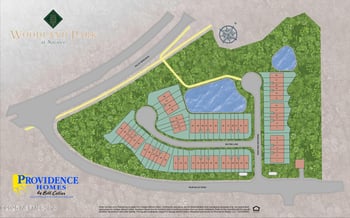
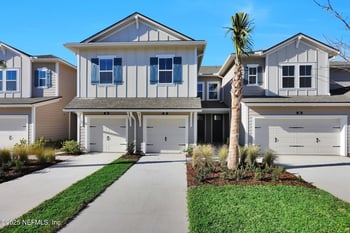
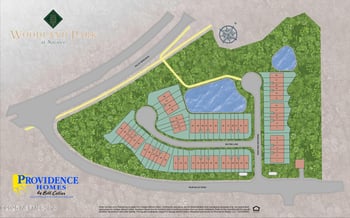
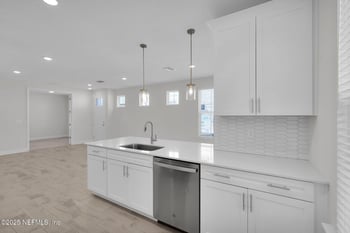
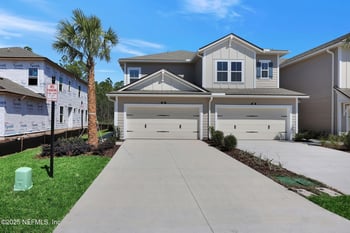
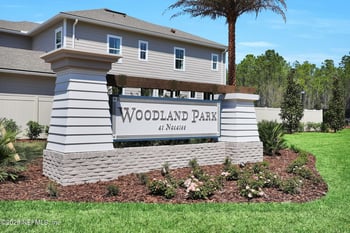
Woodland Park at Nocatee attracts buyers who like newer homes without feeling like they’re living in a construction zone. It often appeals to households that want a balance between fresh design and a neighborhood that’s already functioning day to day.
Palm Crest at Nocatee and Palms at Nocatee East tend to draw buyers who want proximity to amenities without being in the busiest parts of the community. These areas can feel more residential and less “center stage,” which matters to people who value quieter evenings.
The Crosswater area has its own identity inside Nocatee, and it’s common for buyers to cross-shop several of these villages together. Crosswater Village and nearby communities like Crosswinds, Freedom Landing, Heritage Trace, and Liberty Cove share a newer-build energy and more modern layouts. Browse Crosswater-area homes.
Cypress Trails at Nocatee is an important exception that deserves extra attention. While it sits within the Nocatee footprint, it is located in Duval County, not St. Johns County. That distinction affects school zoning and taxes, and it surprises buyers more often than it should—Cypress Trails is zoned to Duval County schools (commonly including Atlantic Coast High School), not the St. Johns County pathways many buyers assume. Always verify current zoning before you commit. See Cypress Trails homes.
The takeaway across all of these communities is simple: the name “Nocatee” gets you in the door, but the village determines how life actually feels. Once you narrow your focus to the villages that match your routine, values, and tolerance for activity or quiet, the search process becomes far more manageable.
Beacon Lake comes up in almost every serious Nocatee conversation, and that’s not an accident. It sits along the same CR-210 corridor, draws many of the same buyers, and often shows up in the same search results. But this is where clarity matters: Beacon Lake is not part of the Nocatee master-planned community. It’s a separate, adjacent community with its own structure, fees, and day-to-day feel. Explore homes in Beacon Lake.
Buyers tend to cross-shop Beacon Lake for one main reason—it offers a similar “newer Florida community” experience without buying into the full Nocatee system. Some people prefer that. Others realize quickly that it’s exactly what they’re trying to avoid. The comparison usually comes down to how much structure you want built into your daily life.
Nocatee is designed to function like a coordinated system. Villages, amenities, and routines are intentionally interconnected, which creates predictability. Beacon Lake feels more self-contained. The community centers around its own lake and amenities, and daily life tends to stay closer to home. For buyers who want a tighter footprint and fewer layers of governance, that difference can be appealing.
The trade-off shows up over time. In Nocatee, residents often talk about how everything “fits together” once they learn the layout. In Beacon Lake, the appeal is that life can feel simpler and more direct from the start. Neither approach is better—it’s about whether you value an integrated system or a more independent neighborhood feel.
This distinction is especially important for buyers relocating from out of state. On a first visit, Beacon Lake and parts of Nocatee can look interchangeable. The roads, homes, and general look overlap enough that it’s easy to lump them together. Living there, though, the difference becomes clearer. The social energy, the way amenities are used, and how often you leave the community all tend to diverge.
If you find yourself torn between Beacon Lake and Nocatee, that’s a good sign—you’re asking the right question. Instead of focusing on which one looks better on paper, pay attention to how you want your weeks to feel. Do you want everything coordinated under one master plan, or do you prefer a community that stands on its own with fewer moving parts? Answering that honestly usually makes the decision obvious.
Del Webb Nocatee isn’t just another village within the community, and it’s best approached as a different kind of decision altogether. This is age-restricted living, designed around a quieter, more predictable pace that appeals to buyers who are intentionally stepping out of the family-oriented phase of life.
The difference shows up quickly once you spend time here, especially around the Canopy Club. This private amenity center is exclusive to Del Webb residents and is often the deciding factor for buyers choosing Del Webb over other active-adult communities in the area. It’s where fitness classes, social events, and day-to-day gatherings actually happen, and it anchors much of the community’s social life. View Del Webb Nocatee homes.
Because of that setup, daily routines in Del Webb tend to revolve around adult-focused amenities and organized activities rather than school calendars or youth sports. For many residents, that structure is the appeal. It creates connection and consistency without the constant motion that defines other parts of Nocatee.
Home choices here usually reflect long-term thinking. Buyers often prioritize ease of maintenance, walkability, and layouts that will continue to work years down the road. Neighbors interact differently as well, with more planned social engagement and fewer spontaneous, kid-driven rhythms.
It’s common for buyers to arrive at Del Webb after initially shopping traditional Nocatee villages. That shift usually happens once they realize they want the benefits of the master-planned setting without the pace that comes with mixed-age neighborhoods. In that sense, Del Webb solves a different problem.
At the same time, this lifestyle isn’t for everyone. Buyers who value a more organic, mixed-age environment sometimes find Del Webb feels too structured or quiet. That doesn’t mean it lacks energy—it simply means the energy is more intentional and centered around places like the Canopy Club rather than spread across multiple amenity hubs.
The key takeaway is to evaluate Del Webb Nocatee on its own terms. If active-adult living with lower day-to-day complexity and a strong, centralized social hub sounds appealing, it deserves a focused look. If it doesn’t, recognizing that early helps you move forward with clarity in the rest of Nocatee.
CDD fees are one of the first things people hear about Nocatee, and usually one of the last things they fully understand. A Community Development District is how much of the infrastructure and amenities were funded, and it’s built into ownership rather than handled as a separate club fee. That structure is common in large master-planned communities across Florida, but it still causes confusion if no one explains how it actually shows up in real life.
The most important mechanical detail is this: CDD fees are paid through the annual property tax bill, not as a monthly HOA payment. This is where many buyers get caught off guard. Online listings often show a low monthly HOA fee, which looks appealing, but the CDD portion is folded into the yearly tax bill and typically collected through your mortgage escrow. In practice, that means it quietly affects the monthly payment even though it doesn’t appear as a line-item “fee” when you’re browsing homes.
What the CDD covers also matters. It’s not the same thing as an HOA. While HOAs usually handle neighborhood-level rules and maintenance, the CDD supports the larger infrastructure that makes Nocatee function as a system—amenities, roads, stormwater management, and shared facilities. That’s why longtime residents tend to think of the CDD less as a fee and more as part of the overall cost of living in a highly structured community.
There’s also an important timing distinction that works in buyers’ favor over the long term. Part of the CDD is tied to bonds used to build the community’s infrastructure. That debt portion is not permanent. As villages mature and bonds are paid down, that part of the CDD can eventually fall off, leaving only the operations and maintenance portion. This is one reason older, more established parts of Nocatee often feel more predictable from a cost standpoint.
The real question isn’t whether a CDD is good or bad. It’s whether the value lines up with how you live. If you’re choosing Nocatee specifically for its amenities, planning, and overall experience, the CDD is part of that package. If you’re drawn mostly to the location but not the lifestyle itself, it’s worth slowing down and making sure the trade-offs still make sense.
Buyers who are happiest here are usually the ones who understood this before they bought. Once expectations are set correctly, the CDD stops being a source of anxiety and starts feeling like a known quantity—just another part of how Nocatee works.
If you want broader context for how planned communities fit into the region, these guides help frame the trade-offs without the noise: St. Johns County Neighborhoods by Lifestyle and Jacksonville vs. Clay vs. St. Johns County.
Nocatee’s location can look deceptively simple on a map, but daily life here is shaped by a very specific internal road system. The true spine of the community is the Nocatee Parkway. This east–west expressway runs through the heart of Nocatee, connecting residents toward the beaches in one direction and back toward major connectors like US-1 and I-95 in the other. For most villages, this road matters more than CR-210.
Where you live within Nocatee often determines how much you rely on the Parkway. Villages like Coastal Oaks, Del Webb, and much of Crosswater use it as their primary artery for commuting and daily movement. It’s designed to move traffic efficiently without cutting through residential streets, which is why many residents feel surprisingly insulated from congestion once they’re home.
CR-210 still plays an important role, especially for regional errands and peak-hour commuting, but locals tend to think of it as the outer edge rather than the core. The Parkway handles most of the internal flow, while CR-210 and I-95 handle the broader connection to Jacksonville, the Southside, and St. Augustine. Understanding that distinction makes the commute picture feel far more predictable.
Another piece that often surprises newcomers is how much daily life happens without a car at all. Nocatee has an extensive network of dedicated golf cart and EV paths that connect villages to shopping, restaurants, schools, and amenities. For many residents, trips to Publix, dinner, or the water park happen by golf cart rather than by car, especially on evenings and weekends.
This changes how the community feels day to day. Internal movement is quieter, slower, and more social than in most suburban areas. You’ll see neighbors passing each other on paths, kids riding alongside parents, and people choosing routes that avoid main roads entirely. That network is a big reason Nocatee feels cohesive instead of spread out.
Weekdays and weekends also feel different. During the workweek, timing still matters, especially around school drop-offs and peak commute windows. On weekends, traffic eases, golf cart use increases, and the community feels more self-contained. Many residents plan their routines around that rhythm without really thinking about it after the first few months.
The takeaway is that Nocatee works best for buyers who appreciate intentional logistics. Commutes are manageable, but structured. Errands are convenient, often cart-based, but still planned. Once you understand how the Parkway, CR-210, and the internal path system work together, the location stops feeling abstract and starts feeling intuitive.
Nocatee works best for buyers who appreciate clarity. The community is intentionally planned, the rules are consistent, and daily life follows a predictable rhythm. If you like knowing how your week will flow—school mornings, workouts, errands, social time—Nocatee tends to feel supportive rather than restrictive.
Families who prioritize schools, organized amenities, and a sense of structure often feel at home here quickly. The same is true for relocators who want an environment that’s easy to learn and doesn’t require years of trial and error to understand. There’s comfort in how legible the community is once you know the layout.
Active adults who value low-maintenance living and built-in social opportunities also tend to thrive, especially when they’re intentionally choosing a calmer pace. For these buyers, the predictability is a feature, not a drawback.
On the other hand, Nocatee isn’t always a fit for buyers who want an organic, unplanned neighborhood feel. If you’re drawn to older areas with irregular streets, minimal oversight, or a more improvisational sense of place, the structure here can feel too managed. The same applies if you prioritize wide lot lines and total visual privacy; Nocatee is designed for density and interaction, not seclusion.
It can also frustrate people who expect flexibility around rules or who don’t see themselves using shared amenities. In those cases, the trade-offs that make Nocatee appealing to others may not feel worthwhile.
The most satisfied residents are usually the ones who recognized these trade-offs early and chose Nocatee deliberately. When expectations line up with reality, the community feels efficient, comfortable, and easy to live in. When they don’t, it can feel like too much of a system.
If you’re reading this and finding yourself nodding along—or pushing back—that reaction is useful. Nocatee rewards self-awareness. Knowing whether you value structure or spontaneity more will tell you a lot about whether this community belongs on your short list.
Once Nocatee starts to make sense as a system rather than a single neighborhood, the home search usually feels easier. Instead of scrolling everything at once, most buyers get better results by narrowing their focus to one or two villages that actually match their routine, pace, and priorities.
A useful approach is to filter first by location inside Nocatee rather than by price alone. Villages differ enough that the same home can feel like a great fit in one area and completely wrong in another. When you start with the part of the community that aligns with how you live, the listings become more comparable and less overwhelming.
It also helps to think about timing and usage. Homes near primary routes, amenity centers, or cart paths feel different at different times of day. Paying attention to when you plan to use those features—weekday mornings, evenings, or weekends—can matter as much as square footage or finishes.
Many buyers find value in saving searches and revisiting them over time instead of trying to decide everything in one sitting. Nocatee has enough internal variation that patterns start to emerge after you’ve watched listings for a bit. What initially looked interchangeable often separates quickly once you know what you’re looking for.
If you tour homes in person, it’s worth driving or riding the cart paths between villages rather than jumping straight from showing to showing. Seeing how areas connect—or don’t—adds context that listings alone can’t provide.
Once you’ve oriented yourself this way, browsing homes in Nocatee tends to feel more intentional. The goal isn’t to find the “best” house on paper. It’s to find the one that fits how you want your days to work, which is where this community either clicks or doesn’t.
Next steps, if you’re ready:
If you’ve made it this far, you probably have a clearer sense of whether Nocatee fits how you live—and which parts deserve a closer look. The next step isn’t to rush into a decision. It’s to narrow the conversation to the comparisons that actually matter to you.
If you’re weighing Nocatee against other parts of the area, it helps to step back and look at how planning, schools, and daily logistics differ across the region as a whole. Seeing Nocatee in the broader context of St. Johns County neighborhoods by lifestyle often confirms whether its structure feels like a feature or a constraint.
Some buyers reach this point and realize their uncertainty isn’t about Nocatee itself—it’s about the trade-off between highly planned communities and more organic ones nearby. Comparing Nocatee to places like SilverLeaf or Julington Creek can make those differences clearer without guesswork.
If your bigger question is “where does Nocatee fit in the First Coast decision map,” this comparison guide helps: Jacksonville vs. Clay vs. St. Johns County.
The goal from here is focus. Whether that means exploring one village in detail, comparing communities side by side, or simply watching the market for a while, you’re in a good position to do it deliberately. When you’re ready, you can browse current Nocatee listings and let the homes confirm what you already understand.
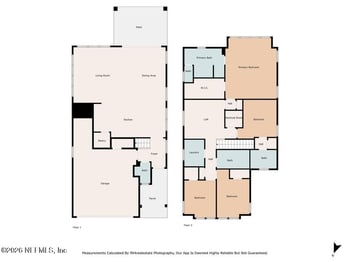
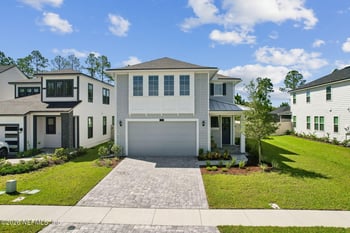
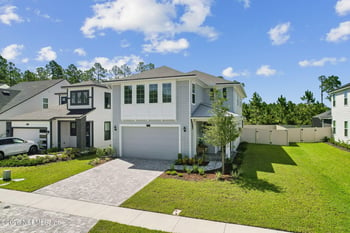
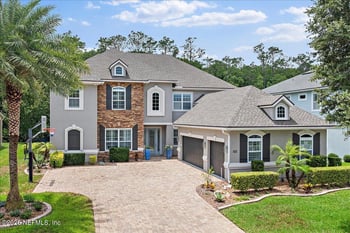
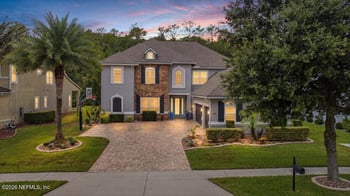
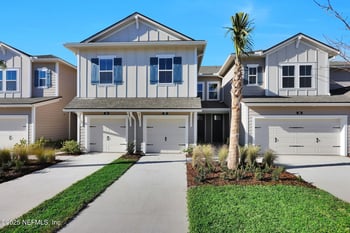
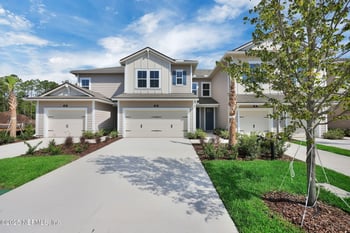
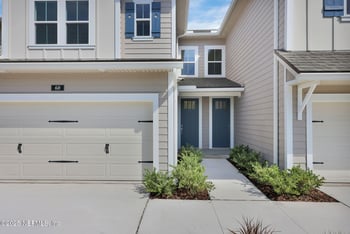
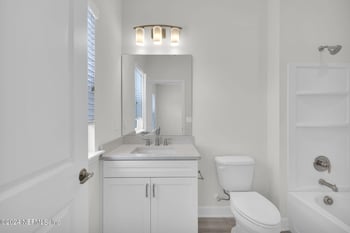
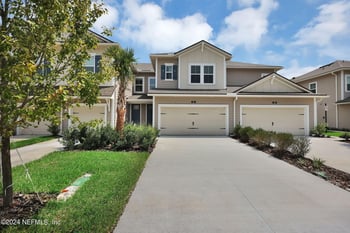
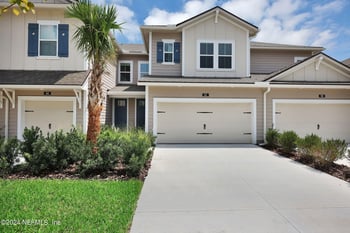
Nocatee is not a city. It’s a large master-planned community made up of multiple villages, most commonly associated with the Ponte Vedra area of St. Johns County. That’s why listings and addresses can look inconsistent even when homes are within the same master plan.
No—Beacon Lake is not inside the Nocatee master-planned community. It’s a nearby, Nocatee-adjacent community along the same CR-210 corridor, which is why buyers often cross-shop it. Treat it as an alternative with its own amenities and fee structure, not a Nocatee village.
Not always. Most of Nocatee is in St. Johns County, but some parts—most notably Cypress Trails at Nocatee—are in Duval County and follow Duval school zoning. Always confirm the county and current school assignment for any address before you rely on assumptions tied to the Nocatee name.
Many Nocatee homes have CDD fees, and the key detail is how they’re paid: CDD assessments are collected through the annual property tax bill, often through mortgage escrow. That’s why buyers sometimes miss them when comparing monthly HOA amounts online—CDD costs usually don’t show up as a separate monthly “fee.”
Nocatee is highly golf-cart and EV-path friendly, and many residents use the path network for everyday trips—especially evenings and weekends. Walkability depends on the village, but the path system often allows people to reach shopping, dining, schools, and amenities without using major roads.
.png)
St. Johns County attracts buyers for very specific reasons: schools, space, newer homes, and long-term stability. What it does not offer is a single, unified lifestyle. Where you live here will shape your daily routine far more than the county name itself.Instead of ranking places “best to worst,” this guide breaks St. Johns County into lifestyle lanes — practical groupings based on how people ac
_0001.jpg)
Updated September 12, 2026SilverLeaf and Nocatee offer two different ways to build a Northeast Florida routine. SilverLeaf is a no-CDD community along St. Johns Parkway between CR-210 and SR-16. Nocatee combines a Town Center with paths connecting neighborhoods and amenities, with Tolomato CDD assessments to include in the ownership budget. Neither community name tells you which home will work be
_0003.jpg)
Compare Julington Creek and Nocatee by the home, its regular trips and its actual fees—not by “quiet suburb” versus “amenity community.” Julington Creek Plantation has its own recreation facilities, community development district (CDD) and property owners association. Nocatee has villages in both St. Johns and Duval counties, so its name alone does not tell you the school district.The useful comp