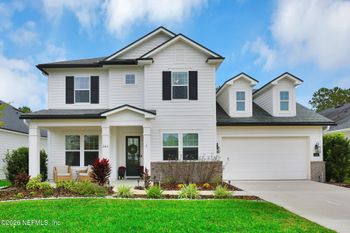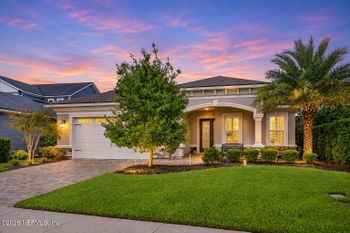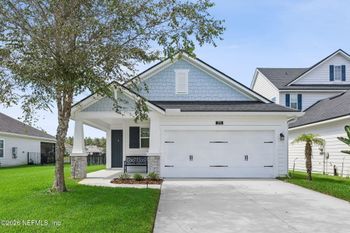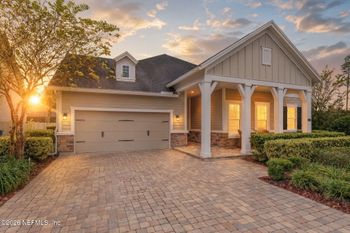


Nocatee's water parks, Town Center, and connected neighborhoods are easy to recognize. What's harder to see in a home listing is how much can change from one part of the community to another.
A detached home in Twenty Mile, a townhome in Woodland Park, and a house in Cypress Trails can all appear in a Nocatee search. Yet they bring different questions about maintenance, association rules, and location. Cypress Trails is even in a different county from much of Nocatee.
Those differences matter more than whether one village seems quieter or newer during a showing. They affect what you pay, which facilities you can use, and how you'll get to the places you visit regularly.
Here's what living in Nocatee involves, from choosing a neighborhood to understanding the expenses and everyday connections that come with a particular home.
What Nocatee Is—and What It Isn't
Nocatee is a large master-planned community in Northeast Florida, between Jacksonville and St. Augustine. Most of the development is in St. Johns County, although several neighborhoods are in Duval County.
It's not an incorporated city, nor is it one giant gated subdivision.
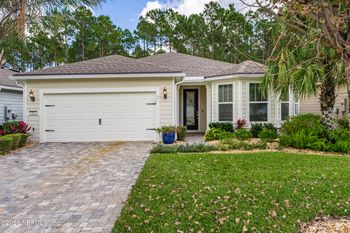
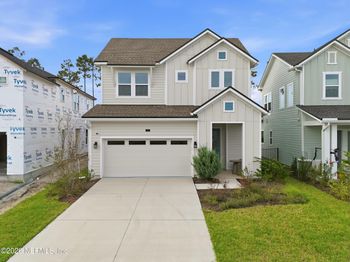
Instead, Nocatee includes numerous residential neighborhoods, commercial areas, parks, recreational facilities, and shared infrastructure. Some neighborhoods have controlled entrances. Others don't. Housing includes detached single-family homes, townhomes, custom-home opportunities, and age-restricted developments.
The name describes the larger development, not a single set of ownership arrangements.
That can be confusing when searching online. A Ponte Vedra mailing address doesn't necessarily tell you which county a property occupies, and a Jacksonville address doesn't automatically mean the home sits outside Nocatee.
The developer's Nocatee neighborhood directory helps establish where the different developments are located. Once you find an individual home, its subdivision, property records, and association documents explain the obligations that come with it.
How Nocatee Neighborhoods Differ
Some Nocatee neighborhoods are collections of smaller subdivisions. Others are individual developments with a particular housing format. A few are still offering new construction, while others are now primarily resale opportunities.
Twenty Mile, Coastal Oaks, and Established Neighborhood Choices
Twenty Mile sounds like one neighborhood, but it's made up of several separately named subdivisions.
The Colony, The Crossing, The Hammock, The Island, The Junction, and The Ranch are among the names you'll encounter. Nocatee's association directory identifies additional Twenty Mile subdivisions and their association arrangements.
So, when a listing says Twenty Mile, it's worth finding out exactly where the house sits.
Imagine comparing homes in The Hammock and The Colony. The broader Twenty Mile name won't tell you whether they have identical association responsibilities, restrictions, or property characteristics. Their individual documents will.
You can explore Twenty Mile homes for sale to see properties offered throughout the area.
Coastal Oaks at Nocatee provides another neighborhood comparison. It has its own association and management arrangements, separate from those of Twenty Mile. Beyond price and square footage, compare lot configurations, access arrangements, amenities, and maintenance responsibilities.
The differences become especially important when an association is responsible for work that would otherwise fall to the homeowner.
Browse Coastal Oaks listings to compare available properties.
Not every Nocatee housing choice involves a detached home, either.
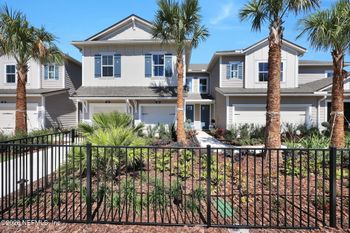
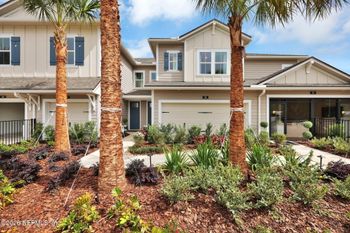
Woodland Park, on Palm Valley Road directly west of Austin Park, is a 65-townhome development by Providence Homes.
That creates a useful comparison with the detached housing found elsewhere in Nocatee. A townhome may have different exterior maintenance arrangements, but the building style alone doesn't establish who pays for the roof, siding, landscaping, or other repairs.
The property's ownership documents and association responsibilities settle those questions.
Crosswater and Crosswinds: New Construction vs. Resale
The Crosswater area brings together several recognizable neighborhood names, including Freedom Landing, Heritage Trace, and Liberty Cove.
There's a distinction here that's easy to miss if you're looking for a newer home: Nocatee currently lists those three developments among its neighborhoods with no new-home construction opportunities remaining.
That doesn't mean you can't purchase a home there. Resale properties can still become available.
A buyer looking specifically for new construction should approach those neighborhoods differently from someone comparing recently built resale homes. You can browse Crosswater-area properties to see what the current market offers.
Crosswinds at Nocatee is another named development, not simply another name for Crosswater Village. Its current developer information describes new single-family homes, a central playground, and a landscaped trail. Earlier development plans also included villas, so the particular home and construction phase are important.
Farther south, Seabrook includes neighborhoods such as Palm Crest at Seabrook along the Conservation Trail area.
The similar names can be misleading. Palm Crest at Seabrook, The Palms at Nocatee, and The Palms Town Homes are distinct locations. They're not interchangeable names for the same neighborhood.
In fact, The Palms at Nocatee is in Duval County, while Palm Crest at Seabrook and The Palms Town Homes appear in St. Johns County school-assignment groupings.
That's one reason to identify a development precisely before comparing its homes, rather than relying on a name that looks familiar in search results.
Cypress Trails and Nocatee's Duval County Neighborhoods
Cypress Trails illustrates one of Nocatee's most consequential geographic details.
The neighborhood is within the Nocatee master plan, but its homes are in Duval County.
The same is true of several other neighborhoods. Nocatee's published 2026–27 school-zoning guide identifies Brookwood, Cypress Trails, The Palms, The Villas, and Timberland Ridge in Duval County.
For that school year, the developer lists Bartram Springs Elementary School, Twin Lakes Middle School, and Atlantic Coast High School for those Duval neighborhoods.
Explore Cypress Trails homes with that county distinction in mind. It can affect school assignments, property-tax calculations, and county services.
Even within St. Johns County, neighboring developments don't necessarily share identical school assignments.
For 2026–27, Freedom Landing and Liberty Cove are listed with Sabal Crest Academy's K–7 opening-year arrangement and Pine Island Academy for eighth grade. Heritage Trace appears in the Pine Island Academy K–8 grouping.
These are school-year-specific assignments, not permanent zoning promises. St. Johns County also provides a separate eighth-grade locator for affected new K–8 areas.
Before purchasing based on a school assignment, enter the home's address into the appropriate district lookup: St. Johns County or Duval County. Confirm the grade and school year as well.
Town Center and the Amenities That Make Nocatee Distinctive
One benefit of Nocatee's master plan is having shopping and recreation distributed throughout a connected development.
Nocatee Town Center is an important everyday destination, with Publix, restaurants, shops, and services. Whether you're stopping for groceries or meeting someone for lunch, it's a place that may become part of your regular trips.
But the experience of reaching Town Center can differ considerably by address. From one neighborhood, the trip might involve a convenient path connection. From another, driving may make more sense.
Then there are the recreational amenities.
Nocatee's broader amenity system includes Splash Water Park, Spray Park, pools, fitness facilities, parks, trails, and paddling destinations.
It's easy to see why those facilities attract attention during a community tour. A water park or fitness center can be a meaningful part of the ownership decision—provided you understand the access arrangements.
Splash Water Park, for example, is a resident amenity with provisions for accompanied guests. It isn't unrestricted public admission.
The Tolomato Community Development District (CDD), the local government district responsible for these shared amenities, publishes amenity policies, amended January 27, 2026. They describe Resident Cards, guest and visitor arrangements, eligibility conditions, and transfers of rights involving tenants.
There's an additional nuance: the published policy also provides a category through which certain people without a district deed may purchase amenity rights. Access is therefore more specific than simply owning a property or living nearby.
For a home you're considering, find out which facilities are included, how Resident Card eligibility works, what guests may use, and whether particular programs carry additional charges. Nocatee's resident information hub provides operating information and policy links.
Private neighborhood facilities need separate attention. A pool or clubhouse within an individual development isn't necessarily available to everyone who owns a home elsewhere in Nocatee.
Del Webb Nocatee and Del Webb Ponte Vedra Are Not the Same Community
The two Del Webb developments belong in the Nocatee conversation, but they have different associations and private amenity arrangements.
Del Webb Nocatee is a gated 55+ development with the Canopy Club and Cypress Café. Its club facilities include a resort-style pool, lap pool, sports courts, fitness center, arts and crafts spaces, and gathering rooms.
There are also organized activities, although not every activity is included without an additional charge. The association's amenity information specifically identifies fees for movement-studio classes.
The gatehouse is described as controlled access, rather than a guarantee of security.
View Del Webb Nocatee homes if you're comparing properties within this development.
The other community is Del Webb Ponte Vedra, also identified as Riverwood by Del Webb. It has the Anastasia Club, with indoor and outdoor pools, fitness facilities, and Sawgrass Café.
Both developments are gated and age-restricted, but one club membership shouldn't be assumed to provide access to the other community's facilities.
Del Webb Ponte Vedra's association website states in its published occupancy information that each occupied residential home must have at least one occupant who is 55 or older. That is the stated rule for Del Webb Ponte Vedra; it shouldn't automatically be applied word for word to Del Webb Nocatee.
A 55+ designation does not necessarily require every occupant to be 55. Occupancy, guest privileges, club eligibility, and maintenance obligations depend on the applicable current documents.
For Del Webb Nocatee, the association directs buyers to arrange viewing access through the seller and request association documents or estoppel statements through FirstService Residential. An association estoppel statement identifies the property's association dues and any outstanding amounts owed to the association.
These details give you a more meaningful basis for comparing the two developments than their shared Del Webb name. The clubs, occupancy terms, association charges, and home-maintenance obligations can all affect the purchase.
Walking, Golf Carts, and Getting Around Nocatee
Nocatee's path network is one of its most recognizable physical features.
The community's electric-vehicle paths connect neighborhoods with Town Center and recreational destinations. Walking, cycling, and permitted electric-cart travel can offer alternatives to taking a car for some trips.
The network includes broad multi-use pathways and dedicated connections through the development.
In Seabrook, paths connect neighborhoods toward Town Center and the Splash and Spray parks.
Consider a house you're touring because you'd like to take a golf cart to Publix. The nearby path matters only if it provides a permitted connection to the destination and works with the type of vehicle you'll use. Crossings, distance, entry points, and posted restrictions all come into play.
A route that looks connected on an illustrated community map may still need closer examination.
There's also a legal distinction between ordinary golf carts and low-speed vehicles.
Under St. Johns County Ordinance 2024-7, golf carts and low-speed vehicles are limited to 15 mph on designated multi-use paths and must yield to pedestrians and bicyclists.
Golf-cart drivers under 18 must have a valid learner's permit or driver's license; those 18 or older need government-issued photo identification. Low-speed-vehicle operators require a valid driver's license, and those vehicles are subject to separate registration, title, and insurance requirements.
Those county provisions apply within their jurisdiction and on authorized routes. St. Johns County rules do not independently authorize golf-cart travel in Duval County, and Nocatee's community guidelines and posted restrictions still matter.
Walking follows a simpler principle: distance and connectivity depend on where the home is located.
If access to Town Center or recreational facilities without driving is a major consideration, examine the connection from the house itself—not merely the presence of paths somewhere in the neighborhood.
Nocatee Parkway and the Drives Beyond the Community
The paths handle part of the local picture. Driving outside Nocatee brings a different set of considerations.
Nocatee Parkway runs east–west through the development and connects with U.S. 1 and the wider road network.
It doesn't have a direct interchange with I-95. Reaching the interstate involves onward roads such as County Road 210; the practical route depends on the home's location and destination.
A buyer traveling regularly to Jacksonville's Southside may have a different practical drive from someone heading toward the beaches or St. Augustine.
Military destinations make that even clearer. Naval Air Station Jacksonville and Naval Station Mayport are separate installations with different approaches.
A home that provides a workable drive to one installation shouldn't automatically be assumed to offer the same convenience to the other.
Future road construction is another consideration. The First Coast Expressway project includes a planned St. Johns River crossing and additional connections toward I-95, but incomplete segments aren't operating shortcuts today.
For a recurring trip, use the actual property address and destination, and test the drive during the hours you'd normally travel. FL511 provides current traffic and construction information.
Nocatee CDD Fees and HOA Costs: What the Listing Price Doesn't Show
A home's asking price is only part of its cost. In Nocatee, the distinction between a Community Development District and a homeowners association is especially important.
A Community Development District (CDD) is a special-purpose local government authorized to finance and maintain certain infrastructure and facilities. A homeowners association (HOA) is a separate private organization that may handle neighborhood rules, services, and maintenance.
A property can have obligations to both.
Here's where that becomes easy to overlook: CDD assessments commonly appear on the annual property tax bill, while HOA dues are billed separately. If you look only at the advertised monthly HOA fee, you may miss a substantial part of the annual ownership expense.
For homes assessed by the Tolomato CDD, the district's fiscal-year 2027 information separates the assessment into debt service and operations and maintenance (O&M).
Debt service goes toward bonds used to finance infrastructure. O&M supports continuing expenses such as landscape maintenance and district amenities.
A debt obligation can eventually be paid off, but the ongoing O&M assessment doesn't disappear simply because the bond debt ends.
The district's FY2027 assessments are scheduled to appear on property tax bills issued in November 2026. Its reference schedules cover properties in both St. Johns and Duval counties.
There are limits to those schedules, however. Tolomato says properties platted after January 2026—meaning their lots were recorded on a subdivision plat after that date, not that the homes were built then—aren't reflected in the November 2026 tax records shown. The published figures also don't account for debt payoffs or paydowns made after August 1, 2026. Its listed payoff figure is approximate; request a district estoppel statement for the property's accurate current assessment and debt payoff obligations.
This is why you shouldn't infer a property's CDD assessment merely from the neighborhood's age.
For budgeting, converting the annual assessment into a monthly equivalent is useful. Just remember that the district isn't necessarily billing monthly. Mortgage escrow treatment depends on the loan and servicer.
Don't count the assessment twice. If the tax figure used in your payment estimate already includes CDD charges, adding them again would overstate the payment.
Property taxes themselves may also change after purchase. The seller's existing bill isn't a guarantee of what a new owner will pay. For a home in St. Johns County, the St. Johns County property-tax estimator can help evaluate value-based taxes and other assessments without guaranteeing the eventual bill; Nocatee homes in Duval County aren't covered by that tool.
Insurance, flood-related conditions, home maintenance, and any rental restrictions add further property-specific considerations.
Home904's guide to CDD fees in Northeast Florida explains the broader assessment system in more detail.
Nocatee vs. Beacon Lake: Similar Search Area, Different Community
Beacon Lake often comes up alongside Nocatee because both are in the broader County Road 210 area and offer newer planned-community housing.
But Beacon Lake is not a Nocatee neighborhood.
It has its own Lake House amenities, association arrangements, and Community Development District. That means its recreational facilities aren't automatically available to Nocatee homeowners, and Beacon Lake ownership doesn't grant access to Nocatee's resident amenities.
One obvious comparison is the amenity setup: Nocatee has multiple district facilities distributed across the development, while Beacon Lake has its own Lake House and lake-centered recreational features.
The important question isn't which sounds more appealing in a brochure. It's what each property provides access to and how often you'd use those facilities.
There's also a meaningful difference in cart use.
Beacon Lake's official FAQ says golf carts are permitted in the community subject to normal road traffic rules, but they aren't allowed on trails, sidewalks, or community greenery. That differs from Nocatee's designated electric-cart path system.
Ownership costs don't provide a simple dividing line, either. Beacon Lake has HOA dues and CDD assessments through the Meadow View at Twin Creeks CDD, including debt service and O&M charges.
It isn't automatically a lower-fee or CDD-free alternative.
Explore Beacon Lake homes alongside properties in Nocatee, using the individual homes' costs, amenities, and locations as the comparison.
SilverLeaf presents another ownership distinction because the developer advertises the community as having no CDD fees. That doesn't eliminate HOA charges, property taxes, insurance, or other expenses. You can browse SilverLeaf homes separately.
For a different location and driving comparison, Julington Creek and Fruit Cove sit in northwest St. Johns County near State Road 13 and the St. Johns River, with routes to Jacksonville via San Jose Boulevard and I-295. Julington Creek Plantation is one planned development within that broader area, with CDD-supported aquatics, tennis, fitness, and trails. Its CDD covers most—but not all—of Julington Creek Plantation and also includes River Oaks Plantation. Homeowners in Julington Creek Plantation neighborhoods outside the district must pay an annual recreational fee if they want to use district member facilities.
If you're still deciding how Nocatee fits into the region, Home904's guides to St. Johns County neighborhoods by lifestyle and Jacksonville vs. Clay County vs. St. Johns County provide broader context.
How to Narrow Your Nocatee Home Search
After exploring a few neighborhoods, the most useful comparison is usually between homes you've actually saved.
Take a Woodland Park townhome and a detached home elsewhere in Nocatee, for example. The floor plans may both suit your needs, but their exterior maintenance responsibilities, association charges, and locations could be quite different.
Or consider two detached homes in different parts of the development. One may have a more convenient path connection to Town Center. The other may offer a better approach to the road you use for work. Their CDD assessments may also differ.
Those are the tradeoffs worth working through.
Start with the ownership picture: subdivision, county, CDD assessment, association fees, maintenance responsibilities, and any restrictions relevant to how you'll use the property.
Then look at what comes with the location. Which amenities can you access? How do you reach the grocery store, parks, and other destinations you expect to visit? Are the paths suitable for the trips you have in mind?
A home can look appealing on a listing page and still involve a driving route, expense, or ownership arrangement you hadn't anticipated.
That's why seeing the individual neighborhood connections and reviewing the property documents are worthwhile before making a decision.
You can browse current homes for sale in Nocatee and save the properties you're comparing. Once you have a few addresses, you'll be able to judge what each home offers—rather than relying on the Nocatee name to answer questions it can't.