Open: Fri 11:00 AM - 4:00 PM



If you’re looking at SilverLeaf real estate in St. Johns County, you’re usually trying to answer one practical question: will this place work for your normal weekday life — school runs, errands, practices, and the drive to where you actually go? SilverLeaf is a newer, master-planned community in a fast-growing part of the county, and you’ll feel that in real ways. Some days it feels clean and simple. Other days you notice active building nearby, the “one more light,” and how the area keeps changing as roads and neighborhoods fill in.
This is a tight-scope guide for homebuyers: where SilverLeaf sits and what “close” means in practice, what new construction really feels like here, how CDD fees work in plain English (and what to ask even if a community is known for “no CDD”), and which commute routes residents actually use. No price stats, no vague promises — just decision-useful details you can verify.
Quick fit check
SilverLeaf tends to fit you if…
SilverLeaf can feel wrong if…
SilverLeaf sits between County Road 210 and State Road 16, near St. Johns Parkway and west of I-95. That’s the map version. The day-to-day version is simpler: most trips funnel out through St. Johns Parkway and CR 2209 (the newer north–south connector roads people use to reach SR 16/I-95 or CR 210), then split based on where you’re headed. This is not a walk-to-stores setup — it’s a drive-based real estate decision, and you’ll feel it most during the school windows.
Main ways in and out
What “close” often feels like
“Close” in SilverLeaf usually means “I can do a weekday circuit without it turning into a whole trip.” Drop-off, groceries, pharmacy, one extra stop, back home — ideally before the afternoon school window.
When people say “we run to Durbin,” they’re usually talking about the CR 210 / I-95 retail-and-services cluster — a practical area to stack stops — then head back before pickup traffic builds.
Reality note: SilverLeaf is in a growth zone. “Close” can feel easy at off-peak times, and it can feel slower when school traffic and work traffic overlap and a lot of households hit the same lights at once.
New construction is the main draw here, but it comes with a specific pattern. One street can feel settled, then you turn a corner and you’re passing active building. If you’re sensitive to noise, trucks, or dust, it’s worth being honest about that upfront — because it can vary by section and by what’s planned nearby. In SilverLeaf real estate, the “street feel” can change fast depending on whether you’re next to an active phase.
Phases + lot feel
Most homebuyers notice the same trade: newer homes and clean layouts versus less mature shade. Lots can feel more open at first, especially before landscaping grows in.
Pay attention to what’s behind you: preserve, water, another row of homes, or a future phase. Two homes with the same floorplan can live very differently depending on the lot and what surrounds it.
Build stage changes your week
What to verify before you buy (new build checklist)
This is the stuff that affects your daily life after move-in — not the brochure details.
Small move that saves headaches: if you can, visit the lot right after a heavy rain. You learn more in five minutes about grading and runoff than you will from a sunny-day showing.
A CDD (Community Development District) is a special district that can fund community infrastructure and amenities. In Florida, when a home is in a CDD, charges typically show up on the property tax bill as a separate line item, often under non-ad valorem assessments. That’s why people talk about it as an ongoing cost: it’s tied to the property and commonly collected through the tax bill. HOA dues are separate — different bucket, different documents, different rules.
SilverLeaf is widely positioned as a “no CDD” community, which can be a meaningful difference in Florida real estate. Still, verify the parcel like you would anywhere else: pull the tax bill for the specific address and confirm what’s listed under non-ad valorem assessments. The practical takeaway isn’t the acronym — it’s having documents that match the exact home you’re considering.
What a CDD typically funds
Exact questions to ask for any listing
Where to verify (official sources)
St. Johns County Tax Collector: Real Estate Taxes | Tax Glossary (includes “Non-ad Valorem”) | St. Johns County Property Appraiser (parcel search)
If you want the deeper CDD explanation
You can go deeper here (and decide when a CDD is worth it): What Are CDD Fees in Northeast Florida? (And When They’re Worth It).
SilverLeaf’s commute story is mostly about direction and timing. The primary routes are straightforward — SR 16, I-95, CR 210, and St. Johns Parkway/CR 2209 — but the feel can change quickly when school traffic and work traffic overlap. You don’t need a spreadsheet to figure it out; you need one honest test drive at the times you’ll actually travel.
Commute compass (how it tends to feel)
Most trips go SR 16 to I-95. The most noticeable friction is usually the interchange flow and peak-time stacking.
Usually a clean interstate move once you’re on I-95. The “feel” depends on when you’re trying to leave or return.
This is the “stack stops” route for many households. It can feel easy off-peak and slower when school traffic overlaps.
A key connector as the area builds out. It’s often less about distance and more about how the lights and merges behave at peak times.
Do this before you commit: drive your exact routine once — school drop-off, school pickup, and your normal work start/end. The “yes/no” answer tends to show up fast when you do it at real times.
Road work reference: if you want the county project context for the CR 2209 / SilverLeaf Parkway connection, it’s here: CR 2209 between International Golf Parkway and Silverleaf Parkway.
This isn’t about memorizing project names. It’s about knowing which connector roads are changing and why your “usual route” can feel different year to year.
Because SilverLeaf sits in a fast-growth area, school assignments are one of the few things you should treat as “verify every time.” Don’t rely on a community name or what someone heard last year — verify by address. If schools drive your decision, the drive to the campus at the exact times you’d travel matters just as much as the school name.
Verify by address
Use the official locator, then drive it at drop-off and pickup and watch how it flows back onto the main roads.
What “school quality” looks like in real life
Fast-growth reality (a simple way to protect yourself)
Do this on contract day
Why it matters
In high-growth areas, boundaries, transportation, and capacity planning can evolve. The goal isn’t to stress about it — it’s to avoid assumptions and keep your decision anchored to what’s true for the specific address.
“Is it safe?” is a normal question, but it depends on the exact street and the routine you live. The practical way to evaluate this is to visit the block at a few times — early evening, later at night, and a weekend afternoon — and pay attention to lighting, how many people are outside, and whether the street feels calm or used as a cut-through.
If you’re narrowing down a specific listing, pull the parcel record and map context so you understand what borders the lot and what’s behind it: St. Johns County Property Appraiser. It’s a simple step that often explains why two similar homes in the same neighborhood feel different at night.
Even if you’re planning to stay for a while, most homebuyers still care about future resale and flexibility. In master-planned real estate, the parts that tend to age well are the boring-but-important pieces: solid access to the main routes, a section that feels settled (not right next to the next phase), and a cost structure you can explain clearly to the next buyer. That’s another reason the tax bill and HOA documents matter — they don’t just protect you now, they help you tell a clean story later.
Often a fit
Often not a fit
Keep this simple. Compare the daily routine first, then compare fees and rules second. The rest tends to sort itself out.
SilverLeaf is a strong fit when you want newer homes, planned amenities, and a community built around modern daily life — and you’re okay with growth-area realities: active construction in places, drive-based errands, and traffic that can feel different depending on time and direction. If you do the real-time route test drives, verify the HOA documents, and confirm parcel-level tax/assessment details, you’ll know pretty quickly whether SilverLeaf fits your weekday life or whether you’d rather be in something older, quieter, and more established.




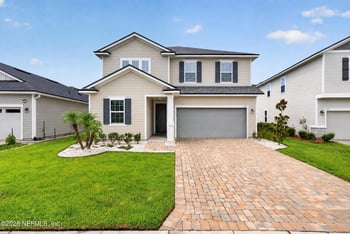
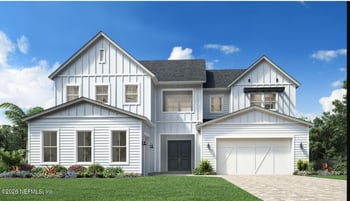


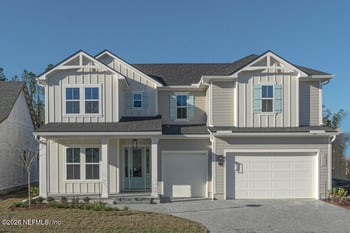
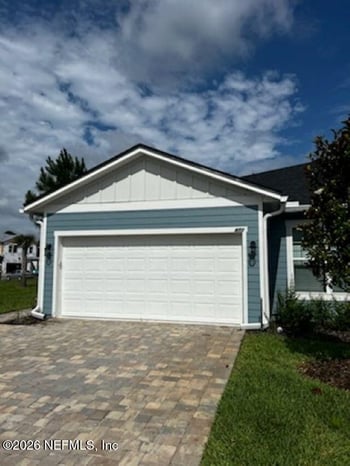




These are the questions people ask after they’ve looked at a few listings and started picturing school runs, errands, and the real monthly cost structure.
If you’re ready to browse: start with SilverLeaf homes for sale, then use the checklist above to verify the exact address you’re serious about.
If you’re looking in northern St. Johns County and keep circling back to SilverLeaf and Nocatee, you’re not missing something — these two get compared for a reason. They’re both large, master-planned communities built for people who value order, schools, and intentional growth. Where they differ isn’t quality. It’s how daily life actually unfolds once routines take over and the new-house exciteme
If you’re shopping newer, amenity-heavy communities in Northeast Florida, you’ll eventually see CDD show up in a listing, a lender worksheet, or a payment estimate—usually with zero context. And because it’s tied to the tax bill (not a normal “monthly fee” you can mentally file away), it tends to trigger the late-night spiral: Is this real? Does it go away? Am I about to get surprised later?This
If you’re cross-shopping Nocatee, Bartram Park, and Durbin, you’re usually not trying to crown a winner. You’re trying to figure out which one fits your weekdays without turning every morning into a strategy session. This is a decision article built around three things that actually change the outcome in real estate: commute routes that behave differently at peak hour, school assignment by addre
If you’ve been house hunting in northern St. Johns County for more than five minutes, you’ve probably heard someone say “Durbin” like it’s one neat, tidy neighborhood. In real life, it’s a little messier — and that’s exactly why this guide exists. When people talk about Durbin real estate, they’re usually bundling together Durbin Crossing and the broader Durbin Pavilion / Durbin Park retail hub (
_0001.jpg)
_0002.jpg)