

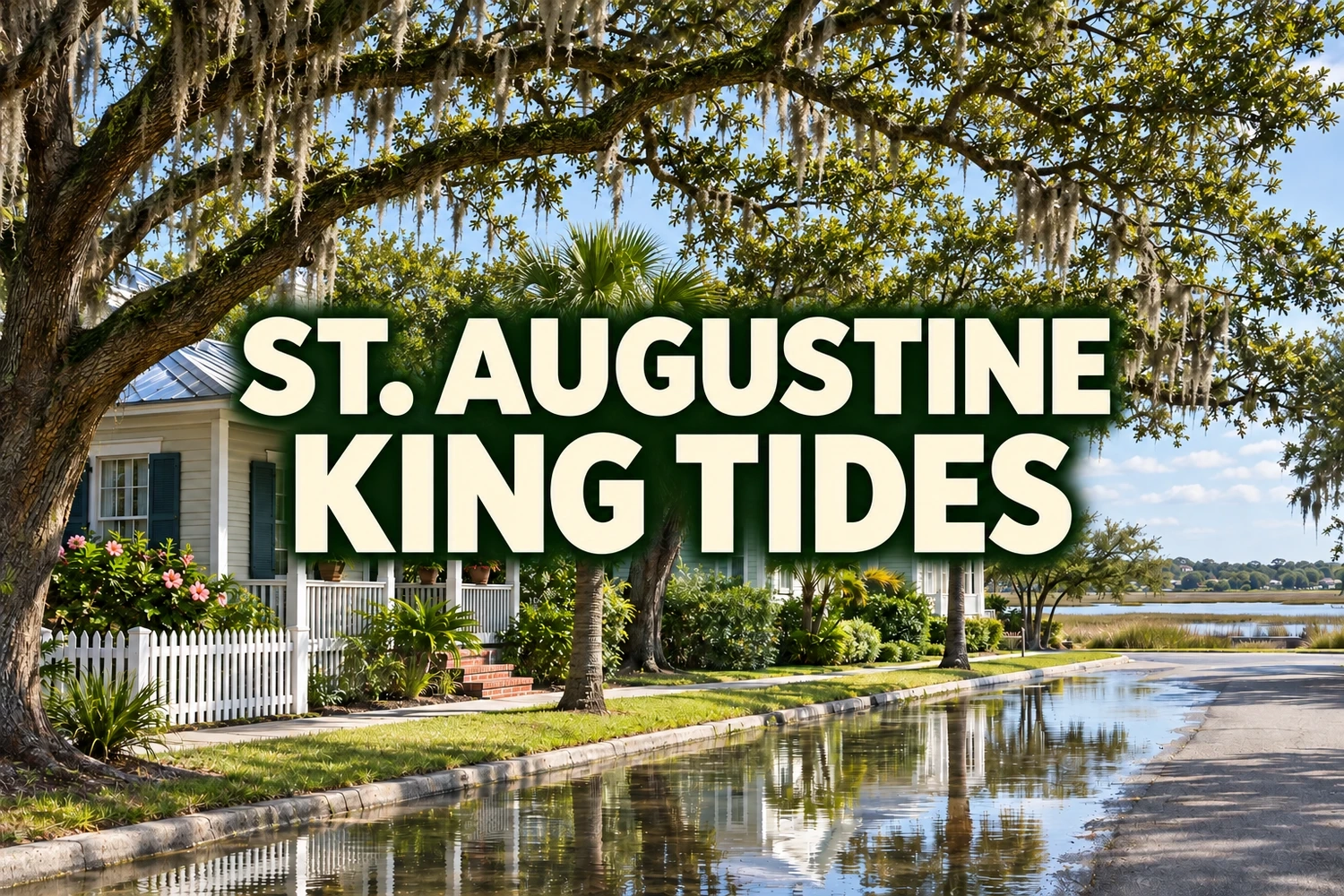
St. Augustine's official king tide calendar identifies November 23–27, 2026, as another period of higher-than-normal predicted water levels. For homebuyers near the waterfront, an October flooding episode shows why the road leading to a house deserves as much attention as the house itself.
On October 26, Action News Jax reported that streets around Coquina Avenue were mostly dry at 5 a.m. By approximately 9 a.m., floodwater had returned. A resident also supplied video of someone kayaking along a neighboring street the previous day.
The flooding affected everyday routines, including delayed trash collection on flooded streets.
For someone considering a St. Augustine home, that raises three questions a single afternoon showing might never answer.
1. Could St. Augustine king tides affect the road to your home?
Imagine touring a home near the water. The driveway is dry, the street looks normal and there's no obvious trouble getting in or out.
But what happens when the tide comes up?
The Coquina Avenue reporting illustrates how quickly road conditions can change. A home may remain dry while the streets serving it become difficult to use.
St. Augustine provides a Hohonu water-level dashboard and links to NOAA's St. Augustine tide chart. Those tools help identify periods of higher water, although gauge readings don't establish flooding depth on individual streets.
The November 23–27 dates are tide predictions, not a forecast that particular roads will flood. The city also cautions that heavy rain, nor'easter winds and waves can make high-tide flooding worse.
For a home you're considering, check the streets leading to it and any alternate route. Ask whether high tides have affected vehicle access, parking or routine services. Visiting at different times can be informative when conditions are safe, but never drive through floodwater to test the route.
2. What does the home's flood disclosure tell you about past flooding?
A road that floods during high tides raises another question. Has water ever damaged the property itself?
Under Florida Statutes Section 689.302, residential sellers must provide a flood disclosure at or before the sales contract is executed.
The form asks whether the seller knows of flooding that damaged the property during their ownership, filed a flood-damage insurance claim or received flood assistance.
That includes more than water entering the living space. Florida's definition of flooding covers tidal or inland water overflow, certain surface runoff and sustained standing water from rainfall.
Request the disclosure before signing and ask for dates and repair records if damage is reported. Find out whether the yard or driveway has experienced standing water, even if the building wasn't damaged.
A property inspection can help evaluate visible drainage and building conditions. An address-specific flood-insurance quote addresses a different part of the decision, including available coverage and costs. Home904's Northeast Florida flood-insurance guide explains what buyers should investigate.
The seller's history, inspection findings and insurance terms work together to provide a clearer picture of the home.
3. Have St. Augustine drainage projects improved the street?
St. Augustine has installed tide check valves in parts of its stormwater system to reduce the frequency and duration of minor to moderate tidal flooding.
The city's tide check valve program explains why low-lying streets can flood when river levels rise above the surrounding land. Its interactive map shows where valves have been installed.
A more substantial example is the Inlet Drive Shoreline Resiliency Project, completed in June 2026.
The city installed a shoreline retaining wall, tide check valve and stormwater improvements, along with riprap stabilization, grading and restoration work. The project was designed to address shoreline erosion, drainage and coastal flooding concerns in that area.
Inlet Drive and Coquina Avenue are separate locations. The October flooding near Coquina Avenue doesn't establish how the completed Inlet Drive improvements performed.
For a home near either area, ask the city which drainage improvements serve the street or access route. Find out what conditions the work was designed to address and whether other flooding concerns remain.
That distinction matters when a seller mentions recent drainage improvements. The project may be completed, but the buyer still needs to understand how it relates to the home and its entrance.
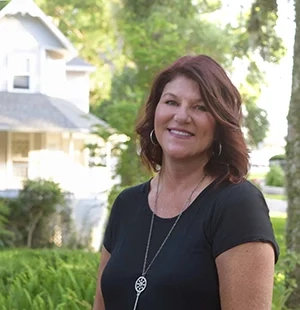
If you're considering a St. Augustine home near the water, send Susie Takara the listing or address. She can help gather available flood and drainage information and identify questions for the city, property inspector, lender or insurance professional before you make an offer.