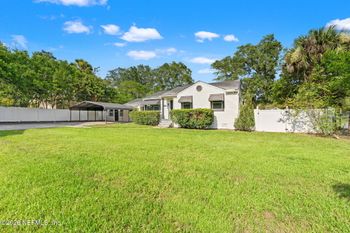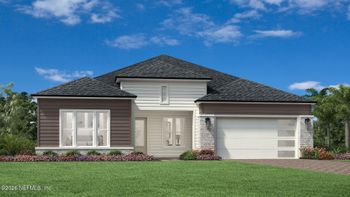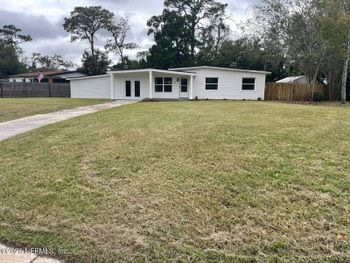



Redfin's November 19 housing report found the national median home-sale price had slipped 0.4% from a year earlier during the four weeks ending November 15. The report pointed to an opportunity for buyers to negotiate lower prices, seller concessions, or both. For Jacksonville buyers, that choice can change the cash needed at closing: in a hypothetical $400,000 purchase with 20% down and enough eligible closing costs, a $10,000 seller credit leaves $8,000 more cash available than an equivalent price cut, but also $8,000 more mortgage debt.
The national report from Redfin doesn't establish what any particular Jacksonville seller will accept. But local listings checked November 20 show both approaches being advertised, sometimes on the same home.
A seller can offer a generous credit, but the buyer's mortgage may not allow them to use every dollar.
1. Two Jacksonville Listings, Two Ways to Attract Buyers
At 4208 Metron Drive in Jacksonville, a townhome entered the market November 19 at $339,990. The listing advertises a $10,000 seller contribution toward closing costs, prepaid expenses and/or an interest-rate buydown.
That offer targets qualifying purchase expenses, not unrestricted cash paid to the buyer. How much can actually be used depends on the contract, the lender and the buyer's eligible costs.
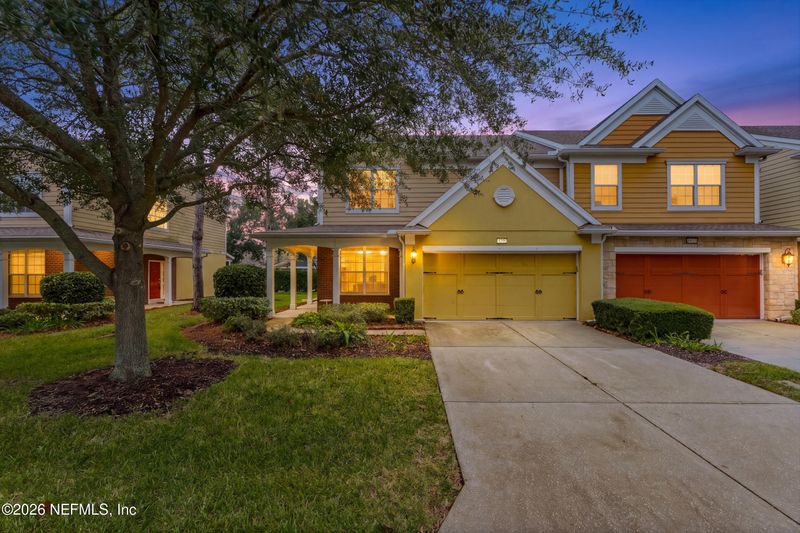
Actual listing photo: 4208 Metron Drive, Jacksonville, FL. Active November 20, 2026. HERRON REAL ESTATE LLC / realMLS, MLS #2174364.
On Jacksonville's Westside, 7958 Hammond Boulevard offers a more complicated example.
Originally listed May 28 for $309,900, the home's asking price had fallen to $282,904 by November 3. That's a $26,996 reduction from its initial asking price.
Yet its retained public remarks also advertise up to $7,500 toward buyer closing costs with a list-price offer. They mention a washer-and-dryer package and a separate recommended-lender contribution of up to 1% of the loan amount.
The washer-and-dryer package, seller-paid closing costs and recommended-lender assistance are distinct conditional offers. The lender contribution isn't the seller's credit, and the two shouldn't be assumed to stack.
Hammond Boulevard moved to Active Under Contract on November 6 and remained there November 20, so it isn't an available-home recommendation. Metron Drive was still active at that check. Neither listing establishes a completed sale or accepted credit, and Hammond's executed contract price and final financing remain unknown. Its public history shows that an asking-price reduction and an advertised conditional credit can coexist, not that a buyer obtained both.
What happens when a seller is willing to concede the same $10,000 either way?
2. The $10,000 Test: More Money in Your Pocket or a Smaller Mortgage?
A November 18 HousingWire opinion column by mortgage lender Eric Bernstein argues that buyers may benefit more from concessions than an equivalent price reduction. His hypothetical uses a $600,000 purchase, 20% down and a $10,000 concession.
The cash-flow argument is worth examining, but it doesn't establish that credits always win.
Consider a different, consistent example closer to the prices many Jacksonville buyers compare.
Suppose a home is priced at $400,000. The seller will agree to either a $10,000 credit or a reduction to $390,000. The buyer plans to put 20% down and finance the remainder with a 30-year fixed mortgage at an illustrative 7% interest rate.
Assume $12,000 in eligible closing costs and prepaid expenses under either option, and that the lender approves the entire $10,000 credit.
| $400,000 with $10,000 credit | $390,000 without credit | |
|---|---|---|
| Down payment | $80,000 | $78,000 |
| Mortgage principal | $320,000 | $312,000 |
| Eligible closing costs | $12,000 | $12,000 |
| Seller credit | −$10,000 | $0 |
| Buyer funds before deposits and adjustments | $82,000 | $90,000 |
| Monthly principal and interest | $2,128.97 | $2,075.74 |
| Price minus seller credit | $390,000 | $390,000 |
Illustrative financing only, not either Jacksonville listing or a current rate quote. Cash figures exclude deposits and other closing adjustments. Monthly payments exclude property taxes, insurance, HOA/CDD assessments and other ownership expenses.
The $10,000 credit offsets expenses the buyer would otherwise pay. Even with a $2,000 larger down payment, the credit option requires $8,000 less in illustrative buyer funds before deposits and closing adjustments. The price cut instead reduces the starting mortgage by $8,000 and monthly principal and interest by approximately $53.22, calculated before rounding.
For someone facing moving expenses or immediate repairs, keeping that $8,000 in savings may matter more than a smaller payment. Another buyer with ample cash may prefer less debt. But dividing the cash difference by $53.22 doesn't produce a complete break-even calculation: the borrowers have different outstanding loan balances, which matter when the home is sold, the mortgage is paid off or the loan is refinanced. Future refinancing isn't guaranteed.
The table also assumes the buyer can use the entire credit. That requires a closer look at the financing rules.
3. Why a $10,000 Seller Credit Might Not Be Worth $10,000
Imagine negotiating $10,000 toward closing expenses, only to discover your lender identifies just $6,000 in eligible costs.
The remaining $4,000 generally doesn't become a check you can take home.
Under Fannie Mae's conventional-loan rules for interested-party contributions, allowable financing concessions can cover qualifying borrower closing costs and prepaid expenses. They may also cover up to 12 months of post-settlement HOA assessments under specified conditions.
They cannot provide the borrower's down payment, satisfy financial reserve requirements or replace a required minimum borrower contribution.
Fannie Mae also limits financing concessions by loan-to-value (LTV), which compares the mortgage amount with the property's applicable value, and combined loan-to-value (CLTV), which also includes other loans secured by the home.
| Financing scenario | Maximum financing concession |
|---|---|
| Primary residence or second home, above 90% LTV/CLTV | 3% |
| Primary residence or second home, 75.01%–90% LTV/CLTV | 6% |
| Primary residence or second home, 75% LTV/CLTV or less | 9% |
| Investment property | 2% |
Those percentages are based on the lower of the purchase price or appraised value, not the loan amount. Some customary seller-paid expenses are treated separately, and specific program exceptions apply.
There's another ceiling: financing concessions cannot exceed the borrower's eligible closing costs. Amounts above the applicable cost or percentage limits are treated as sales concessions, requiring a reduced price for underwriting calculations. They cannot simply be converted into cash for the buyer.
This is why someone making a relatively small down payment could encounter a different credit limit than a buyer purchasing the same home with 20% down.
The appraisal matters, too. Lenders must account for seller contributions and provide relevant information to the appraiser. Agreeing to a higher purchase price to accommodate a credit doesn't make an unsupported property value acceptable to the lender.
VA Buyers Need a Different Calculation
Jacksonville's military buyers should be especially careful with blanket statements about seller-concession limits.
According to the Department of Veterans Affairs' guidance updated October 5, 2026, ordinary seller-paid loan closing costs aren't subject to the VA's 4% seller-concession cap.
VA-defined seller concessions are a separate category, limited to 4% of the home's reasonable value shown in the VA Notice of Value. Examples include payment of the funding fee, paying off buyer debts and prepaid hazard insurance.
Conventional, FHA, VA and other loan programs don't share one universal seller-credit limit. The applicable program and classification of expenses determine what can actually be used.
4. A Rate Buydown Changes the Calculation Again
Metron Drive's advertised $10,000 contribution may be used for eligible closing expenses and/or a rate buydown, depending on the approved financing. Paying ordinary closing costs saves upfront cash without reducing the mortgage principal or contractual interest rate. A buydown can affect the payment, but its structure determines how.
With a permanent rate buydown, the buyer generally pays discount points upfront in exchange for a lower contractual interest rate. The actual reduction depends on the lender's pricing.
A temporary buydown uses a subsidy to lower payments during an initial period. Those reduced payments don't last indefinitely. When the subsidy ends, payments return to the amount required under the underlying loan terms.
Fannie Mae generally includes seller-funded temporary and permanent buydown subsidies in its contribution calculations, while distinguishing certain builder standby commitments.
The Consumer Financial Protection Bureau's guide to points and lender credits explains a separate trade-off: lender credits tied to rate pricing generally reduce upfront expenses in exchange for a higher interest rate, although other lender-credit offers exist. They come from a different source than seller credits, as Hammond Boulevard's recommended-lender incentive illustrates. For any proposed buydown, the written terms should show the actual rate, cost, subsidy duration and payments after a temporary reduction expires.
5. For Sellers, the Same $390,000 Isn't Necessarily the Same Net
A $400,000 contract with a $10,000 seller credit leaves $390,000 before other selling expenses. A $390,000 contract with no credit produces the same starting figure.
But those aren't necessarily identical net proceeds.
Some selling expenses, transfer charges or agreed compensation may vary with the sale price. Mortgage payoffs, additional credits and prorations can change the final result.
A side-by-side seller net-proceeds estimate should account for those differences under each proposed contract. A higher price with a credit still needs to satisfy appraisal and financing requirements.
6. Five Checks Before Choosing a Seller Credit or Price Reduction
When both options are on the table, ask the lender for comparable written Loan Estimates or financing worksheets. Keep the assumptions consistent apart from the negotiated differences.
- How much cash will you actually need? Compare the down payment, closing expenses, prepaids, deposits already paid, seller credits and closing adjustments. The CFPB's Loan Estimate guide explains the cash-to-close calculation.
- Can you use the full credit? Have the lender identify eligible expenses and apply the appropriate loan-program limits. Don't negotiate a credit that exceeds what the financing can accommodate without understanding how the excess will be treated.
- What happens to the total monthly payment? Compare principal and interest alongside property taxes, homeowners insurance, mortgage insurance if applicable, and HOA or CDD costs. This is particularly important when Northeast Florida homes have different community assessments or insurance expenses.
- Does a rate buydown really help? Request the written rate, discount-point cost, payment schedule and any temporary-subsidy expiration. Compare the remaining loan balance and longer-term borrowing cost rather than judging the offer by its first-year payment.
- Do the contract terms and appraisal support the arrangement? Confirm the advertised credit's conditions, proposed contract language, any lender restrictions and appraisal considerations before deciding what to offer.
The final Closing Disclosure should then be checked against the negotiated terms and the lender's earlier estimates.
For buyers weighing expenses beyond the mortgage, Home904's Northeast Florida homebuyer cost guide covers property taxes, insurance and other ownership costs. The guide to making an offer explains deposits, contingencies and contract decisions that also belong in the negotiation.
A lower price and an allowable seller credit can also be negotiated together if the seller agrees and the financing permits.
Comparing a Jacksonville home with an advertised seller credit?
I'm Susie Takara with Home904. I can help you examine the listing terms, frame an offer and coordinate questions with the listing agent and your lender. The lender determines financing approval and allowable contributions, and no particular seller concession is guaranteed.
Learn how Home904 helps Jacksonville and Northeast Florida buyers evaluate homes and offers.