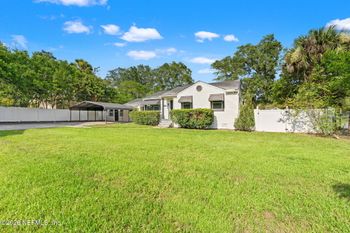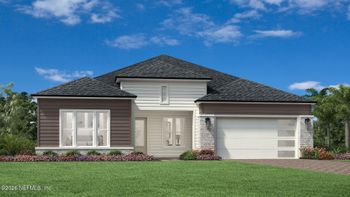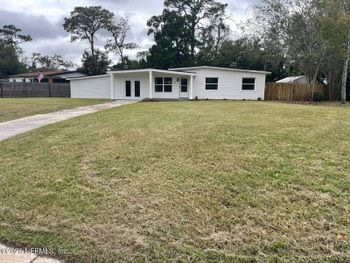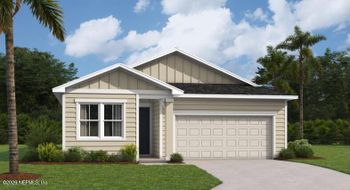


Starting January 7, 2027, some of the country's largest institutional investors will be prohibited from buying additional single-family homes. But that doesn't mean every corporate-owned rental house is suddenly available to Jacksonville homebuyers.
An investor's purchase of an existing home may be restricted while a qualifying purchase of newly built homes for rent remains permitted.
That's an important distinction in Northeast Florida, where professionally managed rental communities can look much like subdivisions filled with owner-occupied houses.
The restriction comes from Section 1001 of the 21st Century ROAD to Housing Act, enacted July 11, 2026. On October 22, the Treasury Department announced proposed regulations, published October 23, to clarify how the law will operate. Public comments are due November 23.
The purchase restriction is already enacted law, with a January 7 effective date. Treasury's proposed implementation details are still subject to change.
For buyers hoping that fewer institutional investors will mean less competition, the real question is which purchases the law actually restricts.
1. Which institutional investors will be restricted from buying homes?
The law doesn't ban every landlord, investment company or LLC from buying a Jacksonville house.
It generally targets for-profit entities engaged in investing in, owning, renting, managing or holding single-family homes that, alone or together with other entities, have direct or indirect investment control of at least 350 single-family homes.
Homes acquired through qualifying excepted purchases after the law's enactment are excluded from that count.
The investment-control requirement matters. A company managing properties for other owners isn't necessarily the investor controlling those homes. And using several companies to hold properties doesn't automatically keep a larger investment operation outside the law.
Treasury's October 23 proposed rule addresses these ownership and control questions, along with exceptions for certain transactions.
Those exceptions include qualifying build-to-rent developments, substantial renovate-to-rent programs and programs intended to help households become homeowners.
So an investor with a handful of Jacksonville rentals isn't automatically affected. A larger investor may face the purchase restriction, but whether a particular acquisition is prohibited depends on the investor's holdings, control relationships and the circumstances of the purchase.
2. Why can Jacksonville build-to-rent communities remain part of the market?
Look at Belfort Landing in Jacksonville's 32216 ZIP code.
AMH advertises detached, professionally managed single-family homes for rent there. AMH advertises features such as garages and fenced backyards, which vary by property. Its Jacksonville communities directory shows other rental developments throughout Northeast Florida.
Congress included a build-to-rent exception for qualifying purchases or construction of newly built single-family homes intended to be managed as rentals. The exception can apply in entirely rental communities or developments combining rental and owner-occupied homes.
Treasury's proposed regulations attempt to define more precisely what counts as newly constructed rental housing.
Under proposed Section 36.5, purchased homes would need to satisfy three conditions:
- They weren't previously occupied by an owner-occupant.
- They were purchased within 18 months after receiving a certificate of occupancy or equivalent.
- Their first occupants after purchase were renters.
The 18-month test is proposed, not a final requirement established by the statute.
Treasury's reasoning is that purchasing newly constructed rental homes is different from acquiring houses already part of the existing housing stock.
That distinction also means an older rental property wouldn't necessarily qualify simply because it was originally built for tenants. Treasury specifically considered that interpretation but explained why it could conflict with the statute's focus on newly constructed homes.
For Jacksonville, Belfort Landing makes the housing type easy to picture. It doesn't establish whether any particular AMH acquisition qualifies for an exception, when a home was purchased or how the owner's holdings would be counted.
The law doesn't prohibit professionally managed single-family rentals as a housing type.
3. Will the new investor restrictions change Jacksonville resale prices?
Imagine shopping for an existing Jacksonville home and hearing that institutional investors won't be allowed to compete for it next year.
Would that justify offering less?
Not without looking at who's actually buying comparable homes.
The law may remove certain large investors from competition for covered purchases after January 7. But it doesn't establish how often those investors would otherwise have bid on homes in a particular Jacksonville neighborhood.
Smaller investors can still purchase homes, and qualifying transactions remain excepted. The legislation also doesn't require existing institutional landlords to sell their rental properties.
For someone selling a house, that means an offer from a company or an all-cash buyer shouldn't automatically be dismissed as prohibited. The buyer's actual status and the acquisition details matter.
For someone purchasing, the useful comparison is much more specific than the national investor headline.
How many similar homes are currently listed nearby? Have comparable properties been sitting on the market or going under contract quickly? What did buyers actually pay in recent closed sales, and how do those homes compare in condition, size and location?
Home904's Jacksonville housing market study explains why neighborhood-level classifications and broad market patterns can't establish the value of an individual property. The same caution applies here.
The federal restriction changes which acquisitions certain large investors may make. It doesn't set a new price for Jacksonville homes or establish that local buyers will face fewer offers on any particular property.
If you're considering a Jacksonville or Northeast Florida home, send Susie Takara the listing through Home904's complimentary buyer research service. She can help compare the property's asking price with relevant listings, closed sales and available property records before you decide what to offer.