$275,000
Active Under Contract
3
Beds
2
Baths
1270
Sqft
0.2
Acres
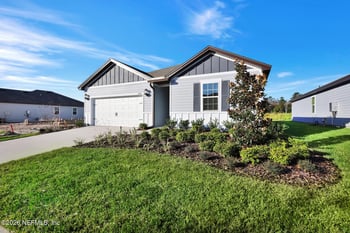
1181 Martin Luther King Jr Blvd, Green Cove Springs, FL 32043
MLS#: 2114657



TL;DR
Lake Asbury waterfront homes on the three private lakes — Lake Asbury, South Lake Asbury, and Lake Ryan — come with association-governed access, key-based boat ramps, and per-lake use rules that most listing descriptions never mention, including an electric trolling motors only restriction on Lake Ryan that eliminates gas-powered boat use entirely. Before making an offer, verify which lake the property fronts, whether the deed includes Lake Asbury Lake Lot Owners Association membership, and what the property-specific flood zone designation is — those four facts answer the questions the listing leaves open.
A listing says "lakefront." The Lake Asbury Lake Lot Owners Association says here are your boat ramp keys, here are the rules for your specific lake, and here is what you can and cannot do with a motorized boat. Those two descriptions are not the same thing, and the gap between them is the central friction buyers encounter after closing.
Private-lake access at Lake Asbury is real — but it is structured, association-governed, and rule-specific in ways that promotional listing language almost never surfaces. The three lakes at the heart of the community — Lake Asbury, South Lake Asbury, and Lake Ryan — each carry their own use rules. Access to the boat ramps requires personal keys issued through the association. And membership in the Lake Asbury Lake Lot Owners Association is not automatic for every home marketed near the water.
Buyers relocating from Fleming Island, Orange Park, or St. Johns County waterfront communities often arrive with assumptions shaped by those markets. A home on Doctors Lake or a canal-front property in a St. Johns County master-planned community operates under a completely different access model. That context doesn't transfer cleanly to Lake Asbury's structure, and the mismatch between promotional descriptions and the actual on-the-ground lifestyle is the thing most buyers wish someone had explained before they started touring homes.
This article covers what the listings leave out: how private-lake access actually works, what the HOA limits govern, which lakes allow motorized boats and which do not, what ownership costs look like beyond the purchase price, and how the Lake Asbury waterfront neighborhood compares honestly with other First Coast waterfront options. You can browse current Lake Asbury waterfront listings to see how listing descriptions read — then use this article to understand what those descriptions are not telling you.
A buyer relocating from a public-lake community elsewhere on the First Coast assumes waterfront means walk down to the water whenever you want. At Lake Asbury, it means getting your association keys first — and confirming before you close that the deed actually includes that access.
Lake access at Lake Asbury is governed by the Lake Asbury Lake Lot Owners Association, which restricts use of the three private lakes exclusively to waterfront lot owners. Not all homes marketed in the broader Lake Asbury area qualify. Membership in the association is tied to the specific parcel, not the zip code or the neighborhood name, so buyers need to confirm in the deed — not the listing description — that their property includes lake lot owner membership.
The association manages two boat ramps. Access to those ramps is granted through personal keys issued to waterfront owners. This is not an open community amenity anyone can walk up to. It is a managed, physical process with its own issuance requirements, and those requirements can change. Verify the current key deposit process, any transfer procedures, and membership terms directly with the Lake Asbury Lake Lot Owners Association before closing, not after.
The key system is actually what protects the lifestyle. Because there is no public ramp access, there is no weekend boat traffic from outside the community. That is why the lakes stay swimmable, fishable, and boatable in a way that public lakes in the area simply are not — no strangers launching jet skis at 7 a.m., no crowded ramp lines on holiday weekends. The privacy of the water is a direct product of the access controls.
But that same system means a waterfront owner who moves from another First Coast area and assumes lake access is automatic will run into a reality that is more rule-bound than expected, especially around access and boat use. The association membership, the key issuance process, and the per-lake rules are all real governance layers that exist before you ever put a boat in the water.
Before closing, request or confirm these four items:
Access is only half the picture. Which lake the property fronts determines what you can actually do with a boat once you have your keys — and that difference is more significant than most listings suggest.
Two homes, both marketed as Lake Asbury waterfront, same general price tier — one lets you pull a wakeboarder behind a gas-powered boat, the other does not. The difference comes down to which lake the property fronts, and that information is not consistently surfaced in listing descriptions.
Motorized boats are allowed on Lake Asbury and South Lake Asbury. Skiing, wakeboarding, and general motorized boating are all supported on these two lakes. Largemouth bass fishing is a noted activity here as well, and the motorized environment means you can cover water efficiently. If gas-powered boat use is a priority, the property must front one of these two lakes — confirm this in the deed and the association rules, not the listing description.
Lake Ryan operates under a different set of rules: electric trolling motors only, no gas-powered boats. Kayaking, canoeing, paddleboarding, and calm-water fishing are the activities this lake is built around. It is a genuinely quiet water environment, and for buyers who want that — no ski-boat noise on Saturday morning, no wake disrupting a paddleboard session — the electric-only rule is the feature, not the restriction.
The friction point is when the rule is a surprise rather than a choice. Restrictions on boat type and lake use, especially the difference between motorized access on Lake Asbury and South Lake Asbury versus the electric-only rules on Lake Ryan, are not consistently explained in listing descriptions. A buyer who wants to run a ski boat and purchases on Lake Ryan has a real problem. A buyer who specifically chooses a quieter lake setting with electric trolling motors only instead of a more active motorized-boat environment has made a deliberate, well-matched decision. The outcome depends entirely on whether the buyer asked the right question before making an offer.
Lake Asbury & South Lake Asbury
Boat use: Motorized boats allowed
Activities: Skiing, wakeboarding, fishing, general boating
Character: Active water environment
Lake Ryan
Boat use: Electric trolling motors only — no gas-powered boats
Activities: Kayaking, canoeing, paddleboarding, fishing
Character: Quiet, low-traffic water environment
Request the current Lake Lot Owners Association rules document from the listing agent or the association directly. That document — not the listing description — is the authoritative source for what each lake permits. Once the lake-use question is settled, the next layer is what the HOA actually governs beyond boat rules, and that is where the ownership cost picture starts to take shape.
"Low HOA fees" is one of the most repeated phrases in Lake Asbury listings — but the fee amount is only one part of what the association actually governs, and at Lake Asbury, there may be two separate sets of rules applying to the same property simultaneously.
The Lake Asbury Lake Lot Owners Association governs lake access, boat ramp use, key issuance, and per-lake activity rules. Its authority is specific to waterfront lot owners and the shared lake infrastructure. It does not govern the broader neighborhood — landscaping standards, architectural approvals, or short-term rental restrictions are not its domain.
What the association does govern has real day-to-day weight. A waterfront owner who assumes a small monthly fee means minimal involvement quickly learns that association membership comes with practical responsibilities: obtaining and maintaining boat ramp keys, following ramp-use protocols, keeping any dock structure in compliance with association standards, and renewing access through whatever current process the association requires. The HOA limits here are not just about what you can build — they are about how you use the water every time you go out.
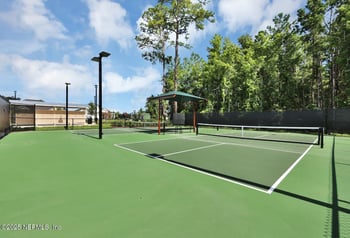
Lake Asbury is not a single master-planned community. It is a collection of distinct neighborhoods — Rolling Hills (which includes a community pool, clubhouse, nature trail, and tennis courts), Cross Creek, Village Park, Royal Pointe, and others — each of which may carry its own separate HOA with its own rules and fee structure. A home that sits within one of these neighborhoods and also fronts a lake carries two governance layers simultaneously: the lake association and the neighborhood HOA.
Buyers in Rolling Hills face a different HOA structure than buyers on a lake lot governed only by the lake association. The assumption that "low HOA fees" means minimal governance is the scenario that catches buyers off guard — the fee may be modest, but two separate sets of rules can apply to the same parcel, covering everything from dock aesthetics to fence height to rental restrictions.
For a broader look at how governance structures vary across nearby Green Cove Springs communities, Asbury Plantation's community profile shows how a different nearby development handles HOA structure — useful context for understanding what Lake Asbury's model is and isn't.
Documents to request before making an offer:
The governance picture shapes what you can do with the property. But the cost picture — insurance, dock maintenance, and waterfront-specific expenses — is what determines whether the private-lake life is financially sustainable long-term.
The HOA fee is the number buyers see in the listing. The dock repair bill, the flood zone determination, and the insurance rider are the numbers that show up later — and for waterfront homes in Clay County, they are not small considerations.
Flood zone designation is property-specific, not community-wide. Two homes on the same street can carry different FEMA flood zone designations depending on their elevation and proximity to the water. Do not assume a lakefront property's flood risk profile based on the neighborhood name or a neighbor's experience. Check the specific parcel using the FEMA Flood Map Service Center before writing an offer, and request an elevation certificate for the specific address as part of due diligence.
Homeowners insurance for lakefront properties in Clay County may differ from comparable inland homes due to waterfront exposure. The dock structure itself is a separate question — confirm with a Florida-licensed insurer whether the dock is covered under the main dwelling policy or requires a separate rider. Obtain a property-specific quote before closing, not as a post-closing discovery.
A private dock sitting in Florida humidity and storm season is a maintenance liability that does not appear in any listing description. Decking, pilings, and hardware all degrade, and the pace of that degradation accelerates with Florida's heat and storm exposure. The association may specify materials or structural standards that affect what repair options are available — verify current dock standards with the lake association rulebook before assuming you can use the least expensive repair approach.
The ownership costs beyond the purchase price — HOA fees, insurance, and maintenance for docks or waterfront property — are the category that catches buyers most off guard. A homeowner who budgets carefully for the purchase price and the association fee and then discovers a dock repair requirement, a flood insurance obligation, or a separate insurance rider is dealing with a preventable surprise. These are not rare edge cases; they are standard features of waterfront ownership that due diligence can surface before closing.
Waterfront lots at Lake Asbury are commonly characterized by larger lot sizes — around one acre — which also means higher landscaping, irrigation, and general maintenance costs compared with smaller-lot neighborhoods like Rolling Hills. That comparison is worth running explicitly before deciding whether a waterfront lot or a neighborhood-amenity lot better fits the actual budget.
Four due-diligence items specific to Lake Asbury waterfront lots:
Once the ownership cost picture is complete, the question becomes whether Lake Asbury's private-lake lifestyle is the right trade-off compared with other First Coast waterfront options at a similar price point — and that comparison requires an honest look at what each option actually delivers. For a sense of how waterfront ownership costs and lot structures compare at an Orange Park lakefront community, Lakeshore Estates in Orange Park offers a useful nearby reference point.
Buyers who toured Fleming Island Plantation and then look at Lake Asbury are comparing two fundamentally different ownership philosophies, not just two neighborhoods. Understanding that difference is what makes the comparison useful.
Lake Asbury's private-lake structure offers controlled, quiet water with no public boat traffic. That is a meaningful difference from river-access or Intracoastal communities where water use is shared with the broader public, conditions are less predictable, and a weekend afternoon can mean heavy boat traffic regardless of what the homeowner prefers. The private-lake life here is genuinely quieter — but it is also more rule-bound, and the trade-off is real: quiet, secluded lake living comes with tighter use rules and fewer recreation options than a public waterway offers.
Jacksonville lakefront communities — Lake Shore, Lake Lucina, Cherry Lakes — offer different price tiers, lot patterns, and access structures. Buyers comparing those options with Lake Asbury should evaluate the private-association governance model, lot size, and commute corridor differences rather than just the listing price. For a look at how a Jacksonville lakefront community's property profile and access structure compare, Lake Shore in Jacksonville and Cherry Lakes in Jacksonville are useful reference points for understanding what the private-association model at Lake Asbury is departing from.
Buyers relocating from Fleming Island Plantation or Eagle Harbor bring expectations shaped by master-planned community amenities, CDD structures, and professional management. At Lake Asbury, there is no master plan. The community is a varied collection of neighborhoods — some with HOAs, some without, some with lake access, some without — and the buyer carries more direct responsibility for navigating association rules and maintenance than a professionally managed CDD community requires.
That absence of a master-plan structure is exactly what attracts buyers who want an old-Florida feel, larger lots, and a less regimented ownership experience. But it also means the mismatch between promotional descriptions and the actual on-the-ground lifestyle is more likely to surface for buyers who arrive expecting the Fleming Island model. A buyer who moves from another First Coast area and realizes the lake lifestyle is more rule-bound than expected — especially around access and boat use — is usually a buyer who compared listing descriptions rather than governance structures.
Quick comparison: three First Coast waterfront ownership models
Lake Asbury private lakes
Governance: Lake Lot Owners Association + possible neighborhood HOA | Water access: Association-keyed, private-only | Trade-off: Quiet and controlled, but self-managed with association rules and maintenance obligations
Fleming Island Plantation / Eagle Harbor
Governance: Master-planned CDD with professional management | Water access: Doctors Lake (public waterway) | Trade-off: More amenities and managed maintenance, but CDD fees and less lot privacy
Jacksonville urban lakefront (Lake Shore, Cherry Lakes)
Governance: Varies by neighborhood; many without formal HOA | Water access: Varies; some public, some private | Trade-off: Closer to Jacksonville employment centers, but smaller lots and less controlled water environments
On commute: the First Coast Expressway corridor is expected to improve Lake Asbury's access to Jacksonville, St. Johns County, and Duval County — but verify current construction status and projected completion with Clay County or FDOT sources before factoring commute time into a purchase decision. Do not assume a timeline from a listing description or a community marketing page. The comparison only resolves into a real decision when the buyer maps their specific lifestyle priorities — boat type, commute corridor, lot size preference, and tolerance for self-managed association rules — against what each option actually delivers.
Every question this article raised has a specific document or source that answers it — and all of them are available before you make an offer, not after you close.
The decision turns on four verifiable facts: which lake the property fronts (motorized or electric-only), whether the deed includes Lake Asbury Lake Lot Owners Association membership, what the current association rules and key issuance process require, and what the property-specific flood zone designation is. These are not questions to ask after the inspection period closes. They are the foundation of the purchase decision.
Four-step verification checklist before making an offer:
The unclear day-to-day reality of private-lake access for waterfront owners versus what listings imply is not a minor footnote — it is the central thing buyers wish they had understood earlier. The buyers who are happiest at Lake Asbury are the ones who did this verification work upfront and chose the community knowing exactly what the access rules, lake use restrictions, and ownership responsibilities entail.
For buyers who want private-lake access, controlled water conditions, larger lots, an old-Florida character, and proximity to Clay County schools and the emerging First Coast Expressway corridor, Lake Asbury delivers a lifestyle that is genuinely difficult to replicate elsewhere on the First Coast at a comparable price tier. But that is only true if the access and use rules match the buyer's intended lifestyle — and that match requires the verification work, not just the listing tour.
The right next step is pulling current listings for the specific lake that matches your boat-use needs and confirming the association membership status in the deed before the inspection period closes. Current Lake Asbury waterfront listings let you cross-reference which properties front which lake and start applying the verification framework to specific addresses. If the Lake Asbury access structure doesn't match your lifestyle needs, Lake Lucina in Jacksonville is worth evaluating as an alternative lakefront option with a different governance and access model.
_0001.jpg)
_0002.jpg)
.jpg)

_0001.jpg)