New - 7 Days Ago


TL;DR
A Lake Asbury address is not the same as a home directly on Lake Asbury, South Lake Asbury or Lake Ryan. For a lakefront buyer, check the specific shoreline and recorded rights, then separate lake-lot association status from annual ramp-key and vessel-pass enrollment. Boat rules differ by lake, dock work has an association review process, and a separate public district assesses properties for lake and dam responsibilities. Its current dam planning could matter to water levels and future costs. Start with the home and the way you want to use the water—not a promise in a listing.
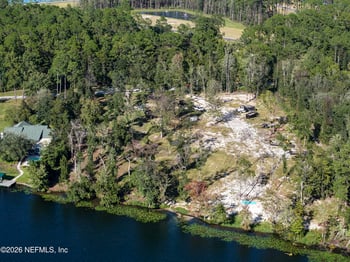
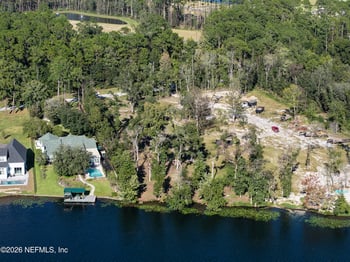
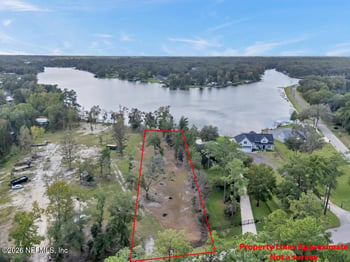
Imagine touring two homes advertised around Lake Asbury. One backs up to Lake Ryan; the other sits in a newer neighborhood elsewhere in the broader Lake Asbury area. Both might appeal. But a shoreline behind the first house is a physical feature, while the area name on the second tells you nothing about frontage—and neither description proves what rights come with the parcel.
The Lake Asbury Lake Lot Owners Association (LALLOA) identifies three lakes at the heart of its waterfront community: Lake Asbury, South Lake Asbury and Lake Ryan. A listing's "lake view," "waterfront" or Lake Asbury area label is not a substitute for checking the parcel, survey and actual shoreline. Nor does a nearby pond or neighborhood amenity establish access to one of those lakes.
There is a second use of the name. Clay County's Lake Asbury Master Plan covers a broader planning area, including land use, transportation and future public facilities. Adopted in 2005 and amended through 2006, it is a county growth framework—not one umbrella waterfront HOA or a promise of private-lake access to every home built nearby.
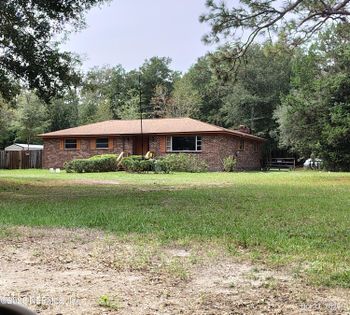
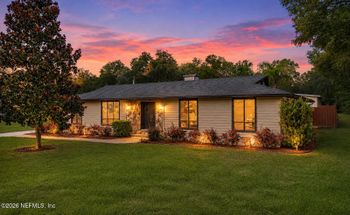
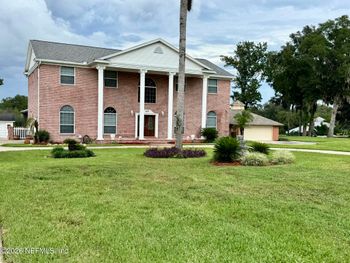
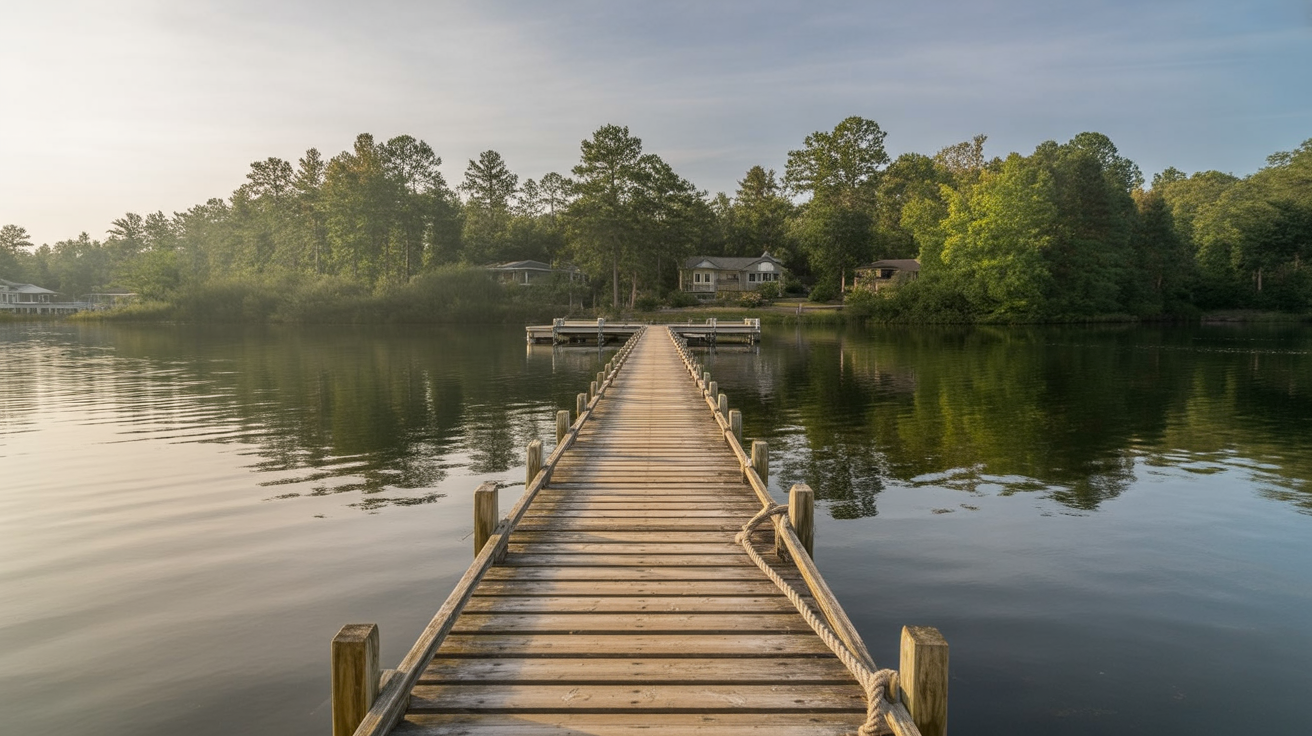
That distinction makes browsing more useful. Lake Asbury homes for sale gives you a starting selection, including homes not necessarily fronting a lake. Compare the location of each promising property before comparing boats, fees or docks. The dock scene accompanying this guide is illustrative; it does not identify a particular Lake Asbury parcel, waterbody or approved improvement.
Here is the distinction that can change a Saturday plan: owning a house on the water is not the same as having a current key to a shared boat ramp. You may be looking at the lake from your porch, yet still need to arrange annual enrollment before launching a motorized boat through the association's gates.
LALLOA describes its association as covering waterfront properties on the three lakes. Under a charter recorded in 2023, a separate Lake Lot Owners Access & Privacy Organization operates under the LALLOA umbrella. It provides annual enrollment for eligible lake-lot owners and qualifying tenants and administers ramp keys and vessel passes. Recorded property rights, LALLOA status, annual enrollment, a physical key and permission for a particular vessel are distinct matters. A seller handing over a key is not proof the buyer inherits current enrollment or every claimed right.
The 2026 enrollment agreement lists $100 a year for Full Access and $50 for Supporting. Supporting does not include a ramp key or motorized access; Full Access provides the key arrangement and two personalized motorized-vessel passes. That agreement also lists a $25 late charge for Full Access submissions after April 1, 2026, and an optional $25 key-package mailing charge. Those are dated enrollment terms, not fixed future prices or the complete cost of waterfront ownership. The association's membership instructions say ramp locks are typically rekeyed in March and enrollment must be renewed yearly. The recorded charter describes nonmotorized lake use for Supporting members and guests, but does not give that level a ramp key. Permission to paddle and a practical launch point are separate questions.
Yes, invited visiting vessels are contemplated under the published guest rules, and the term includes boats brought in for dock, bulkhead or boathouse work. But guests are not interchangeable with unrestricted public launches. The host lake-lot owner needs Full Access enrollment for a guest vessel using a ramp, is responsible for the guest's activity, and must accompany a guest who brings a vessel to the ramp. A visiting motorized vessel uses one of the host's passes, which stays with the boat in operation. Confirm the current process with the association when arranging a visit or contractor—not after the truck and trailer arrive.
Before you count on the ramp, get three separate answers:
Those questions are more revealing than asking whether a listing says "private lake." Privacy describes an access framework, not a guarantee of no visiting boats, a transferable key or a particular recreational experience.
The boat matters as much as the address. If your weekends revolve around a gas-powered ski boat, you'll look at different lakefront homes than someone who wants to paddle or fish with an electric motor. Lake Asbury and South Lake Asbury are the first lakes to investigate for motorized recreation; Lake Ryan requires particular care because the association's published descriptions are not identical.
Lake Asbury & South Lake Asbury
Published guidance: The association welcomes motorized boats.
Buyer question: Does the current rulebook permit your boat, towing activity, launch and intended use under its speed, wake and pass rules?
Lake Ryan
Published guidance: No gas-powered boats. The homepage allows electric trolling motors, while a 2023 charter says nonmotorized vessels only.
Buyer question: Get today's written answer for the exact electric motor or paddlecraft you plan to use.
That Lake Ryan difference is important, not a technicality. The association homepage says electric trolling motors are allowed there and gas motors are not; the recorded 2023 charter describes Lake Ryan as nonmotorized-only under Full Access. Do not buy on the assumption that either wording grants an unconditional electric-motor privilege. Ask LALLOA for the currently applicable, lake-specific rule in writing before you commit to a property or boat.
The site's linked safety rules, revised March 2024, require no wake in all lake "fingers" (narrow branches off the main water), idle speed when water levels run above or below normal, valid motorized-vessel passes and a maximum of two motorized craft per lake-lot owner on the water at once. They also prescribe counterclockwise travel for powered watercraft. The document says motorized craft should carry liability insurance; it does not phrase that sentence as an insurance mandate. State boating laws and actual insurance policy terms remain separate considerations.
The 2026 access application asks members to acknowledge 2026 safety rules, even though the publicly linked rule sheet is marked 2024. Request the current complete version for your lake, vessel and guests. A no-wake area, a seasonal water-level restriction or a tow-sports rule can have more effect on a family's use than the headline "motorboats allowed."
Match your activity to the rule, not the adjective:
These are controlled-access lakes, not lakes proven silent or visitor-free. Permitted guests, contractors, other lake-lot owners and changing water conditions all belong in the real picture.
A dock changes the way a waterfront home feels. It may also come with repairs and limits on what you can change. Suppose a house has a weathered pier and you plan to replace it, add a lift or reinforce a bulkhead. The fact that something is already standing does not establish its approval, condition or right to be rebuilt the same way.
LALLOA's Plan Review process says its board reviews docks, piers, boathouses, bulkheads, shoreline protection and changes along or within the lake waters. It says permission is required before waterfront improvements such as docks, ramps and pilings. That is a real construction-review function; it cannot be dismissed as merely handing out boat-ramp keys.
Association approval is not the only possible step. The Florida Department of Environmental Protection's environmental-resource permitting guidance explains that covered alterations may require authorization, although specific exemptions can apply, including to some single-family docks. Which agency, permit or exemption applies depends on the project and property. A survey, governing documents, available approvals and an inspection of the actual structure are more useful than assuming an existing dock gives you unlimited shoreline rights.
Keep the actors straight. LALLOA is the private lake-lot association; its Access & Privacy Organization handles the annual ramp and pass enrollment. The Lake Asbury Community Association is a distinct civic organization, not a substitute for either. A particular neighborhood may have its own HOA and architectural rules or lie within a Community Development District (CDD), a separate public district that can assess properties for infrastructure and services. Meanwhile, the public Lake Asbury Municipal Service Benefit District addresses lake and dam infrastructure and assessments. Their roles are not interchangeable.
Nor can you assume an architectural restriction, rental rule, fee or covenant is absent because the lake association focuses on water. LALLOA's dues notice discusses a possible restrictive-covenant revitalization under Florida's Marketable Record Title Act. It does not resolve enforceability for a specific lot. Review the property's recorded documents and any neighborhood disclosures with the appropriate closing and legal professionals. To compare a nearby neighborhood, browse Asbury Plantation homes and look at the rules and amenities that apply to each property.
A low association enrollment charge sounds reassuring until you see a separate line for public lake infrastructure. Here, the meaningful contrast is between paying to use a ramp and paying through an assessment system that supports lakes and dams. They serve different purposes—and should be budgeted separately.
The Lake Asbury Municipal Service Benefit District (LAMSBD) is a dependent Florida special district created in 1986 under Chapter 86-392. Its stated responsibility is maintenance of lakes and dams. Approved July 6, 2026 minutes record Resolutions 26-01 through 26-03: no district ad valorem millage was requested, but the district adopted its FY2026–27 budget and a non-ad valorem assessment roll. No property-value-based district millage does not mean no district charge.
The FY2026–27 final budget uses 445 assessments at $2,400 apiece, or $1,068,000 before adjustments, as its special-assessment revenue assumption. This is a concrete district-wide budget line, not proof that any particular house marketed as Lake Asbury owes $2,400. Determine whether the parcel lies within the district and read its actual assessment and tax bill. The budget also provides for estimated engineering capital spending and shows $0 for municipal bond payments in that year; neither line guarantees future assessment or borrowing decisions.
The district's approved September 14, 2026 meeting minutes describe engineering discussions about a possible phased rehabilitation, with one of the three dams—called the North Lake dam in district records—considered first. Engineers and trustees discussed whether lowering the lake during construction could avoid the expense of cofferdams—temporary barriers that keep a work area dry. They also discussed different gate arrangements and further analysis of effects on surrounding lakefront properties.
No final decision to lower the lake had been made, according to those minutes. The board approved further discussion, not a drawdown date, construction schedule or finished financing plan. Work had started on a smaller walkway project at Lake Ryan, but rehabilitation of the three dams was still being planned. For a buyer with a dock, a shallow approach or plans to boat regularly, potential changes in water level are worth asking about alongside the project's funding and assessment outlook. Engineers had supplied preliminary cost estimates for all three dams in August, but those draft figures are not an approved project cost or a basis for predicting an individual owner's future assessment.
Build an ownership estimate using different lines, not one "HOA fee":
The currently published LALLOA notice says collection of its previously mandatory $50 annual dues is temporarily suspended while the board considers covenant revitalization. That is separate from the Access & Privacy fees listed in the 2026 application—and separate again from the district assessment. The notice states no timetable and is not a parcel-specific legal opinion about future dues or restrictions.
The seller's tax bill may reflect a homestead exemption and Save Our Homes protection. Save Our Homes limits annual growth in assessed value for qualifying homesteads; it does not cap the whole tax bill. Those benefits do not automatically transfer to a buyer. Under Florida Department of Revenue guidance, an ordinary change of ownership generally results in reassessment at just value the following January 1, subject to statutory exceptions. Use the Clay County Property Appraiser and the relevant taxing authorities to estimate the buyer's amount rather than copying the seller's number. If a district assessment is already included in that total or the lender's tax escrow, do not add it twice; dividing an annual figure by 12 is a budget comparison, not a new payment schedule.
A shorefront home calls for an address-specific look at the effective FEMA flood map, the site's drainage, elevation and any known loss history. An X-zone designation is not a promise of no flood risk. Clay County has also published proposed 2026 FEMA map changes with a comment/appeal period running through November 18, 2026. Proposed lines and currently effective insurance maps are not the same thing. The county's evacuation-zone lookup answers an emergency-planning question, not the insurance-rating question.
Florida's homeowners insurance guidance explains that standard homeowners policies exclude flood damage. The Office of Insurance Regulation notes that private flood coverage can be a standalone policy or, in some cases, an endorsement to homeowners coverage. Ask an insurer what is actually offered for this property, and specifically how the dock, bulkhead, boat, waterfront liability and storm losses would be treated under the proposed policies. No single dock rider or standard waterfront premium can be presumed.
Lake Asbury may suit a buyer whose ideal afternoon begins and ends on a controlled-access lake. Someone who wants to head by boat to Doctors Lake, the St. Johns River or the Intracoastal Waterway has a different requirement: a usable connection to those waters. Owning a home on one of the three private lakes does not by itself provide that route. Boat draft, bridge clearance, ramp availability, permissions and shoreline conditions matter more than the word "waterfront."
Public access has its own tradeoffs without automatically being more crowded or less pleasant. For instance, Clay County describes Doctors Lake Park in Fleming Island as a fishing-pier and picnic destination; it should not be confused with the separate Lakeshore Boat Ramp. A public launch is an option for reaching public waters, not a right that comes with an unrelated private waterfront lot.
To look beyond Lake Asbury, you can browse Lakeshore Estates homes in Orange Park or explore Jacksonville neighborhoods including Lake Shore, Cherry Lakes and Lake Lucina. Those searches cover homes throughout each area, not just those directly on the water. If a property catches your eye, check whether it fronts water, what access is available and which rules apply before making a dock or boat launch part of your plans.
For newer Clay County neighborhoods or homes in Fleming Island and Orange Park, compare the HOA and public-district charges, amenities and maintenance responsibilities at each property. And drive the trips you will repeat: CR 218, Henley Road and the actual route toward work, family or shopping. For roadwork that could affect those trips, see Clay County's project updates. News4JAX reported that FDOT opened the First Coast Expressway/SR 23 segment from U.S. 17 to Leonard C. Taylor Parkway on June 29, 2026. That is a real Clay County connection, but the new St. Johns River crossing and eastward extension remain separate projects. Test the trip you actually need, including tolls and present-day traffic, rather than treating the future full beltway as already open.
The right waterfront home depends on how you plan to use it. You might prefer Lake Asbury or South Lake Asbury because you want to explore motorized boating. You might gravitate toward Lake Ryan for a paddle-focused routine—provided the current rules support the craft you intend to use. Or you may decide that access to a public river, a smaller yard or a neighborhood pool fits everyday life better.
Before making an offer, pin down these property-specific answers:
Start with homes listed in the Lake Asbury area and narrow by actual address and waterfront features, not by an assumed lakefront filter. Then take the right questions to the association, district, surveyor, insurer and closing professionals while the purchase terms can still respond to their answers. That is how the appeal of private-lake living becomes a choice you can live with—not just a view you liked during a showing.