New - 2 Days Ago


$228,500
Active
2
Beds
3
Baths
1248
Sqft
0.07
Acres
6562 Arching Branch Cir, Jacksonville, FL 32258
MLS#: 2171917



TL;DR
The asking price of a Mandarin waterfront home does not tell you what you need at closing, what you will spend each year, or what you can actually do with the water. Compare buyer-specific property taxes, insurance quotes, any association charges, and responsibility for a dock or seawall. Then confirm whether the frontage, depth, recorded rights and permitted access fit the life you have in mind. Two homes advertised as waterfront can be very different purchases.
Picture two homes in Mandarin. One looks across the St. Johns River and has a dock reaching into the water. The other overlooks a smaller lake, with a wide stretch of water visible from the back porch. Both might appear in a search for Mandarin waterfront homes for sale. But if you intend to keep a boat behind the house, they are not interchangeable.
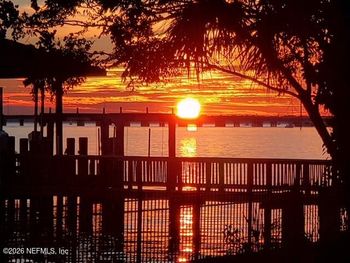
Cover image is illustrative. It does not identify a verified Mandarin address, water body, dock right, flood designation or structural condition.
Mandarin sits along the St. Johns River in Jacksonville, near Julington Creek. A property might have direct river frontage, frontage on a creek or lake, a pond view, or access through a shared dock or recorded easement. Those descriptions tell you something about the setting. They do not, by themselves, tell you where the property line ends, whether private docking is allowed, or who pays when a shoreline improvement needs work.
For a boater, ask about water depth at low water, the route from the dock to the water you plan to use, overhead clearance, and whether the intended vessel or lift is permitted. For someone who wants the view more than a boat, a shared facility or a home without a private dock might be perfectly suitable. A nearby public ramp is useful, but it is not the same as docking rights attached to a home.
Florida's riparian-rights law addresses rights associated with qualifying land bordering navigable water; it does not turn every pond, lake or shoreline into the same legal arrangement. A survey, title review, recorded easements and restrictions, and existing dock authorizations help establish what actually transfers. The Florida Department of Environmental Protection also distinguishes permission to use state-owned submerged land from environmental approval for construction.
Once you know which water features you would actually be buying, the costs are easier to compare. Start with the money needed to take ownership. The monthly mortgage payment comes later.
Two homes can share an asking price and still require different amounts of cash before move-in. The down payment is only part of it. A financed purchase can also involve loan and closing charges, prepaid insurance, inspections and an initial deposit into an escrow account. That account holds money collected at closing and with mortgage payments so the loan servicer can pay property-tax and insurance bills when they come due. A waterfront home may warrant additional attention to an aging dock or seawall. If known repairs are not being completed by the seller, those belong in your purchase decision too.
Your lender's Loan Estimate shows projected loan costs, monthly payments and estimated cash to close. As closing approaches, compare it with the Closing Disclosure, which itemizes closing costs, deposits, credits and cash to close. Ask your lender or closing professional to explain changes. Prepaid insurance and initial escrow deposits affect the cash-to-close calculation; when estimating ongoing costs, do not add an escrowed insurance or tax bill a second time to a monthly payment that already includes it.
A survey or a closer look at existing shoreline records may matter more to one purchase than another. A general home inspection may not establish the structural condition of a seawall. If there are signs of movement, erosion, deterioration or a significant proposed dock repair, ask the appropriate shoreline specialist what assessment is justified and what it would cost before agreeing to carry that uncertainty.
Florida property taxes deserve a separate estimate. The owner selling you the house may have a homestead exemption and years of Save Our Homes assessment limitations. Those benefits do not automatically carry over to you. Following an ordinary change of ownership, the property's assessed value generally resets to just value on the following January 1, subject to statutory exceptions. Your own eligibility for exemptions and other benefits also matters.
Save Our Homes limits certain increases in assessed value; it is not a ceiling on the entire tax bill. Taxable value is assessed value after applicable exemptions, and millage is the property-tax rate applied to it. The bill can also include non-ad valorem assessments for services or improvements calculated on a basis other than property value. Use the individual parcel and your expected ownership circumstances to obtain a buyer-specific estimate, rather than carrying the seller's bill into a mortgage calculator. The Florida Department of Revenue's county-official directory can help you find Duval's property appraiser and tax collector; its property-tax guidance explains the parts of the calculation.
Principal and interest tell you what it costs to repay a loan. They do not necessarily tell you what it costs to keep the house. On a Mandarin waterfront property, the difference can include insurance, taxes and maintenance obligations associated with the actual shoreline. Some of these are bills you pay regularly. Others arrive once a year, after a storm, or when a structure reaches the end of its useful life.
The costs to put beside each property
Read the Estimated Total Monthly Payment on the Loan Estimate before adding other figures. If your lender is already collecting taxes or insurance through escrow, those items are already part of that payment. Add only expenses not included, rather than charging yourself for the same bill twice. The Consumer Financial Protection Bureau explains how escrow works and why it can change when taxes or premiums change.
For comparison, you can divide an annual bill by 12 to understand its monthly effect. That does not mean the insurer or association will bill you monthly. Likewise, setting aside money for a future seawall replacement is prudent planning, not necessarily a charge your lender collects or includes in your debt-to-income calculation. The right reserve depends on what you own, what condition it is in, and your tolerance for a large unexpected expense.
A home facing the St. Johns River may have a different flood history and building elevation from a house overlooking Lake Mandarin. But the water body's name does not assign an insurance price. Nor can you assume every riverfront home is in the same FEMA flood zone, or that a smaller lake automatically means lower risk.
Start with the individual address on FEMA's Flood Map Service Center. A mapped Special Flood Hazard Area identifies a higher mapped flood hazard. Base Flood Elevation describes the elevation reached by the flood with a 1% annual chance; a zone designation does not prove a particular home's finished floor sits at or below that elevation. And a Zone X designation does not mean water cannot reach the property. Ask about local drainage, prior flooding and any available elevation information alongside the map.
The National Flood Insurance Program prices coverage using characteristics of the property, including flood types and frequency, distance from flooding sources, elevation and rebuilding cost. Coverage choices and deductibles matter as well. An elevation certificate can provide valuable building-height information and may help identify possible savings, but it is not generally required to buy NFIP coverage. Certain high-risk situations and local floodplain building requirements can call for additional elevation documentation. An old certificate or a seller's old premium is useful context, not a current quote for your purchase.
If you are borrowing through a federally regulated, supervised or insured lender and the home is in a Special Flood Hazard Area, flood insurance is generally required. A lender may also require it elsewhere. Buying with cash removes that particular mortgage requirement, not the property's exposure to flooding; prior federal flood assistance can also create continuing insurance obligations tied to the property. Standard homeowners policies generally do not cover flood damage.
Ask an insurance agent to compare available NFIP and private flood options for the actual house, including building and contents limits, deductibles, exclusions, effective dates and any lender requirements. Private coverage may be a separate policy or an endorsement to homeowners coverage. Do not assume flood or homeowners insurance automatically covers a dock, seawall, boat or every storm-related loss; ask what is covered, excluded or limited. Florida's Office of Insurance Regulation explains the private flood market.
Timing matters. New NFIP policies typically have a 30-day waiting period, but FEMA identifies exceptions, including qualifying coverage purchased in connection with making, increasing, extending or renewing a mortgage loan. Check the actual effective date with the insurance agent and lender. Private policies have their own terms.
Florida also requires a residential seller to provide a flood disclosure at or before the sales contract is executed. It covers the seller's knowledge of flooding damage during ownership, flood claims and flood-related assistance. The law's definition reaches beyond river overflow to certain runoff and sustained standing water from rainfall. Read that disclosure, but don't treat it as a substitute for flood maps, insurance quotes or an assessment of the property's present condition.
There is a practical difference between enjoying a dock and being responsible for keeping it standing. Before you assume the seller's dock will be yours to modify, establish who owns it, who maintains it, and which rights and approvals apply. A seawall can be privately maintained, shared with neighbors, or maintained under an association arrangement. The mere presence of an HOA does not settle that question.
Ask for available maintenance records, previous plans and permits, invoices, warranties, inspection findings and reports. Look closely at visible signs of deterioration and ask a qualified professional whether further inspection is justified. A missing engineering report does not automatically mean every home needs the same specialist inspection. But a dock that needs major work can change what you're willing to pay, especially if the usable water access was the reason you wanted the property.
Suppose you buy a property intending to add a boat lift. A listing photograph does not establish that the lift will be allowed. Jacksonville's zoning guidance on docks and boathouses describes local limits and points to DEP or U.S. Army Corps involvement. Florida's environmental permitting program includes possible exemptions for qualifying single-family dock work, including some repairs or replacements. Whether an exemption applies has to be established for the proposed work.
Local building or zoning approval, environmental authorization or an applicable exemption, permission to use state-owned submerged land, and association consent are separate questions. An existing structure does not prove every proposed change will be approved. Before treating a new dock, lift or boathouse as part of your future plans, confirm the relevant requirements with the agencies and professionals involved.
Some waterfront homes have no private HOA. Others may be in communities with mandatory association membership or a different ownership structure, such as a condominium. For a property with an applicable association, read the recorded covenants and amendments, current rules, dues and payment schedule. Ask for available budgets, financial reports, meeting records, maintenance allocations, reserve information, and details of adopted assessments or projects under discussion.
Florida's HOA records and budget law provides important background, but it does not mean every association has a separate seawall reserve or a formal reserve study. For a purchase governed by Chapter 720, the seller must provide the disclosure summary before contract execution. A closing professional may also request an estoppel certificate showing specified amounts and association matters. Neither document substitutes for the actual governing documents or an assessment of a dock's condition. Arrange additional records through the seller or another authorized person; prospective buyers do not automatically have unrestricted access to every association record.
That distinction is worth keeping in mind as you look at homes in Mandarin Station or Mandarin Lakes. If a particular property has a dock, seawall or shared water access, find out whether upkeep falls to you, other owners or an association, and whether any dues cover that work. The answer may change the ongoing cost of owning that home.
A lender's preapproval letter is not a promise to finance whichever waterfront home you choose. As the property becomes known, its condition, the loan terms, taxes and actual insurance costs can change the calculation. Ask the lender what still needs to be verified and whether any property or insurance requirements could affect approval or closing. Your own maintenance savings goal is important for affordability, but it is not automatically a lender-required monthly expense.
It also helps to know which inspection answers which question. A general home inspection looks at the house. An insurer may ask for a four-point inspection of an older home's roof, plumbing, electrical and heating or air-conditioning systems. A wind-mitigation inspection documents features that may qualify for windstorm premium credits; it is not itself an ongoing monthly charge or a promise of a particular discount. A shoreline specialist, when warranted, addresses a different concern from either of those reports. The Home904 wind-mitigation guide explains what buyers should check in that documentation.
With an all-cash purchase, there is no mortgage approval to clear. You still need to understand the home's insurance options and any coverage obligations, waterfront rights, maintenance responsibilities and future resale implications. The financing method changes some requirements; it does not change the building or the shoreline.
Consider the buyer who uses a boat most weekends. Water depth, an accessible route to the St. Johns River, dock capacity and permission for a lift may justify paying more for one property. A quiet lake view might be a wonderful home for someone else, yet not meet this buyer's purpose at any price.
Now consider someone who mainly wants to watch the water from a porch and travel for part of the year. An elaborate private dock brings responsibilities they may not want. A house with the water view they want and fewer shoreline structures could be the better fit, even if the two homes have similar asking prices.
Mandarin's location and everyday routines matter too. A property near the St. Johns River, one around Lake Mandarin, and a home closer to Julington Creek can bring different journeys to work or errands as well as different kinds of water. For daily-life context, see Home904's guide to Mandarin's schools, shopping and commute routes. If you are exploring named communities, Lake Mandarin home listings provide one starting point. Do not assume a community name guarantees navigable water, a private dock, or any particular flood designation.
You may also compare Mandarin with Ortega, San Marco or other Jacksonville waterfront areas. Avoid deciding that one is cheaper to own based on average asking prices or statewide headlines. Compare real homes with the same intended use and current information: cash needed to purchase, a realistic tax estimate, actual insurance terms, association charges, anticipated repairs and the access you can legally and physically use.
You can learn a great deal before making an offer, but some information arrives during negotiations or the inspection period. That is why the timing of a question matters as much as the question itself. A flood map can be checked early; a formal condition assessment may require access under contract. Florida's seller flood disclosure belongs at or before contract execution. Where important answers remain open, discuss inspection periods, document delivery and other contract protections with the appropriate Florida professionals rather than assuming every surprise can be prevented.
Questions to resolve for each home you seriously consider
To see homes being advertised in Mandarin, start with Mandarin home listings and verify the waterfront features on each individual property. The waterfront listings displayed below draw on a Mandarin High School-area search rather than a guaranteed Mandarin neighborhood boundary. They may include pending, under-contract or coming-soon homes as well as active listings; confirm current availability, location and school assignment by address.
The right Mandarin waterfront purchase is not automatically the house with the longest dock or the lowest list price. It is the one whose water access you can use, obligations you understand and ongoing costs you can comfortably carry.