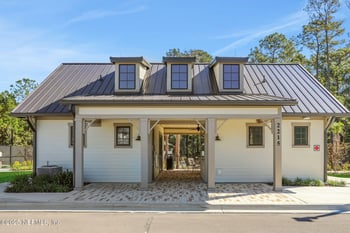
$614,636
Pending
5
Beds
4
Baths
3285
Sqft
0.2
Acres
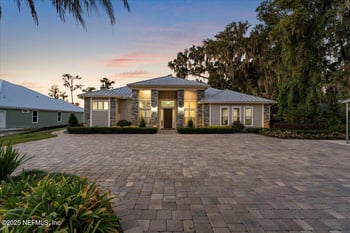
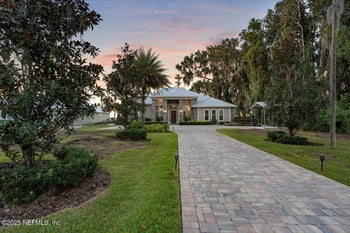
2305 Jennings Farm Dr, Middleburg, FL 32068
MLS#: 2141369



TL;DR
Mandarin waterfront homes carry a measurable waterfront premium over comparable non-waterfront properties, but the listed price is the least useful number for evaluating affordability — the true monthly cost only becomes visible when flood insurance, HOA dues, dock and seawall reserves, and wind mitigation costs are stacked on top of the mortgage. Which cost layers apply, and how heavily, depends on which water body the property sits on, what the elevation certificate shows, and which buyer type you are — and those three variables can make two identically priced listings dramatically different financial commitments.
Most buyers searching Mandarin waterfront homes spend weeks comparing list prices — and almost none of them price flood insurance before falling in love with a property. By the time the real numbers surface, they are often already emotionally committed to a home that does not fit their actual budget.
Headline purchase prices on Mandarin waterfront listings routinely omit the flood insurance obligation, HOA dues, dock and seawall reserves, and lender-required wind mitigation costs. Those omissions are not incidental. Together, they define the true monthly cost of ownership — and for many buyers, the gap between the mortgage payment and the all-in monthly payment is wide enough to change the decision entirely.
The waterfront premium is real. Waterfront homes in Mandarin carry a measurable price advantage over comparable non-waterfront properties in the same ZIP code. But that premium does not disappear at closing — it compounds monthly through the cost layers that the listing price never shows. What it really costs to own a Mandarin waterfront home is a different calculation than what the MLS displays, and most search results never walk a buyer through it.
Affordability and fit depend on which buyer type you are, which waterfront body your home sits on, and which cost layers your lender and insurer will require before you close. A St. Johns River-front estate and a Lake Mandarin home at the same list price can carry flood insurance obligations that differ substantially — not because of the home's condition, but because of how each parcel's elevation compares to its Base Flood Elevation and which FEMA flood zone it falls in. Pulling the FEMA flood map and requesting an elevation certificate from the seller is the first verification step, not a post-offer surprise.
The Five Cost Layers Every Mandarin Waterfront Buyer Must Price Before Making an Offer
For buyers relocating from higher-tax states who are drawn to Mandarin's river estates, the absence of state income tax is a genuine financial gain — but it does not offset an insurance stack that was never priced into the budget. The framework for the rest of this article builds that stack, layer by layer, by buyer type. For a broader look at how Mandarin fits into daily life before evaluating waterfront ownership, this overview of Mandarin's schools, shopping corridors, and commute options provides useful context.
A Mandarin waterfront home listed at a price that fits your budget can become unaffordable before you even reach the inspection period — and the number that does it is almost always flood insurance. This is not a hypothetical. It is the specific moment where a buyer who has already mentally moved in discovers that the all-in monthly payment is materially higher than the mortgage alone.
Properties along the St. Johns River in Mandarin frequently fall within Special Flood Hazard Areas designated AE or VE on FEMA flood maps. Under FEMA's NFIP program, an AE designation means the property sits at or below the Base Flood Elevation with a one-percent annual flood probability — a designation that triggers mandatory flood insurance as a lender condition, not an optional add-on. A VE designation adds coastal high-velocity wave action to that risk profile, which carries different insurance base rates and mitigation requirements.
Flood insurance is the killer cost that buyers consistently underestimate. The annual premium varies dramatically based on the property's first-floor elevation relative to its Base Flood Elevation. Two homes on the same Mandarin street can carry flood insurance obligations that differ by thousands of dollars annually based solely on how their first-floor elevation compares to the BFE on the certificate — the listing price tells you nothing about this.
Lake Mandarin and smaller tributary-fronting properties may carry different FEMA zone designations than St. Johns River-front homes. Buyers must verify the specific parcel's flood zone via Duval County GIS or FEMA's Flood Map Service Center — not assume zone by neighborhood or by proximity to the river. Community-level generalizations are not reliable here; the designation is parcel-specific. You can explore Lake Mandarin listings and waterfront body types to compare how tributary versus river frontage affects the search before committing to a specific area.
Buyers should request the seller's current elevation certificate during the inspection period — not after — because the certificate's data directly determines the insurance quote range and can make or break the all-in monthly payment calculation. A buyer who falls in love with a Mandarin waterfront home listed in their price range, then discovers that flood insurance and maintenance push the monthly cost well above budget, is almost always a buyer who did not request the elevation certificate before making an offer.
Private flood insurance alternatives to NFIP exist and may offer lower premiums for certain elevation profiles. Buyers should request quotes from both NFIP and at least one private carrier before finalizing their budget — the spread between the two can be significant depending on the specific property's elevation data. FEMA's NFIP also requires a 30-day waiting period before new flood coverage takes effect, so coordinate the application timeline with your lender well before closing.
Flood Insurance Verification Workflow — Do This Before Writing an Offer
Once you know your flood insurance tier, the next question is whether the HOA's rules on dock and seawall work will limit what you can actually do with the waterfront — and whether the reserve is funded well enough to protect you from a surprise assessment.
Buyers shopping Mandarin waterfront homes for dock access often assume that owning the dock means controlling it. The HOA's CC&Rs frequently say otherwise — and the gap between what a buyer imagines doing with their waterfront and what the governing documents actually permit is one of the most common sources of post-closing regret in Mandarin waterfront communities.
HOA restrictions in Mandarin waterfront communities can limit dock modifications, seawall repairs, boathouse additions, and even the type of watercraft permitted at a private dock. Buyers who want full flexibility to customize their waterfront access must read the CC&Rs before making an offer, not after. The friction is specific: HOA rules can limit dock use, exterior changes, or seawall work in ways that are not visible in the listing description and are not negotiable after closing.
Subdivisions within Mandarin carry community-specific governing documents that differ from neighboring waterfront communities. Mandarin Station Losco, for example, has its own CC&Rs that may not match what buyers assume based on the broader Mandarin market. Buyers should verify the specific subdivision's governing documents — not assume uniformity across Mandarin waterfront HOAs. You can review Mandarin Station listings and community structure to get a sense of how HOA governance varies across specific Mandarin sub-communities.
The trade-off here is concrete: HOA-managed convenience — maintained common areas, shared dock infrastructure, coordinated seawall oversight — comes with less control over what you can actually do with your own dock, seawall, and waterfront property. For buyers who want to add a boathouse, modify a dock configuration, or make exterior changes on their own timeline, that loss of control is not a minor inconvenience. It is a structural constraint that should be priced into the decision before the offer is written.
An underfunded HOA reserve for seawall infrastructure is not visible in the listing price or the monthly dues figure. It only appears in the reserve study — a document that most buyers never request until it is too late. A reserve study that shows inadequate funding for seawall or dock replacement is a direct financial risk: when the infrastructure needs repair and the reserve cannot cover it, the cost falls on current owners as a special assessment.
Dock and seawall maintenance costs are unpredictable by nature. Storm damage, erosion cycles, and material degradation can produce repair bills that dwarf annual HOA dues. An owner with a dock or seawall who faces a surprise repair bill quickly realizes that the true cost of waterfront living is much higher than the mortgage alone — and that this exposure was never reflected in the listing price they paid. Waterfront upkeep is unpredictable, especially when dock repairs, seawall replacement, and storm-related damage are not fully budgeted before purchase.
Duval County requires permits for seawall and dock repairs through the Building Inspection Division. Buyers should request seller-provided maintenance records and any existing engineer reports at the contract stage to understand the current structural condition and upcoming repair obligations. If no records exist, budget for an independent marine engineer inspection during the inspection period and verify the permit history for prior repairs directly with Duval County.
HOA and Dock/Seawall Document Request Checklist
HOA rules and maintenance costs are fixed obligations regardless of buyer type. But how financing constraints interact with waterfront risk is where different buyer profiles diverge sharply — and that is where the cost stack gets personal.
Pre-approval for a Mandarin waterfront home is not the same as approval — and the gap between the two is almost always the insurance stack, not the purchase price. Buyers who treat pre-approval as a green light without first pricing flood insurance are building their budget on an incomplete foundation.
Financing constraints for Mandarin waterfront properties begin before the appraisal. Lenders typically require a flood insurance quote as part of pre-approval, meaning buyers who have not yet priced flood insurance are working with a budget that does not reflect the waterfront premium's full monthly obligation. The flood insurance premium is not a post-closing detail — it is an underwriting input that affects whether the loan clears at all.
Wind mitigation inspections are a lender and insurer requirement for many waterfront homes in Northeast Florida. The inspection result directly affects the homeowner's insurance premium and, by extension, the debt-to-income calculation the lender uses. A buyer who clears the debt-to-income threshold at pre-approval can fail full underwriting after the flood insurance quote is added — and this happens after the inspection period has already closed. Financing can be harder for certain waterfront homes because lenders and insurers may treat them as higher risk, particularly when the flood zone designation, structure age, or dock and seawall condition triggers additional scrutiny.
Buyers should verify loan eligibility for a specific property before investing in inspections. Ask your lender directly which property conditions — flood zone designation, structure age, dock and seawall condition — require additional underwriting review. That conversation belongs at the beginning of the process, not after you are under contract. For a broader look at how wind mitigation results affect insurance costs on Northeast Florida waterfront properties, this breakdown of wind mitigation reports and what buyers should verify is worth reading before you schedule inspections.
First-time buyers face the steepest financing learning curve on waterfront properties. The cost layers — flood insurance, wind mitigation, HOA dues, and waterfront maintenance reserves — are not reflected in standard mortgage calculators and can push the effective monthly obligation above what the pre-approval suggested. A property that looks affordable on paper becomes unaffordable after lender requirements, insurance quotes, and reserve costs are included, and first-time buyers have no prior waterfront ownership experience to calibrate against.
Move-up buyers and cash buyers have more flexibility but still face insurance underwriting constraints. Private flood carriers may decline coverage on certain older structures or those with documented seawall deterioration — and that affects resale liquidity regardless of how the purchase was financed. A buyer who cannot easily insure a property at resale is holding an asset with a narrower buyer pool. That is a financing constraint that does not appear in the original purchase decision but shapes the long-term value of the waterfront premium paid.
You can compare how different Mandarin waterfront community structures affect financing and insurance exposure by reviewing Mandarin Lakes inventory and community characteristics as a reference point alongside other Mandarin waterfront options.
Financing constraints narrow the field by buyer type — the next section maps which Mandarin waterfront buyer profiles are best matched to which cost structures, and what each profile should prioritize before writing an offer.
Two buyers can look at the same Mandarin waterfront listing and face completely different financial realities — not because of their credit score, but because of how the cost stack interacts with their income structure and risk tolerance. The listing price is the same. The true monthly cost is not.
First-Time Waterfront Buyer
Primary cost risk: Underestimating the all-in monthly payment — the flood insurance, HOA, and dock reserve layers are unfamiliar and not reflected in standard mortgage calculators.
Key documents to verify first: Elevation certificate (determines flood insurance tier) and reserve study (reveals HOA funding for waterfront infrastructure).
Decision signal: If the flood insurance quote plus HOA dues plus a monthly dock/seawall reserve pushes the monthly obligation above your lender's threshold, the property does not fit — regardless of how the list price looks.
First-time waterfront buyers in Mandarin face the highest risk of underestimating the all-in monthly payment because they have no prior waterfront ownership experience to calibrate against. The mortgage is familiar. The flood insurance, HOA, and dock reserve layers are not. Headline purchase prices hide the real monthly burden once flood insurance, HOA dues, and waterfront maintenance are added — and first-time buyers are the least likely to have priced those layers before falling in love with a property.
Move-Up Buyer / Active Boater
Primary cost risk: Paying the waterfront premium for dock access that HOA restrictions or dock condition make unusable for the intended purpose.
Key documents to verify first: CC&Rs (confirm dock modification rights) and seller maintenance records / engineer report (confirm dock structural condition).
Decision signal: Better water access and views justify the higher ongoing ownership costs — but only if the dock condition and HOA rules actually support the intended use.
Move-up buyers with equity from a prior sale and boaters who will actively use dock access represent the buyer profile where the waterfront premium delivers the clearest lifestyle return relative to cost. The trade-off is direct: better water access and views versus higher ongoing ownership costs. That trade-off is favorable when the dock works, the HOA permits the intended use, and the flood insurance tier is manageable. It is not favorable when the dock needs near-term replacement, the CC&Rs restrict the modifications the buyer planned, or the insurance profile makes the property difficult to resell.
A buyer comparing two similar Jacksonville waterfront homes at the same list price — and choosing the one with lower insurance exposure and fewer HOA restrictions, even if the purchase price is slightly higher — is making the correct calculation. The cheaper listing is not cheaper if its true monthly cost is higher.
Retiree / Second-Home Buyer
Primary cost risk: Unpredictable waterfront maintenance — a single seawall repair or dock replacement can consume years of projected savings on a fixed income.
Key documents to verify first: Reserve study (is the HOA funded for waterfront infrastructure?) and engineer report (what is the current structural condition of the dock and seawall?).
Decision signal: A family that wants river access and views but has to rule out homes that are difficult to finance or carry expensive insurance requirements is making the right call — the view is not worth the financial exposure if the cost structure does not fit a fixed income.
Retirees on fixed incomes and second-home buyers who will not occupy the property year-round face the greatest exposure to unpredictable waterfront maintenance costs. What it really costs to own a Mandarin waterfront home on a fixed income is not just the mortgage and insurance — it is the mortgage, insurance, HOA dues, and the realistic possibility of a seawall repair or dock replacement that arrives without warning and without a salary to absorb it.
The boater who needs dock flexibility and the retiree who wants low-maintenance waterfront views are not shopping the same product even when they are looking at the same listing. Knowing your buyer type narrows the property filter — but the next question is whether Mandarin waterfront is the right market at all, or whether a nearby Jacksonville neighborhood or a different Florida waterfront market offers a better cost structure for your profile.
Buyers who search for cheaper Florida waterfront alternatives to Mandarin often find a lower purchase price attached to a higher insurance bill and a thinner resale market. The savings are less real than they appear — and the true monthly cost comparison frequently favors the more expensive market once the full cost stack is calculated.
Mandarin waterfront homes carry a measurable price premium over non-waterfront Mandarin properties and over waterfront homes in some adjacent Jacksonville neighborhoods. Nearby neighborhoods including Ortega, San Marco, and Julington Creek attract overlapping buyer pools for waterfront properties. Each carries different flood zone profiles, HOA structures, and commute implications that affect the true monthly cost comparison — and none of those differences are visible in a list-price comparison alone.
Buyers considering Mandarin waterfront as a value play relative to Ponte Vedra or Deerwood should run the full five-layer cost stack comparison before concluding which market offers better affordability. A Mandarin river estate and a Ponte Vedra waterfront property at similar list prices may carry substantially different flood insurance obligations based on their respective elevation certificates and FEMA zone designations. Verify current median price differentials using active MLS data and recent closed sales from a local agent — not list-price averages, which do not reflect negotiated outcomes.
The question of whether Florida real estate prices are dropping is meaningful only if you are looking at the right data slice. Statewide trends do not predict what is happening in Mandarin waterfront inventory specifically. Waterfront inventory behaves differently from the broader Jacksonville market — verify current days-on-market and price-reduction frequency for Mandarin waterfront specifically via a local agent's MLS pull before drawing conclusions from statewide headlines. You can browse current Mandarin waterfront inventory to get a sense of active supply and price distribution before talking to an agent. For a lower-price-tier reference point within the Mandarin market, Mandarin Hollow's inventory and community structure offers a useful comparison.
The cheapest waterfront property in Florida is typically found in rural inland counties or along less-desirable water bodies. But lower purchase prices in those markets are frequently offset by higher flood insurance costs, limited lender options, and minimal resale liquidity. The waterfront premium you avoid at purchase often reappears in the insurance stack and in the difficulty of finding a buyer when you eventually sell.
Discussions on Reddit, Quora, City-Data, and Facebook groups dedicated to Florida real estate consistently surface this pattern: buyers who chased the cheapest Florida waterfront entry point frequently report that the true monthly cost comparison was less favorable than the headline price suggested. The insurance exposure on a rural waterfront property with no comparable sales history and limited private carrier options can exceed what a well-documented Mandarin waterfront home carries — even at a significantly lower purchase price.
Once you have the pricing context and the buyer-type framework, the final step is a pre-offer verification checklist that prevents the most common and most expensive surprises — and that is what the closing section covers.
Every surprise cost that derails a Mandarin waterfront purchase is preventable — but only if the verification steps happen before the offer, not after. The five steps below are not complicated. Most buyers complete fewer than two of them before going under contract, which is exactly when the expensive discoveries happen.
Pre-Offer Verification Checklist — Mandarin Waterfront
Step 1 — Flood zone and elevation
Pull the parcel-level FEMA flood zone designation via Duval County GIS or FEMA's Flood Map Service Center. Request the seller's current elevation certificate, then obtain both an NFIP quote and at least one private flood insurance quote before finalizing your offer price.
Step 2 — HOA documents
Request the full CC&Rs, reserve study, and most recent meeting minutes from the listing agent. Confirm what dock modifications, seawall repairs, and exterior changes are permitted, and verify whether the reserve is adequately funded for waterfront infrastructure.
Step 3 — Dock and seawall condition
Request seller-provided maintenance records and any existing engineer reports. If none exist, budget for an independent marine engineer inspection during the inspection period. Verify permit history for prior repairs with Duval County Building Inspection Division.
Step 4 — Financing pre-check
Confirm with your lender which property conditions — flood zone, structure age, dock and seawall condition — trigger additional underwriting requirements. Provide your flood insurance quote to the lender before the inspection period closes so the full debt-to-income picture is known before it matters.
Step 5 — True monthly cost calculation
Add mortgage principal and interest, flood insurance premium, homeowner's insurance (including wind mitigation result), HOA dues, and a monthly waterfront maintenance reserve. That total is the all-in monthly payment — and it is the number that determines whether the property actually fits your budget, not the mortgage alone.
Waterfront upkeep is unpredictable, especially when dock repairs, seawall replacement, and storm-related damage are not fully budgeted before purchase. Financing can be harder for certain waterfront homes because lenders and insurers may treat them as higher risk — and discovering that after the inspection period has closed is a preventable outcome. Buyers who complete all five steps before making an offer are working with the same information the seller already has. That changes the negotiation.
For buyers ready to apply this framework to specific properties, current Mandarin waterfront listings give you a starting inventory to evaluate with the full cost stack in hand. If you are comparing HOA-governed versus non-HOA waterfront options within Mandarin, Mandarin Glen's community structure and waterfront access and Mandarin Village's HOA and community characteristics are worth reviewing as reference points before narrowing your search.

_0001.jpg)
_0002.jpg)