



Nocatee can offer a military household neighborhood recreation, local shopping and a range of homes, but it is not one school zone or one commute. Naval Air Station (NAS) Jacksonville is west of the St. Johns River; Naval Station Mayport is on the coast. Nocatee itself spans portions of St. Johns and Duval counties. Before choosing a home, compare the drive to your actual gate and worksite, the address-and-grade school assignment, a workable child care plan, permitted golf-cart trips and the full rent or ownership obligation. Those answers matter more than a community-wide drive-time estimate.
On a house-hunting afternoon during a permanent change of station (PCS) move, Nocatee can seem to put everything close together: neighborhoods, the Nocatee Town Center, parks and electric-vehicle paths. Then picture an ordinary duty day. Someone needs to be through a base gate; a child needs to be at school or care; the grocery stop happens on the way home, not necessarily next to the neighborhood pool. A house that looks convenient on the community map may be convenient for only one part of that day.
The first distinction is geographic. Nocatee is primarily in St. Johns County but includes Duval County neighborhoods. A Ponte Vedra mailing address establishes neither the county nor a child's assigned school. Nocatee Town Center is the local shopping area; St. Johns Town Center is a different destination in Jacksonville's Southside near Gate Parkway and J. Turner Butler Boulevard. Confusing the two can turn an assumed quick errand into another regional drive.
The road names matter, too. Nocatee Parkway connects U.S. 1 to the west with Palm Valley Road toward A1A and the Beaches to the east. It does not have a direct I-95 interchange: the developer's I-95 directions use County Road 210, then U.S. 1, then Nocatee Parkway. The subdivision entrance and the direction of your next trip can matter as much as the community's position on a regional map. You can explore Nocatee homes and named neighborhoods as possible addresses to compare, rather than assuming every village has the same approach.
Three details to have before evaluating a listing
Duty destination: The actual NAS Jacksonville or Mayport gate, building and departure/return schedule — not just the installation name.
Household destinations: The school, child care program, bus stop or regular worksite that must fit into that same trip.
Property identity: The parcel's county, school year and grade assignments, assessment district and neighborhood access rules.
Nocatee's position southeast of Jacksonville does not put it halfway between these installations. NAS Jacksonville lies west of the St. Johns River; Mayport is a coastal station farther northeast. The useful comparison is door to the gate you can actually use, onward to your worksite, and home again — with any school or care stop included. A route that works before sunrise may be a poor match for afternoon pickup.
For NAS Jacksonville, the Navy hospital's published directions from I-95 northbound use I-295 across the Buckman Bridge and U.S. 17/Roosevelt Boulevard toward the main gate. That is a useful way to understand the west-bank approach, not a guaranteed fastest route for every Nocatee house. Depending on the starting street, I-95 access may be approached through the CR 210 or SR 9B connections; FDOT lists those as separate interchanges. The trip does not inherently require driving through downtown Jacksonville.
Suppose the reporting adult must reach NAS Jacksonville before a school-age child can be dropped off. The key question may be who handles the later trip, not whether the base appears an acceptable distance away. If a second adult works in Baymeadows, at Mayo Clinic on San Pablo Road, or from home, those are three distinct arrangements. Test the actual outbound and return legs using Florida 511 for present conditions and, when feasible, drive at times relevant to your own schedule. An occasional airport run north to Jacksonville International Airport is another trip altogether, not evidence of a daily commute.
Mayport is on the Atlantic side, but J. Turner Butler Boulevard (JTB/SR 202) is not the automatic route from every Nocatee address. Nocatee Parkway can take you toward Palm Valley Road and A1A; depending on the home and destination, a mainland route involving JTB, Beach Boulevard or Atlantic Boulevard may also be relevant. Those are distinct connections across the Intracoastal Waterway, and reaching the Beaches is not the same thing as reaching your assigned Mayport entrance.
The gate can change the calculation. The Navy's published gate schedule lists the Mayport Road Main Gate as open around the clock. Gate 5 near Mayport Village lists inbound access from 5:30 a.m. to 2 p.m. on weekdays; the Seminole Gate by Hanna Park lists 6–8 a.m. weekday inbound access only for Department of Defense Common Access Card (CAC) holders who also have a Hanna Park sticker. Both secondary gates close on weekends and holidays. Confirm current hours and credentials with the installation before building a routine around either gate. A shorter-looking approach is no help if that gate is closed when you report.
What to compare on a real commute
NAS Jacksonville: Nocatee street → access to I-95/I-295 and the Buckman Bridge → U.S. 17 and the applicable gate → worksite or child care.
Mayport: Nocatee street → chosen mainland/coastal connection → an open, authorized Mayport gate → worksite.
For either trip, compare your actual report and return windows, school or care stops, and how often the drive happens. These are route questions, not fixed community-wide minutes.
That geography also explains why an alternative such as Julington Creek deserves a separate look for a west-bank assignment: its road approaches are different, not automatically better. We will return to Julington Creek versus Nocatee after looking at the other commitments a household must make.
"Nocatee schools" sounds like one decision. It is not. The community includes homes served by different county districts, and individual schools can change by neighborhood, grade and academic year. For a child arriving between semesters, the school assignment is only the beginning: registration records, transportation, course placement and the adult's reporting schedule still have to fit.
The developer's 2026–27 school-zoning examples show why the exact home matters. Coastal Oaks, Crosswinds and West End at Town Center are listed with Pine Island Academy for K–8 and Nease High. Woodland Park is listed with Valley Ridge Academy for K–8 and Nease High. In Seabrook Village and Reflections at Seabrook, the example that year is Sabal Crest Academy for K–7, Pine Island Academy for eighth grade, and Nease High. These are year-specific community references, not a guarantee for a particular student's address.
On the Duval side, the same developer list places Brookwood, Cypress Trails, The Palms, The Villas and Timberland Ridge with Bartram Springs Elementary, Twin Lakes Middle and Atlantic Coast High. The Palms Town Homes appears separately in a St. Johns County group; a similar-sounding neighborhood name can mislead. Check the house in the appropriate St. Johns attendance locator or Duval school lookup, using the child's grade and intended school year. St. Johns also has a special 2026–27 eighth-grade locator for areas affected by new schools opening K–7; it is not an alternate locator for every eighth grader.
District-wide grades can be useful background, but they cannot establish a school's fit for a child needing a particular program or support. The St. Johns versus Duval school-data comparison offers that broader context; the receiving district must apply relevant military-transfer protections while confirming the student's assignment, program eligibility and support arrangements.
Military orders can change the usual enrollment process. Under Florida Statute 1003.05, a student whose active-duty parent is transferred or pending transfer to a Florida military installation is considered a district resident for enrollment when the official orders are submitted. The student also receives preferential treatment in controlled open enrollment, the public-school choice process for requesting a school outside the ordinary attendance zone. If that parent transfers within Florida after the controlled open enrollment window, the statute separately allows the student to enroll in any school in the state. An address-based school lookup alone will not explain those military-transfer rights.
There is an important, more specific program protection. Dependent children of active-duty personnel who otherwise meet a special academic program's eligibility criteria receive first preference for that program even if it is at a school outside their ordinary assignment. If the parent transfers into Florida during the school year, the statute requires enrollment in that qualifying program under its stated conditions. When the qualifying program is at a different school, the parent or guardian provides transportation. Orders alone do not establish a child's eligibility for a particular special academic program.
The Florida Department of Education's military-family resources and an installation School Liaison can help with records, course placement, an IEP or 504 plan, and how to raise statutory questions with the receiving district. A liaison helps navigate the process; the school and district remain responsible for their applicable decisions. Separately, confirm whether transportation is provided. St. Johns says a child must first be registered and have a student number before district bus transportation can be arranged; its transportation guidance requires a parent or another listed guardian to meet a kindergartener physically at the school bus's student door. An older sibling or someone other than a parent or listed guardian may receive the child only with an approved Provisional Transportation Waiver.
One address, four school questions
Consider a hypothetical household: one adult must report to NAS Jacksonville early, and a younger child needs care long before a school bell rings. A home with a reasonable gate trip may still leave an unsolved hour at the start or end of each day. The question becomes whether care is near home, along the commute, or on the installation — and whether its hours match both the departure and the pickup.
MilitaryChildCare.com lets eligible families create a household profile, search programs and submit requests as soon as a duty station and tentative arrival date are known, even before orders arrive. Child development centers (CDCs), school-age programs and Family Child Care (FCC) are different arrangements. FCC means care in the home of an installation-certified provider — at NAS Jacksonville, Navy-certified military family members provide it in their own homes on or off base — not another name for a child development center. The NAS Jacksonville CDC at Building 2070 on Mustin Road publishes weekday hours of 5 a.m. to 6 p.m.; those hours do not establish an available place or the right pickup plan for your child.
A request is not an offer of care. Program eligibility and priority depend on sponsor, child and applicable spouse circumstances; the request date also matters. The anticipated placement time (APT) shown through the system is an estimate that can change. If eligible, a family may explore Military Child Care in Your Neighborhood (MCCYN) fee assistance for qualifying community providers, but it is not universally available or automatic. Families using it may owe the applicable parent fee plus a provider charge above the program's rate cap.
Before a housing commitment, compare the actual program's opening, holiday and pickup hours, eligibility, offered slot, costs and transportation with the duty schedule. A school bus, school-age program transport and a child care provider's pickup service are separate arrangements. Even a nearby civilian preschool cannot solve a reporting-time conflict until the family has confirmed a place and its terms.
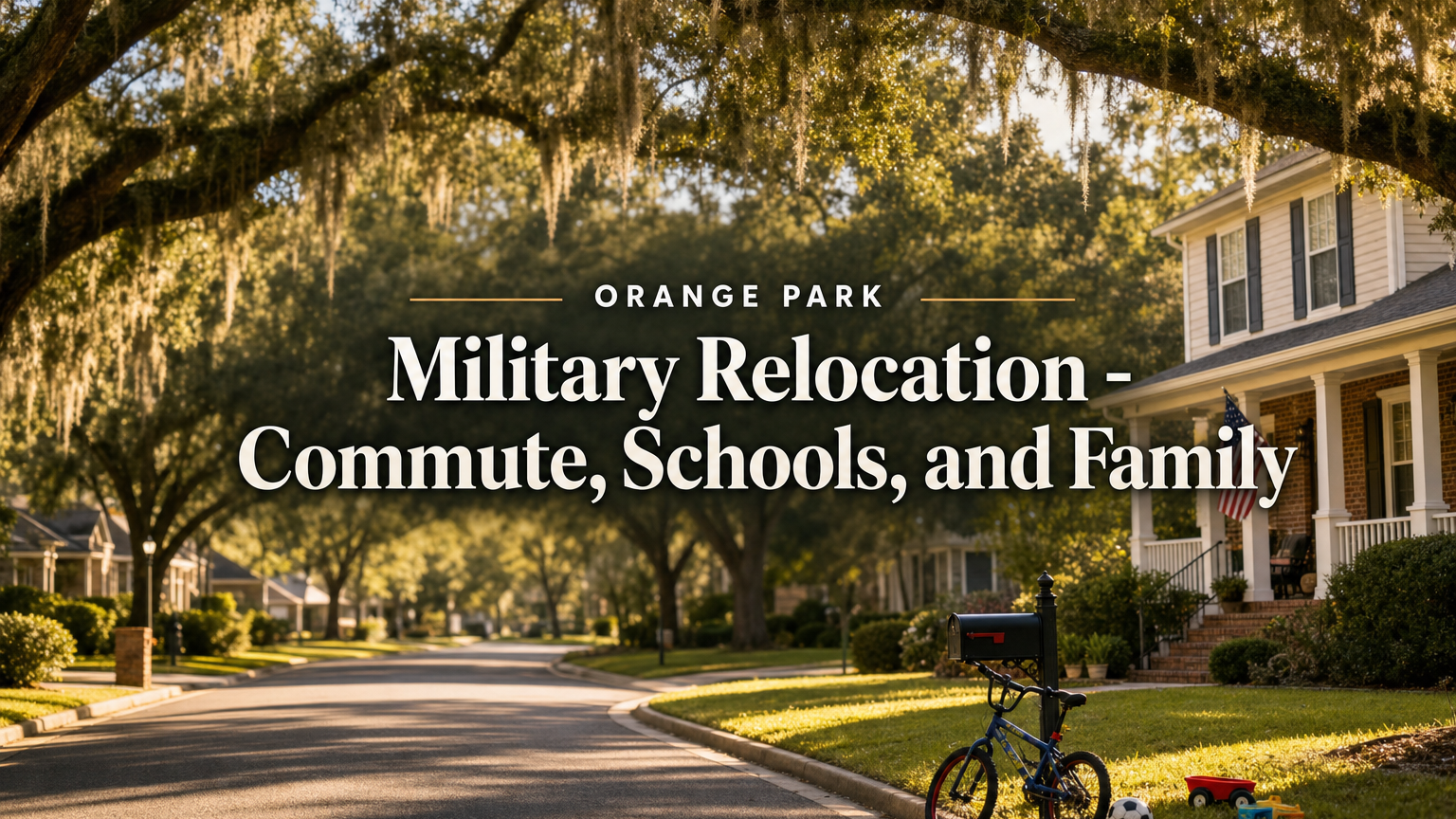
The cover illustration shows a cart driver beneath moss-draped oaks, with a house beyond the road. Neither the driver nor the location is identified, so the scene captures the appeal of a neighborhood ride without depicting a documented Nocatee home or military-family trip. Here, a similar outing to a school or amenity depends on permitted paths, crossings and entry rules.
Nocatee promotes electric-vehicle paths linking parts of the community to shopping and amenities. Its multi-use Greenway Trails serve walking, running and cycling, while the Nocatee Preserve has unpaved routes described for hiking, mountain biking and horseback riding. A line on a recreation map does not make every trail, sidewalk or crossing legal for a cart.
Florida also distinguishes an ordinary golf cart from a low-speed vehicle (LSV). Under section 316.212, public-road golf-cart travel is limited to designated roads and authorized crossings, with equipment and daytime-use rules; night operation needs the applicable authorization and required lighting/equipment. On public roads, an operator younger than 18 needs a valid learner's or driver license; an operator 18 or older needs valid government photo identification. Sidewalk use requires specific authorization, not merely a wide sidewalk.
An LSV has different obligations: title, registration, insurance, specified equipment and a licensed driver. Its ordinary roadway limit is streets posted at 35 mph or less, with a defined intersection-crossing exception and possible local or FDOT restrictions. Neither vehicle classification automatically grants permission on a private path or inside a school campus. For a desired trip, check the vehicle, signed route, crossings and destination separately.
Start with an ordinary trip: a grocery stop at Nocatee Town Center, a visit to a park or an evening event. From one home, an authorized path may make that easy; from another, the route may have a missing connection, an unauthorized crossing or a longer return than the map suggests. A school pickup by cart is not a given just because a school sits near a trail. Ask the school about its actual arrival and dismissal rules, and follow the posted route restrictions.
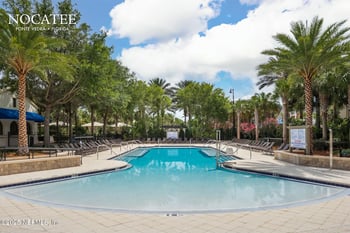
Amenities have their own access rules. Tolomato CDD's January 2026 amenity policies cover the water parks, swim and fitness facilities and other district amenities. Eligible Resident Cards, guests, operating schedules and occasional facility restrictions matter. For a qualifying non-apartment rental, the tenant generally needs a lease and the owner's release of amenity rights; apartment tenants have a different process. Simply living at an address does not entitle every occupant to a card. A publicly accessible store is not the same as a resident-controlled pool.
A cart may replace some local car trips, but it cannot be assumed to replace an installation commute, a medical visit across Jacksonville or child care transportation. Whether a household needs one car, two or another arrangement depends on overlapping schedules and permitted trips, not a rule of one vehicle per employed adult. Coastal Oaks homes can be one property search to examine in relation to actual roads, neighborhood rules and access documents, without assuming gated entry proves any particular cart privilege.
A Nocatee golf-cart map is the starting point for three checks
Route: What connection does the map show from this address, and are its segments and crossings permitted for this vehicle?
Destination: Does the school, amenity or other property allow that arrival and entry?
Household: Does the cart still make sense when someone is on duty, children need collection or the weather changes?
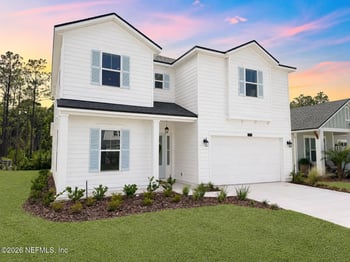
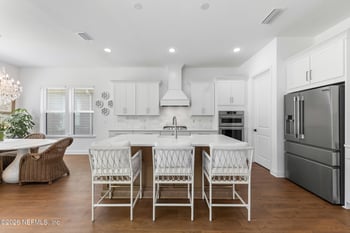
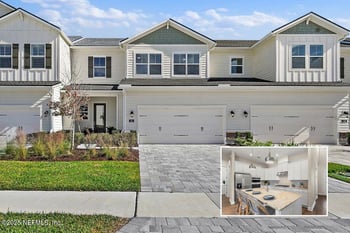
Once the commute and care plan work, the housing decision is more than a rent or mortgage quote. Nocatee contains different home styles, construction ages, association arrangements and resale properties. A gate, builder label or subdivision name does not establish today's price tier, fee total or future resale result. The costs and rights need to be tied to the parcel or lease.
A community development district (CDD) is a public special-purpose government that may assess properties for infrastructure debt and ongoing operations. A homeowners association (HOA) is a separate private association with its own dues and rules; a home may have more than one applicable association. Tolomato CDD's published fiscal 2027 assessments distinguish bond debt service from operations and maintenance (O&M), for the fiscal year October 1, 2026 through September 30, 2027. Paying off a parcel's applicable bond debt does not erase ongoing O&M. The posted schedule is only a reference: later payoffs and newly platted parcels may not be reflected. Confirm the home's CDD or assessment area; for an exact bond-debt payoff, request that parcel's estoppel letter from the district rather than relying on a nearby home's figure.
The tax line deserves equal care. A seller's homestead-influenced tax bill may be lower than the next buyer's post-purchase burden; a newly built home may initially have land-only or incomplete improvement values. Use the correct county property appraiser and buyer-specific estimate. The St. Johns tax estimator may already include non-ad-valorem assessments — charges based on a unit or service rather than property value — such as applicable CDD and solid-waste charges. Check the breakdown before adding those costs again. Get insurance quotes for the actual roof, building and coverage. Standard homeowners coverage generally does not include flood damage; a FEMA flood map, evacuation information and an insurer's premium quote answer different questions.
For an ownership comparison, put mortgage principal and interest, mortgage insurance if applicable, buyer-estimated taxes, home and any flood coverage, CDD and HOA obligations, utilities, upkeep and repair reserves on one page. Count taxes or insurance collected through the mortgage escrow only once; escrow is a payment method, not a second tax. Dividing an annual district assessment by 12 helps compare budgets but does not mean the CDD sends monthly bills. Keep down payment, closing, shipment-related outlays and cash reserves separate from recurring obligations.
As you review actual homes, Crosswinds listings and Woodland Park listings offer two more sets of addresses to investigate. Their listing pages do not independently establish a cheaper HOA arrangement, price tier, school assignment or current CDD balance.
For a rental, compare base rent, deposit, lease length, utilities, pet or parking charges, renters insurance, maintenance responsibilities and any separately billed amenity or association costs. A landlord's property tax or CDD bill does not automatically become an additional tenant invoice; the signed lease controls which expenses a renter owes. Confirm the tenant's amenity eligibility and card process in writing: qualifying non-apartment renters need a signed lease and the owner's Amenity Release Form, while apartment management submits tenant names, unit numbers and lease terms through a separate Resident Card process. An advertised pool is not a usable benefit until the applicable access steps are complete.
A qualifying military move or deployment may allow residential lease termination under the Servicemembers Civil Relief Act. But orders, required notice and effective dates matter; the words "military clause" alone do not settle your rights, and a waiver deserves legal review. The installation legal assistance office can review the actual lease. Navy Housing Service Centers at NAS Jacksonville and Mayport provide off-base referrals and lease assistance. The Housing Early Assistance Tool (HEAT) can start contact with Navy housing before departure, but neither a request nor a listing promises an available home.
Buying raises a different question: if reassigned sooner than expected, could the household manage the selling costs, uncertain sale timing, maintenance and possible overlap while still holding emergency cash? There is no universal two-year break-even point. Basic Allowance for Housing (BAH) varies by pay grade, duty location, dependent status and applicable rate year; choosing Nocatee does not itself change the duty-location basis or guarantee that all property costs are covered. PCS moving entitlements are separate from monthly BAH.
Ask for the documents behind the advertised home
If Nocatee's amenities appeal to you but the duty trip or housing commitment does not, the next step is not simply to move the search pin a few miles. The alternatives are different places with different school systems, routes and recreation rights. Bartram Park and Julington Creek, in particular, should not be grouped into one St. Johns County option.
How the nearby search areas differ
Nocatee: Mostly St. Johns, partly Duval; paths and master-planned amenities, but address-specific school zoning, cart permissions and CDD/HOA commitments.
Bartram Park: Jacksonville/Duval communities around Bartram Park Boulevard and Old St. Augustine Road; I-95 and I-295 approaches worth testing for a west-bank commute. The broad label is not one subdivision.
Julington Creek Plantation: Northwest St. Johns County near SR 13 and Race Track Road. Its CDD includes most, not all, of the plantation, and separate recreation membership may matter; the wider Julington Creek label also reaches Jacksonville.
Durbin Crossing / Durbin Park: The former is a St. Johns residential community; the latter is a separate shopping development. SR 9B, Peyton Parkway and Race Track Road may change a regional trip.
The Beaches: Atlantic Beach, Neptune Beach and Jacksonville Beach offer different coastal Mayport approaches and Duval school zones; flood exposure, property conditions and gate access vary by address.
For comparison, see Nocatee, Bartram Park and Durbin for the road and neighborhood distinctions, or Mayport-area PCS neighborhoods for coast-side alternatives. Neither general area name establishes a shorter commute, transferable amenities or better-priced housing for every household. Compare actual addresses under the same school, route and cost questions.
There is an easy trap in a military move: the house can be ready before the shipment, the school can accept records before the child care program has a place, or the cart route can look perfect until a crossing is checked. None of those problems means Nocatee is the wrong choice. They mean the home's physical location, access rights and arrival commitments need to be considered together.
Before signing for a particular Nocatee home
For the household-goods move, your local transportation office is the main source for scheduling, storage, entitlement and moving-day problems. Current Military OneSource guidance identifies the Defense Personal Property System (DPS) for arranging eligible moves, tracking shipments and filing claims. First-time movers, separating members and retirees must speak with their local transportation office before scheduling in DPS. The applicable household-goods weight allowance depends on orders and circumstances; exceeding it can create personal costs. A possible Dislocation Allowance partially offsets qualifying move expenses, not the price of a chosen home. None of these establishes a guaranteed delivery date.
That leaves a practical choice rather than a universal ranking. A family whose school arrangement, gate trip and permitted local errands line up may find Nocatee's neighborhood infrastructure worth the extra planning. Another household may gain more by living nearer a particular gate, child care program or west-bank route. You can use Palm Crest property listings as another address-level starting point. The right answer belongs to the home and the household's real week — not to a commute slogan.