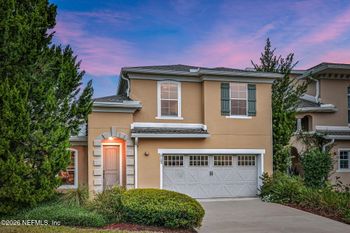



The White House issued an order on October 22, 2026, aimed at making private mortgage insurance easier to cancel for eligible borrowers. But Jacksonville homeowners already paying PMI shouldn't assume the new initiative will remove that monthly expense.
Under the executive order, the director of the Federal Housing Finance Agency (FHFA) would direct Fannie Mae and Freddie Mac to establish a pilot only after determining that doing so is in the best interests of Fannie Mae and Freddie Mac or FHFA, and also in the American public's best interests. Periodic reviews would identify borrowers who appear to meet cancellation requirements. Actual cancellation would still depend on applicable equity, safety-and-soundness, legal and contractual conditions. Only mortgages originated after the pilot is established would be covered.
For existing homeowners, the more immediate opportunity lies in cancellation rules already available. Depending on the loan, you may be able to remove PMI without refinancing, using either the home's original value or an approved review of its current value.
Here are three questions worth taking to your mortgage servicer.
1. Does your mortgage qualify for PMI removal?
Private mortgage insurance generally applies to conventional mortgages when borrowers make smaller down payments. FHA mortgage insurance has different cancellation rules, and lender-paid mortgage insurance follows different terms. VA-backed loans don't require PMI.
The Consumer Financial Protection Bureau's PMI cancellation guidance explains federal rights for covered conventional mortgages on single-family principal residences that closed on or after July 29, 1999.
Ask your mortgage servicer whether your loan has borrower-paid conventional PMI, who owns or guarantees it and which cancellation routes apply. Fannie Mae, Freddie Mac and other investors may have additional servicing requirements or earlier cancellation options.
2. Can you remove PMI using the home's original value?
For many covered conventional loans, homeowners can request cancellation when the mortgage's principal balance is scheduled to reach 80% of the home's original value.
Extra principal payments can also help. If you've paid the balance down to 80% ahead of schedule, you may be eligible to request cancellation earlier.
The original value generally means the lower of the purchase price or original appraised value. For a refinanced mortgage, it generally means the appraisal value at refinancing.
The CFPB says the request must be made in writing. The borrower must be current, have an acceptable payment history, certify that there are no junior liens, such as a second mortgage or home-equity line of credit secured by the home, and provide evidence, if required, that the property's value hasn't declined below its original value.
For covered loans, PMI generally must terminate when the principal balance is scheduled to reach 78% of original value, provided payments are current. Paying the balance down to 78% early doesn't automatically change that scheduled termination date.
Another automatic termination rule generally applies at the midpoint of the original amortization period when the borrower is current.
Ask your servicer for the scheduled PMI cancellation and termination dates, along with the conditions you must meet.
3. Could your home's current value help remove PMI sooner?
Suppose you've owned a Jacksonville home for several years and comparable homes nearby have recently sold for more than they did when you purchased.
Could that increased value help you cancel PMI before reaching the original-value threshold?
Possibly. Some conventional loans have a separate cancellation process based on current property value.
Under Fannie Mae's mortgage-insurance termination requirements, a borrower-initiated current-value review for a one-unit principal residence or second home generally uses these thresholds:
- Loan aged two to five years: The balance must be 75% or less of current property value.
- Loan older than five years: The balance must be 80% or less of current property value.
- Qualifying property improvements: The usual two-year minimum may be waived for substantial value-increasing improvements, with an 80% loan-to-value threshold and other conditions.
These are Fannie Mae requirements for the specified property types and cancellation route, not universal standards for every conventional mortgage.
For the improvement exception, ordinary upkeep doesn't count simply because it was expensive. Qualifying work must increase the property's value.
Payment history matters as well. Fannie Mae generally requires the loan to be current, with no payments 30 or more days late in the previous 12 months and none 60 or more days late in the previous 24 months, subject to specified exceptions.
Before paying for an appraisal, ask your servicer about its approved valuation process and any fee. Fannie Mae's current-value procedure requires an approved property valuation that includes an interior and exterior inspection.
Jacksonville homeowners also need to distinguish market value from their county tax assessment.
Duval County's Save Our Homes rules limit annual assessed-value increases for qualifying homesteaded properties. As a result, the assessed or taxable value can be substantially different from what a home might sell for today.
The county's assessment isn't a substitute for the valuation required by the servicer. Recent comparable sales can help you decide whether to ask about a current-value review, but the servicer determines eligibility and acceptable evidence.
Home904's Jacksonville housing market study explains why comparing the right homes matters when estimating current market value.
For help gathering Jacksonville property information or identifying relevant comparable-home questions, contact Susie Takara through Home904's buyer research service. She can help organize the property questions to discuss with your servicer.