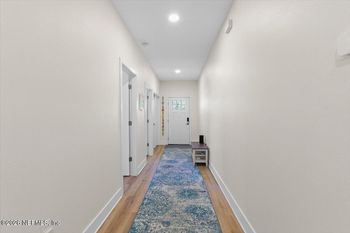
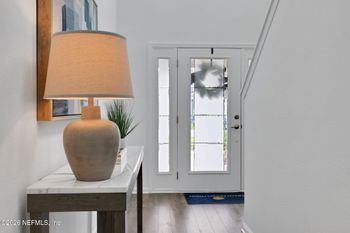
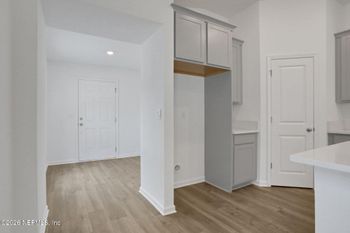
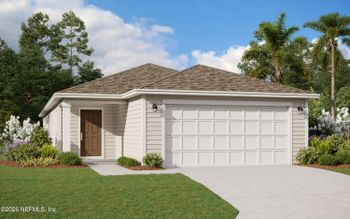
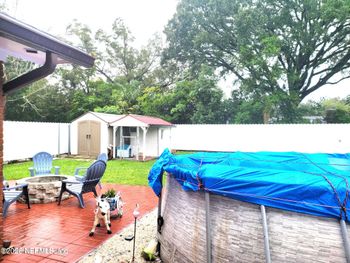
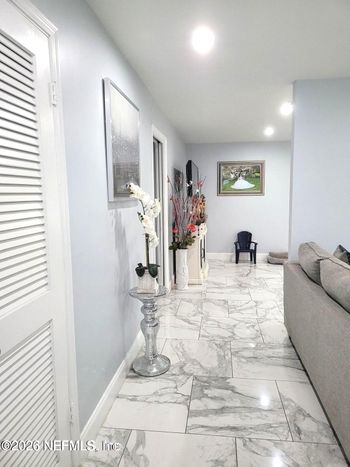
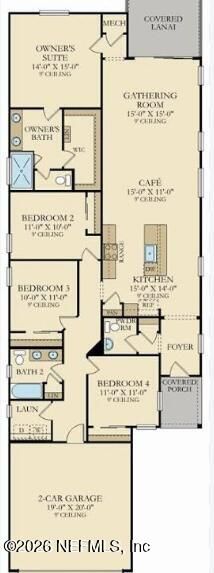
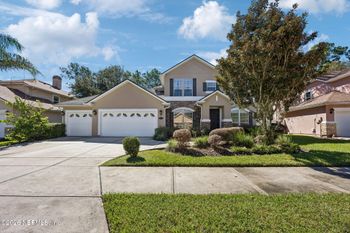
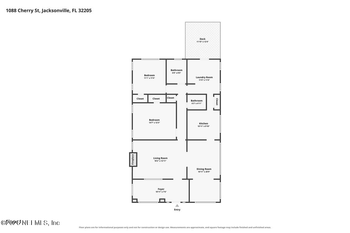
$364,999
Active
4
Beds
2
Baths
2489
Sqft
0.52
Acres
9278 Hawks Run Ln, Jacksonville, FL 32222
MLS#: 2169312



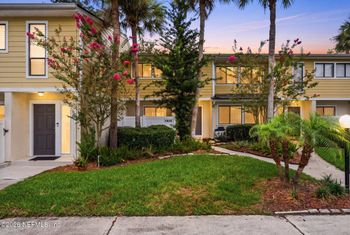
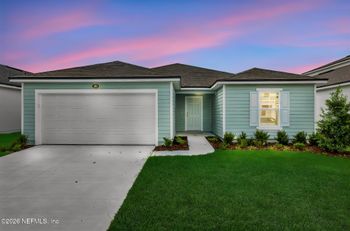
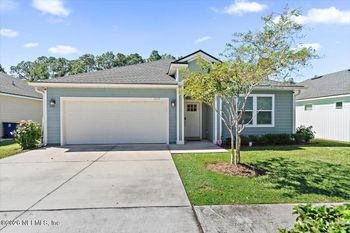
Illustration: A coastal-style Northeast Florida home introduces the taxes, insurance, community fees, utility systems and monthly costs to check for each property.
TL;DR
For a first home in Northeast Florida, work out three numbers for the actual address: the cash needed through closing, the full cost of ownership each month, and the money to keep available for repairs or surprises. A seller’s tax bill, a lender’s preliminary payment and an old listing’s HOA amount are starting clues, not a completed budget. Loan type, insurance terms, special assessments, home condition, and water or sewer service can change the comparison.
Two houses can have the same asking price and leave you with very different amounts to spend. One might be in a newer St. Johns County community with a homeowners association (HOA) and a Community Development District (CDD) assessment. Another might be an established Jacksonville home without those fees but with a roof or cooling system that needs attention. Neither description tells you which house will cost less to own.
The same question comes up at the Beaches—Jacksonville Beach, Atlantic Beach and Neptune Beach—as well as in Fleming Island, Green Cove Springs and Nassau County. Some homes have private wells or septic systems. Others have public utilities, association obligations or water-related insurance considerations. The costs follow the property and your financing, not a countywide price tag.
Start with the money you need to complete the purchase. Then look at what leaves your account each month. Finally, decide what you can afford to keep in reserve once the moving boxes are gone.
The down payment is only one part of the cash needed to buy a house in Florida. Before closing, you may pay for a home inspection, specialist inspections, an appraisal or other services as the transaction progresses. An earnest-money deposit is money delivered under the purchase contract; when credited at closing, it is not a second down payment to add again. The contract and actual payment records control its treatment.
At closing, the buyer’s share of charges can include lender fees, settlement and title services, recording charges and applicable transaction taxes. It may also include prepaid homeowners insurance, interest for part of a month, and an initial deposit into a mortgage escrow account used for later tax and insurance bills. A prepaid insurance premium buys coverage; an escrow deposit sets aside money for future bills. They are not the same charge, even if both appear on the closing paperwork.
Use your lender’s Loan Estimate to plan, then compare it with the Closing Disclosure before signing. The disclosure shows the down payment, closing costs and final cash to close, accounting for amounts already paid, applicable prorations and agreed seller or lender credits. Ask the lender or closing agent to explain any difference. Your money for movers, utility setup and immediate work is still needed even if it never appears on that disclosure.
The practical question is not simply, “How much are closing costs?” It is, “How much cash must I have available before closing, how much must I bring on closing day, and what will remain afterward?” A small change in the amount due can matter if it leaves nothing for the first repair.
The mortgage payment deserves a closer look than principal and interest alone. On a conventional loan with less than 20% down, private mortgage insurance (PMI) may be required to protect the lender. Depending on the loan, it may be charged monthly, upfront or in a combination.
Federal Housing Administration (FHA) loans have their own upfront and ongoing mortgage-insurance charges. U.S. Department of Agriculture (USDA) loans use a different guarantee-fee structure. Department of Veterans Affairs (VA) purchase loans have no monthly PMI or FHA-style mortgage-insurance premium, although a funding fee may apply and some borrowers are exempt. Those differences can change both closing cash and the monthly payment. Compare the actual loan terms using the Consumer Financial Protection Bureau’s explanation of mortgage insurance and VA purchase-loan guidance, rather than applying one PMI rule to every first-time buyer.
Your Loan Estimate also shows an estimated total monthly payment, including specified mortgage-insurance and escrow amounts. Read what is included. If property taxes or homeowners insurance are collected in escrow, do not add the same bill a second time to your monthly comparison. If HOA dues, a separately billed district charge or another expense is not included, you still need to budget for it.
The seller’s current property-tax bill is not a safe estimate for what you will pay. A longtime owner in Jacksonville, Fleming Island, St. Augustine, Fernandina Beach or Orange Park may have a substantially different assessed value from a new buyer. Florida’s Save Our Homes protection limits increases in a qualifying homesteaded owner’s assessed value, but the accumulated benefit generally does not transfer with an ordinary sale.
For example, after an ordinary purchase in 2026, an existing Save Our Homes assessment difference is generally removed when the property is assessed at just (market) value on January 1, 2027. Certain ownership transfers have exceptions. That does not mean the next bill is automatically a fixed percentage of the sales price: the property appraiser determines just value, then assessment rules, exemptions, taxable value, local tax rates (millage) and applicable special assessments enter the calculation. Florida’s Save Our Homes guidance explains the distinction.
A Florida homestead exemption may reduce eligible taxes on a qualifying primary residence, but timing matters. Eligibility is tied to January 1, with a usual March 1 application deadline. After the first year of a qualifying homestead, Save Our Homes generally limits annual assessed-value increases to 3% or the change in the Consumer Price Index, whichever is lower. It does not cap the entire tax bill. Qualified owners moving from a previous Florida homestead may also have portability benefits, but a first-time buyer with no qualifying prior homestead should not assume those savings.
Instead of multiplying the price by a statewide percentage, start with the parcel and its taxing district. Check the correct property appraiser’s estimate, the tax collector’s itemized bill, and any separately billed assessments. Florida Department of Revenue’s property-tax guidance and the state directory of county property officials can help you find the right local offices.
Taxes based on taxable property value are called ad valorem; separate charges for certain services or districts are often non-ad valorem assessments. The estimator itself matters. The St. Johns County parcel tax estimator can include non-ad valorem items already associated with the parcel, such as a CDD assessment or solid-waste charge, using the most recently available figures. The Nassau County tax estimator, by contrast, estimates ad valorem taxes and does not include non-ad valorem special assessments. If you compare two estimates without recognizing that difference, you could undercount one home or count a CDD charge twice on the other.
For Duval/Jacksonville, Clay and other addresses, confirm the municipality, tax district and assessments shown on the specific record. On new construction, a current bill based on land or an incomplete building can be particularly misleading; ask the property appraiser how the completed home will be assessed. Treat every estimator as a planning tool, not a guarantee of the next bill.
Taxes can also change the payment after you move in. If the mortgage servicer collects taxes through an escrow account, a higher bill can lead to higher future monthly collections and, sometimes, a shortage that must be repaid. Your principal and interest could remain unchanged on a fixed-rate loan while the total amount due rises.
Homeowners insurance in Northeast Florida is not a flat ZIP-code charge. A newer concrete-block home away from the water can quote differently from an older wood-frame home in an established Jacksonville neighborhood or a house near Amelia Island, Atlantic Beach, Jacksonville Beach or Ponte Vedra Beach. Similar asking prices do not mean similar premiums.
Ask for an address-specific quote using the actual roof, construction, updates and coverage needs. Look beyond the annual premium to exclusions, wind and hurricane coverage, and deductibles. A hurricane deductible expressed as a percentage of insured dwelling value can leave you paying thousands of dollars toward a covered loss. Check the insurer’s conditions for issuing coverage as well as the price; Florida’s homeowners-insurance overview provides a useful explanation of what policies can contain.
Roof type and condition, electrical wiring, plumbing, heating and cooling systems, and wind-resistant construction details can affect an insurer’s decision. That matters in older parts of Jacksonville such as Riverside, San Marco, Arlington, Ortega and Murray Hill. Yet a home’s age is not a repair estimate: an older house may have updated systems, while a newer one can still need work.
Florida has protections against roof decisions based solely on age. An insurer cannot refuse to issue or renew coverage just because a roof is under 15 years old. For a roof at least 15 years old, the owner must be allowed an authorized inspection at their expense before replacement is required, and the insurer cannot reject coverage solely on age if that inspection finds at least five years of useful life. Other roof conditions and underwriting factors still matter. See Florida’s roof-age insurance protections; obtain the actual carrier’s requirements before assuming a replacement is inevitable or unnecessary.
A wind-mitigation inspection documents qualifying features such as roof-to-wall connections and opening protection. Eligible credits affect the windstorm portion of a premium; they do not promise a fixed discount on the whole policy. For the inspection details, see our wind-mitigation inspection guide.
Homes near the Atlantic, Intracoastal Waterway, St. Johns River, marshes or tidal creeks deserve a closer look at water exposure and policy coverage. Standard homeowners policies generally exclude flood damage. National Flood Insurance Program coverage comes through a separate policy; private flood coverage can be standalone or, with some products, an endorsement. The form, limits, deductible and lender acceptance all matter, not just whether someone calls it “flood insurance.” See Florida’s flood-insurance guidance.
Planned communities can be attractive to a first-time buyer: newer floor plans, defined common areas and amenities may be part of the appeal. You may encounter Community Development Districts and homeowners associations in parts of St. Johns County and Clay County, but neither charge is automatic for every planned community. Check the actual property’s obligations rather than assuming them from the community name.
These obligations can change the cost of owning a home even when they are not part of a lender’s advertised payment. They also can be assessed or billed in different ways. Find out exactly which organizations are involved before comparing that home with one that has few or no community charges.
A Community Development District (CDD) is a governmental special district, not a private homeowners association. Its assessments can pay debt service on infrastructure bonds and continuing operations and maintenance for district facilities or services. Debt tied to a lot may eventually be retired without eliminating the district’s ongoing operating assessment.
Some CDD assessments appear as non-ad valorem items on a property tax bill; others may be billed separately. The district’s current budget, assessment schedule and the charges allocated to the actual parcel are more useful than an old listing’s annual figure. Ask whether bond debt remains and what the operations-and-maintenance amount is. Also distinguish any separate private or developer-related charge rather than assuming it is a CDD fee. For the local framework, see our explanation of CDD fees in Northeast Florida.
HOA dues can vary even within the same master-planned community. One section may have a sub-association, lawn care, a different amenity package or other maintenance responsibilities. A condominium can involve a different allocation of building upkeep and insurance. Confirm what the actual documents cover, what remains the owner’s responsibility, and whether there is a master association as well as a neighborhood association.
An association estoppel certificate provides a snapshot of certain current dues, balances and obligations within its scope; it does not promise that future dues or assessments will stay unchanged. Before closing, use our guide to Northeast Florida HOA documents to know what to request. “Maintenance included” does not mean you have no personal insurance, deductible, repair or special-assessment exposure.
In established Jacksonville neighborhoods such as Riverside, San Marco, Murray Hill, Ortega and Arlington, a buyer may be drawn to an older home’s layout or appearance. But its updates and maintenance history tell you more about potential repair costs than the neighborhood name or asking price.
With older homes, the important expenses often sit in the systems: roof, electrical, plumbing, heating and cooling, windows, drainage, insulation and foundation. A beautiful kitchen does not tell you when an air conditioner will need replacing. But do not assume all older houses need the same work. Recent permits, actual inspection findings and repair estimates are better evidence than the year built.
For some older Florida homes, an insurer asks for a four-point inspection of the roof, electrical, plumbing, and heating/cooling systems. The carrier uses it for underwriting and may request particular repairs or additional documentation. A general home inspection serves the buyer’s broader condition review; a wind-mitigation inspection evaluates different features. None of them is interchangeable with a lender’s appraisal or a specialist’s repair assessment.
Ask what the inspector actually examined and put unresolved issues into the offer decision. If the electrical panel, roof or plumbing raises concern, obtain the relevant specialist’s estimate instead of treating a favorable insurance report as a clean bill of health. See our Florida four-point inspection guide for the insurance-specific checks.
Older windows, less insulation, aging cooling equipment or additions that are hard to cool can contribute to higher summer electric bills. Recent utility records may help you ask better questions, but another household’s usage and thermostat settings are not your future bill. You still need to consider yard drainage after heavy rain, parking arrangements and, if the home uses public sewer, which parts of its connecting pipe the owner must maintain and whether they need work.
Where will you park after work? How will the yard drain? Is the roof or cooling system nearing a likely repair? Those questions make an established neighborhood easier to compare with a newer subdivision without reducing the decision to age versus amenities.
An inspection report becomes useful when it changes what you do next. If it flags a roof problem, questionable wiring or drainage trouble, ask the appropriate specialist what the repair would cost and when it is needed. Work required to secure insurance before closing is a different cash question from equipment you may replace a few years later; both should affect what you offer and what you retain in savings.
Keep a repair reserve beyond cash to close. Size it around the home’s known condition, likely replacements, private equipment and insurance deductibles rather than relying on a generic percentage of purchase price. A house with a newly replaced roof may need a different near-term cushion from one with aging heating and cooling equipment or a questionable drain field. Even a newer home can need unexpected work.
What happens when the first major bill arrives matters as much as the monthly payment. If one home uses nearly all your savings at closing and another leaves room for repairs, that difference belongs in the comparison before you write an offer.
In parts of Clay County, rural Nassau County and less urban areas of Northeast Florida, homes may use septic systems and private wells instead of public sewer and water. That can be normal for the property, but it changes the buyer’s responsibilities. Confirm the service at the specific parcel, rather than assuming a Green Cove Springs, Middleburg or rural address automatically has one system or the other.
A home on septic and well might not have the same utility bill as a home on public service. It still has costs: pumping and maintaining a septic system, possible drain-field repairs, a well pump and pressure tank, water treatment and periodic testing. Public water and sewer can also involve owner-maintained service lines, pumps or connection charges. Compare the actual systems, not the assumption that one arrangement is cheaper.
A standard home inspection typically does not fully evaluate a septic system or private well. For septic, ask for permits and records, system capacity, the location of the tank and drain field, and an inspection appropriate to the system. A receipt showing that a tank was pumped is useful history, not proof that the drain field functions. See our septic-versus-sewer guide and EPA septic-system care guidance for why ongoing care matters.
Private well owners are responsible for the safety of their water. Florida Department of Health’s private-well guidance recommends testing for bacteria and nitrate at least annually. Florida does not impose a general statewide water-sampling requirement simply because an existing private-well home is sold, although a lender, contract, local rule or particular well work may introduce requirements. A certified laboratory or county health department can help determine the appropriate tests.
A house with extra land may still be the right choice. Just make sure that a failing drain field or expensive water treatment does not turn a comfortable-looking payment into a tight ownership budget.
Flood exposure is not limited to houses with waterfront views. A property a few streets from a waterway or in a low-lying inland drainage area may face a different hazard from the home next door. That is why a county, city or neighborhood name is not enough to identify the building’s flood designation.
Start with the building on the FEMA Flood Map Service Center, then ask about the lender’s actual flood determination, available elevation information, seller disclosures, and any known flooding or drainage history. A Special Flood Hazard Area is mapped for a flood with a 1% annual chance of occurring. Shaded Zone X indicates moderate mapped hazard; unshaded Zone X indicates minimal mapped hazard. Neither Zone X category guarantees that a home will stay dry. Effective FEMA maps, evacuation zones and a property’s history answer different questions.
For a building in a Special Flood Hazard Area, a federally regulated or insured lender generally requires flood insurance on the secured loan; a lender may also require it elsewhere. A homeowners insurer can set its own flood-coverage requirement. For example, Citizens Property Insurance Corporation requires flood coverage for qualifying new and renewing personal residential policies with wind coverage, including some homes outside a Special Flood Hazard Area. Outside those areas, its phased schedule is based on Coverage A (the insured dwelling limit), with stated exceptions for condominium unit-owner and tenant-content policies and policies without windstorm or hail coverage. Even when neither lender nor insurer requires it, flood coverage remains a decision to make based on the building’s exposure and the potential cost of a loss.
If coverage is required, ask when the proposed flood policy can take effect and whether it satisfies both the lender’s and homeowners insurer’s terms, as applicable. Use our Northeast Florida flood-zone guide to understand the map designation without assuming the map alone settles the decision.
Amelia Island, Fernandina Beach, Jacksonville Beach, Atlantic Beach, Neptune Beach and Ponte Vedra Beach offer different settings and ways of living. One buyer may value ocean access; another may favor a larger inland lot. But neither preference establishes a flood premium. Even neighboring homes can differ in elevation, building details, drainage and insurance requirements.
Also weigh wind coverage, hurricane deductibles, salt-air wear and evacuation planning where relevant. The point is not to rule out coastal living. It is to understand what you are buying and what it would cost to keep it protected, repaired and usable after a storm.
Before you make an offer, put each home’s costs into one working budget. Some figures will come from early lender or settlement estimates; others need an insurance quote, a tax record or an inspection. Keep purchase cash, continuing bills and money held for surprises separate so an affordable payment does not disguise a costly move-in.
Mark which figures are still provisional. A tax estimate cannot promise the next bill, and an insurance quote may depend on inspection results. That uncertainty is another reason to keep money available after the purchase rather than using every dollar at closing.
Imagine three similarly priced homes: one in a hypothetical St. Johns County planned community whose tax estimate already includes a CDD assessment, an older Jacksonville house with a roof concern needing a contractor’s quote, and a Clay County home on septic and well awaiting a specialist’s findings. For the first home, check that the district fee is not added twice. For Jacksonville, get the roof estimate before deciding what to request or keep in savings. For the Clay County property, find out whether the private systems need work before assuming the costs fit. The asking prices alone cannot settle those choices.
Once the costs are visible, they can shape your inspection strategy, allowable negotiated credits, repair requests or decision to walk away. Our guide to making an offer on a Northeast Florida home explains that next step. If you are still narrowing your search, choosing where to live in Northeast Florida can help you decide which locations fit your daily life before comparing individual houses.