New - 3 Hours Ago


Home904 • St. Johns + Duval Counties
Imagine two homes on your saved list: one advertised in Durbin Crossing, the other in Nocatee’s Cypress Trails. Their neighborhood names point to different counties. Durbin Crossing is in St. Johns County; Nocatee’s 2026–27 school guide identifies Cypress Trails as a Duval County neighborhood. You would start with different school-district and tax-record systems, but still check each exact address rather than treating the listing label as proof of its county or school assignment.
The names hide another distinction. “Durbin” can refer to several places in northwest St. Johns County, while Nocatee is one master-planned community made up of different neighborhoods. That matters when you compare road access, nearby shopping and community amenities. For the larger county decision, see Jacksonville vs. Clay County vs. St. Johns County.
Northwest St. Johns County
Durbin Crossing has an established community development district. The Pavilion at Durbin Park is commercial development, not another name for that neighborhood.
More context: Living in Durbin (St. Johns), FL.
St. Johns and Duval counties
The community has its own neighborhood directory, but being in Nocatee does not make every home part of the same county, association or building phase.
Explore further: Living in Nocatee: The Unofficial Guide.
Cypress Trails isn’t the only Nocatee neighborhood on the Duval side. The community’s 2026–27 neighborhood zoning guide also identifies Brookwood, The Palms, The Villas and Timberland Ridge in Duval County. It lists The Palms Town Homes separately from The Palms, a reminder not to treat similar neighborhood names as interchangeable. That guide helps you find the right starting point; the applicable school district must resolve the assignment for the address, grade and school year.
The county line determines which district’s records to use. Finding the assigned school for the intended grade and year is only the first answer; choice options and transportation have their own rules.
A 2026–27 lookup is a snapshot, not an assignment for every future school year. Keep the dated result for your notes and confirm again when the move and enrollment year are set. District boundaries, grade arrangements and enrollment rules can change.
Buying a home that isn’t finished yet? St. Johns’ enrollment guidance says a projected builder closing alone does not establish registration without the required closing or current-lease documents. If your family is temporarily living in St. Johns County while waiting for the home to be finished, you may apply for an Out-of-Zone Hardship Waiver, but the application does not guarantee approval. Verify timing directly with the district before relying on it.
When a school year or a lease end sets your move date, a “new home” sign will not tell you when you can get the keys. Durbin Crossing’s district was established in 2003, but that does not date the houses; construction near Durbin Park might be commercial. Nocatee’s developer distinguishes its neighborhood directory from neighborhoods with no new-home opportunities. That classification concerns new builder offerings, not resale availability.
A completed builder home raises questions about final condition, possession and warranty coverage. An unfinished builder-contract home also brings construction milestones and what happens if work runs late. A recent resale or older resale calls for a careful look at condition and negotiated terms. None of these categories guarantees the closing date; the signed agreement matters.
For the inspection sequence, closing issues and warranty follow-up in greater detail, see Buying New Construction in Northeast Florida. The critical choice is what the particular home and signed terms require, not an assumption about either community.
The drive comparison starts before the highway. Two homes that look equally close to I-95 on a map may lead you out through very different subdivision entrances and connecting roads. A distance on the screen does not yet tell you how you will reach work, school or the last stop on the way home.
Longleaf Pine Parkway and St. Johns Parkway are useful landmarks for Durbin Crossing, but “Durbin” listings can start on different roads. One entrance might lead along Race Track Road to Peyton Parkway and SR 9B; another could use St. Johns Parkway toward SR 9B, while a CR 210 approach reaches I-95 at exit 329. SR 9B connects with I-95 and I-295; CR 210 has no direct I-295 interchange.
Nocatee Parkway runs between the U.S. 1 and Palm Valley Road sides, but it has no direct I-95 interchange; SR 9B does not run into Nocatee either. To reach I-95, the developer’s directions use U.S. 1 and CR 210. For a Butler Boulevard (JTB) trip, compare U.S. 1 north to JTB with CR 210 west to I-95 north and its SR 202 interchange. Southside destinations also require a connection beyond Nocatee Parkway, whether through U.S. 1 or the interstate. For Ponte Vedra or the Beaches, Palm Valley Road provides an approach toward A1A.
The road network itself is documented in the FHWA’s completed SR 9B profile, FDOT’s I-95 interchange list and Nocatee’s directions. Those sources describe connections, not how long your particular trip will take.
St. Johns County now marks the CR 210 improvement project completed. Roughly 0.7 mile between Trinity Way and Beachwalk Boulevard was widened from two to six lanes, with drainage and intersection changes. That’s a defined segment, not all of CR 210 between I-95 and U.S. 1—and completion does not establish a reliable commute time for a particular address.
Test the drive you would actually make. Start at the property’s entrance, take the exact interchange and finish at the real workplace, school or appointment entrance. Include your regular stops. Compare weekday departure and return periods that matter to you, not somebody else’s ideal midmorning trip.
Check FL511 for current incidents or traffic conditions. A test drive or a traffic snapshot shows conditions at that moment, not a promise about every weekday.
Suppose the daily trip has a grocery stop on the way home. The Pavilion at Durbin Park is a concrete shopping destination near Race Track Road and SR 9B, but that doesn’t tell you how far a Durbin Crossing address is from its entrance. Nocatee Town Center gives the other side of the comparison a named retail destination. Map the actual round trip, including turns and stops, rather than assuming proximity from the marketing name.
Shops are open to customers; neighborhood recreation may be reserved for eligible residents. Durbin Crossing’s amenity-management site describes two amenity centers, while Nocatee describes recreation and paths and maintains resident information. Before counting on a pool, path or event, ask what the home includes, whether guests are permitted and what extra fees may apply.
And if an electric cart or neighborhood vehicle is part of the plan, start with Nocatee’s designated electric-vehicle path information and applicable rules. A path on a diagram does not grant access to every road or vehicle.
An HOA figure in a listing can be only one line of a home’s ongoing costs. A community development district (CDD) is a special-purpose local government, while an HOA is a private association. Depending on the parcel, a buyer may also encounter master or subassociation dues and distinct maintenance or insurance responsibilities. That can mean a charge on the property-tax bill as well as a separate HOA invoice—even when two homes have similar asking prices.
Check the actual district boundary and records—Durbin Crossing CDD for properties within that district, or Tolomato CDD where that district applies. Some CDD assessments repay district debt; others cover ongoing operations and maintenance. Paying off the debt does not necessarily end the charges for maintaining district facilities.
The companion What Are CDD Fees in Northeast Florida? and HOA Rules in Northeast Florida explain how to read those different bills and rules. They are guides to the paperwork, not a fee quote for either house.
Return to those two saved homes. A school arrangement, an uncertain move-in date or a cost left out of the listing can change which one works. Before making an offer, settle the details that would actually affect your decision:
The Northeast Florida flood-zone guide explains why federal flood-zone labels require interpretation, rather than serving as a simple yes-or-no answer about flood risk.
Return to the two illustrative listings: Durbin Crossing points to St. Johns County, while Nocatee’s guide places Cypress Trails in Duval. That tells you which school-district and tax records to consult first; check each exact address before relying on an assignment or tax estimate. A Durbin Crossing home may offer a useful connection toward SR 9B; for regular trips to Ponte Vedra, compare the route from Cypress Trails. School-enrollment timing, an unfinished home’s closing terms or the actual HOA, CDD and insurance costs could matter more than either drive.
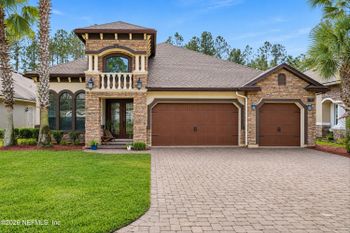
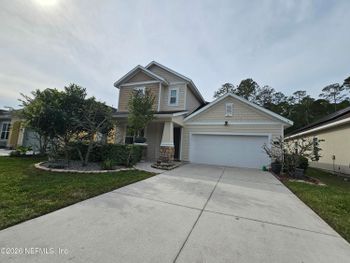
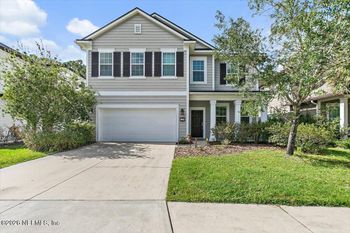
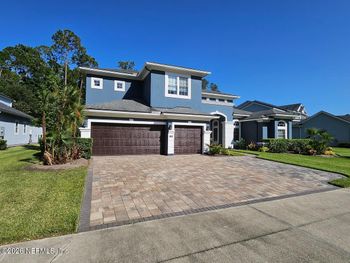
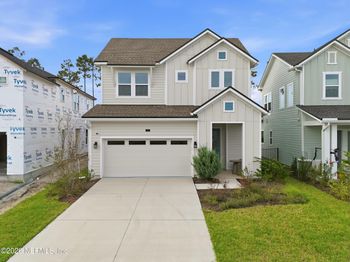
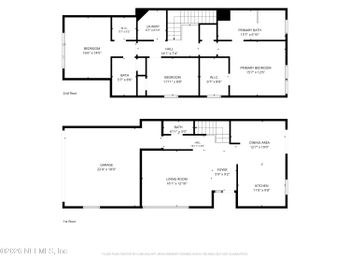
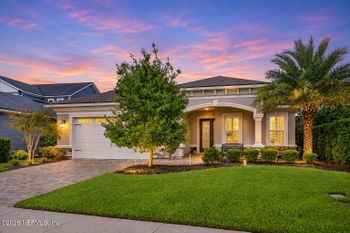
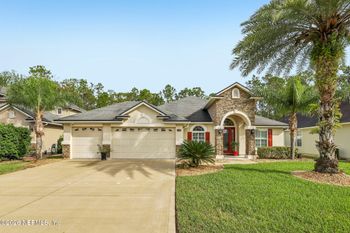
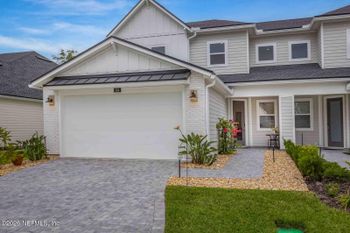
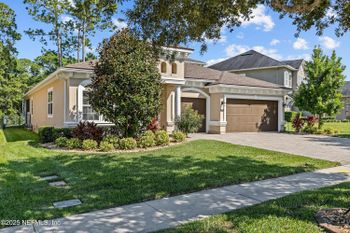
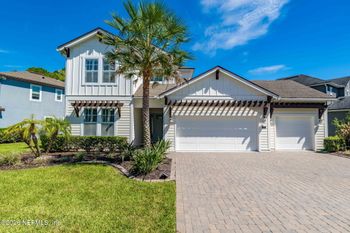
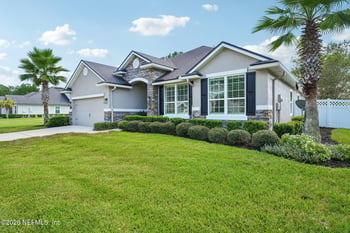
The homes shown below are a starting set, not a complete search of either area. The selection covers named communities on both the St. Johns and Duval sides; it can show Active, Pending and Coming Soon listings, stops at 18 results and has no new-construction filter. It is not a full builder inventory or a school-zone map. Use the listings to find addresses worth a closer look, and confirm each home’s current status.





FAQ