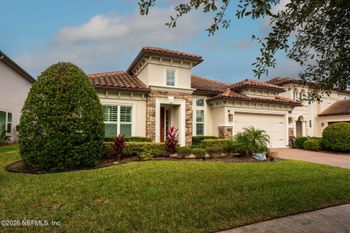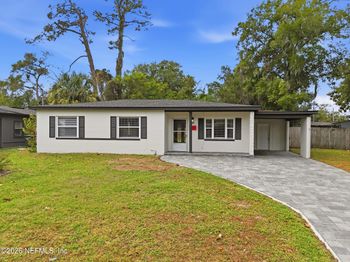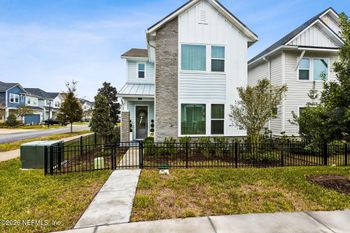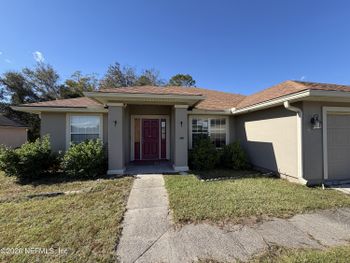
New - 1 Hour Ago
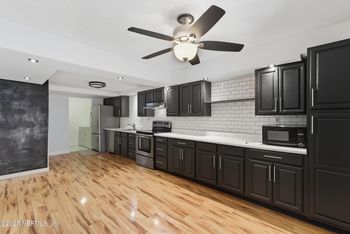
$139,900
Active
3
Beds
2
Baths
1642
Sqft
0.01
Acres
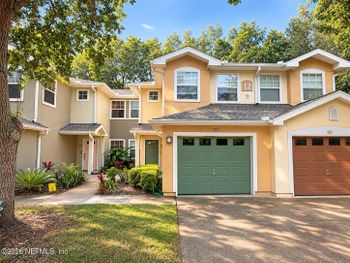
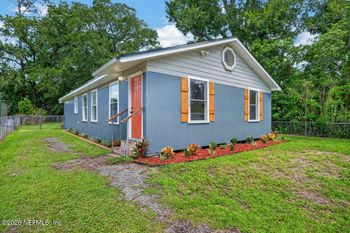
7188 Cypress Cove Rd #21, Jacksonville, FL 32244
MLS#: 2174171



Nocatee can put groceries, dining, paths, parks and resident recreation near home. It does not put every Jacksonville job, airport trip or appointment nearby. The road out depends on your village and destination: Nocatee Parkway does not connect directly to I-95. Before choosing a home, compare its actual weekday trips, walking connections and permitted golf-cart routes, school arrangements if relevant, and the full cost of ownership. HOA dues, CDD assessments, buyer-specific property taxes and insurance can change the comparison as much as an attractive floor plan.
The cover is an illustrative graphic, not a documented photograph of a particular Nocatee entrance, business, home or commute.
A grocery run and a trip across Jacksonville can tell two different stories about the same Nocatee address. You might have dinner near home on Wednesday, then spend Thursday getting to a particular office, military gate or airport terminal. That is why the useful question is not simply how far Nocatee is from Jacksonville. It is what your own week would look like from the home you are considering.
Nocatee is a master-planned community primarily in St. Johns County, with portions in Duval County. A Ponte Vedra mailing address may describe an inland Nocatee property; it does not make the home part of coastal Ponte Vedra Beach, establish the county, or determine its public-school assignment. The distinction becomes important when you compare property records, local services and a school-day route. The Nocatee developer FAQ explains the community's geography.
The label also covers different kinds of homes and access arrangements. A townhome near commercial destinations and a detached home in another village need not have the same drive, association rules or recreation access. When Nocatee's developer lists a neighborhood as sold out, that describes its new-construction offerings, not whether resale homes are available. For the larger picture of the villages and amenities, see Home904's broader Nocatee guide.
Nocatee Town Center is the community's own commercial district, with groceries, food, services and other daily stops. St. Johns Town Center is a different shopping and dining destination on Jacksonville's Southside, near J. Turner Butler Boulevard, Gate Parkway and I-295. If a listing says a home is near “Town Center,” identify which one. One could be a local grocery trip; the other is a journey into Jacksonville.
Nocatee's position southeast of Jacksonville provides several directions of travel, but the road names are not interchangeable. A route toward a mainland office can look quite different from one continuing to the Beaches.
Nocatee Parkway runs west toward U.S. 1 and east toward Palm Valley Road, which continues over the Intracoastal Waterway toward A1A. It has no direct I-95 interchange. The developer's directions from I-95 instead use County Road 210 east to U.S. 1 north, then Nocatee Parkway east. CR 210 and Nocatee Parkway are distinct roads, not two names for the same exit.
For orientation, FDOT lists CR 210 at I-95 Exit 329, SR 9B at Exit 333 and I-295 at Exit 337. On I-295, SR 9B is Exit 58 and U.S. 1 is Exit 60. Those connections help you read a map; they do not tell you which way will be fastest from your driveway at 7:30 a.m.
“I work on the Southside” leaves out the most important detail: where? Baymeadows, an office near St. Johns Town Center and a building on the J. Turner Butler Boulevard corridor do not have one common last mile. Mayo Clinic's Jacksonville campus is at 4500 San Pablo Road on the mainland side of the Intracoastal; its particular building or employee entrance matters more than a generic “Mayo” map pin.
Going to the Beaches adds another distinction. J. Turner Butler Boulevard (SR 202), Beach Boulevard and Atlantic Boulevard are different mainland-to-Beaches connections across the Intracoastal. Palm Valley Road provides another connection from Nocatee toward A1A. Someone heading to a mainland medical campus should not assume their route is identical to a drive out to the ocean.
Downtown Jacksonville is a trip into the urban core. Jacksonville International Airport is north of it, at 2400 Yankee Clipper Drive; FDOT identifies the Airport Road interchange at I-95 Exit 363. A flight a few times a year creates a different obligation from an airport-related shift several times a week.
Military destinations call for the exact installation and gate. Naval Air Station Jacksonville (NAS Jacksonville) is west of the St. Johns River; the Navy's published southern approach crosses the Buckman Bridge on I-295 and continues by U.S. 17 toward the base. Naval Station Mayport is a separate coastal installation with different approaches. The assigned entrance, worksite and reporting hour all affect that trip.
Those roads also shape the Nocatee, Bartram Park and Durbin comparison, which covers school-zone and construction differences as well; Bartram Park is in Jacksonville/Duval. The Durbin versus Nocatee guide narrows the focus, distinguishing Durbin Crossing's residential community from Durbin Park's retail area.
It is tempting to choose a village because its name appears closer to Nocatee Parkway on a map. But the route begins at the home's driveway, runs through its actual access streets and may include a gate or a different entrance than you expected. Being closer to an exit does not by itself prove a quicker or more reliable commute, just as being farther inside the community does not prove quieter streets.
Consider a home near West End at Town Center and one in a Twenty Mile or Seabrook neighborhood. Even within Nocatee, their village entrances, local streets and usable paths may lead toward different errands and regional roads. Browse Nocatee homes for sale to identify candidate addresses and village locations; confirm each listing's current status, property details, school assignment and fees separately.
Imagine two people considering the same home. One travels to Baymeadows twice a week and handles most other errands locally. The other reports to NAS Jacksonville at fixed hours and has recurring appointments across town. Their floor plan would be identical; the demands on their calendars would not.
If others share the home, their work or care commitments might run in a different direction. A school run, recurring medical appointment, evening class or frequent flight may matter more than a work trip made twice a week. Put the fixed stops on the calendar first; they reveal where flexibility runs out. The Julington Creek versus Nocatee comparison offers another view of how roads and neighborhood access shape the routine.
Nocatee's internal convenience is more tangible when you name a stop. Publix at 250 Pine Lake Drive gives a concrete grocery destination. Treylor Park at 158 Marketside Avenue offers a local dining option. For someone who sometimes needs a workspace outside the house, the link at 425 Town Plaza Avenue offers coworking arrangements for purchase, not a benefit automatically included with a Nocatee address.
Healthcare is not simply an outside-the-community errand, either. Baptist HealthPlace at Nocatee, 400 Colonnade Drive off Nocatee Parkway near Preservation Trail, lists primary care, pediatrics, imaging, lab, rehabilitation and selected specialty services. Whether your clinician, appointment and insurance plan fit that campus still needs checking. Some visits may remain elsewhere in Jacksonville or beyond.
A nearby grocery store or clinic is most useful when the connection from home suits the way you travel. Home904's Jacksonville-area daily-life guide explores other patterns of everyday destinations around the metro. Within Nocatee, reaching a shop or park might mean walking, cycling, driving or using a cart route—with different rules for each.
Nocatee's developer maps electric-vehicle paths connecting neighborhoods, shopping and amenities. The map is a helpful starting point, not authorization for every cart, crossing, sidewalk or destination. First identify the vehicle: Florida has different rules for an ordinary golf cart and a road-registered low-speed vehicle (LSV).
Under Florida's 2026 golf-cart statute, public-road use depends on designated roads or crossings, with equipment and time-of-day requirements. Operators under 18 need a valid learner's or driver license; those 18 or older need government-issued photo identification. Sidewalk use requires specific authorization. An LSV follows different rules: title, registration, insurance, required equipment and a licensed driver, generally on roads posted at 35 mph or less, with a limited intersection-crossing provision and possible local restrictions.
The Greenway Trails are multi-use trails for activities such as walking and cycling; the Nocatee Preserve has separate unpaved trails for hiking, mountain biking and horseback riding. Neither description makes every trail a cart route. Parks, pools and water facilities introduce another distinction: access to public-facing shopping is not the same as eligibility to use a resident amenity.
The Tolomato Community Development District (CDD) oversees district-owned Nocatee facilities, including the Splash and Spray Water Parks, Swim Club and Fitness Club. Its amenity policies were amended January 27, 2026. Resident Cards and eligibility rules apply; simply occupying an address does not grant every occupant a card. Qualifying non-apartment tenants need a lease and an owner's release of amenity rights, while apartment tenants have a separate procedure. The policies provide twelve individual daily guest credits per household per calendar year for eligible facilities—one credit for one person for one day—but exclude the Swim Club and Fitness Club, which are resident-only except at designated events. Check current facility hours, weather and maintenance closures, guest limits and any reservations or charges rather than treating an amenity photograph as an open invitation.
One Nocatee neighborhood may fall in St. Johns County while another belongs to Duval. The developer's 2026–27 school overview illustrates the difference: West End at Town Center is listed with Pine Island Academy (K–8) and Nease High, while Brookwood is in the Duval grouping. Seabrook Village is listed with Sabal Crest Academy for K–7 and Pine Island Academy for eighth grade in that school year. These are starting points, not individual attendance guarantees.
Use the correct district's address tool—St. Johns County zoning or Duval's school locator—for the exact street address, student grade and intended year. The special St. Johns 2026–27 eighth-grade locator applies to affected new K–7 schools, not every eighth grader. Enrollment documentation, any choice or special-program seat and transfer transportation are separate questions; school choice is subject to its actual rules and capacity, and transport to a transfer school is generally the family's responsibility under the cited district policy.
Then look at the school-day clock, not only the school map. A bus assignment, stop location, school bell time and drop-off arrangement are different pieces of a morning. St. Johns transportation guidance says students must be registered and assigned before using a district bus. A nearby school does not establish a walk, a golf-cart drop-off permission or a bus option for the particular child.
A homeowners association (HOA) is private; a CDD such as Tolomato is a separate public special-purpose local government. A property may have district assessments alongside dues to one or more associations. Start with the actual governing documents and Nocatee's association directory, rather than applying a fee quoted for one village to every Nocatee property.
For properties subject to Tolomato CDD assessments, its fiscal 2027 schedules cover October 1, 2026 through September 30, 2027 and separate bond debt service from ongoing operations and maintenance (O&M). Paying off a parcel's applicable bond debt does not make O&M disappear. The posted schedules are for general reference, not an exact payoff quote for your parcel; they may omit later debt paydowns or newly platted property. For the precise debt balance, request a current estoppel letter from the district. Check the correct district, assessment area and current parcel documents.
A past owner's homestead protections can make an existing tax bill a poor estimate of what a buyer will pay. New construction records may initially reflect land or incomplete improvements. Use the relevant county's actual parcel and buyer-oriented estimate; the St. Johns County property-tax estimator is one resource when the property is in that county. Confirm which non-ad-valorem assessments—charges based on units or services rather than property value—are included before adding a CDD or other assessment to a budget.
Compare principal and interest, any mortgage insurance, buyer-estimated taxes, homeowners insurance and any applicable flood protection, HOA dues, CDD assessments, utilities, maintenance and planned reserves. Insurance depends on the building, roof, condition, coverage and deductible, not simply the community; standard homeowners coverage generally excludes flood, which may require separate protection or an endorsement. The Florida insurance regulator's flood guidance and FEMA's map service address different parts of that investigation. A flood-zone map, evacuation information and an actual insurance quote are not substitutes for one another.
One last accounting detail matters. An annual assessment divided by twelve is useful for comparing a monthly budget; it does not mean the district sends a monthly bill. If a CDD assessment is already part of the county tax bill or buyer-tax estimate, do not add it again as another charge. Likewise, when a lender collects property taxes or insurance through escrow, include those expenses once in your total—not again on top of the escrowed payment. Set apart the one-time down payment, closing, moving and possible overlapping housing expenses; planned reserves are savings for future work, not another current invoice.
Two homes can have similar floor plans yet change different parts of the week. One may put a grocery stop and a walking route close by; another may suit a fixed work departure. Compare those benefits alongside each home's condition, permitted amenity access and continuing charges. The deciding detail might be an everyday stop—or an annual bill that does not disappear after closing.
If longer drives pull your search elsewhere, start with Orange Park's roads and daily routines for a westside perspective, or explore Jacksonville neighborhoods by practical lifestyle priorities for a wider field. The home you choose has to work on an ordinary weekday, not just on the afternoon you tour it.