_0001.jpg)
_0002.jpg)
.jpg)

_0001.jpg)
New - 3 Days Ago

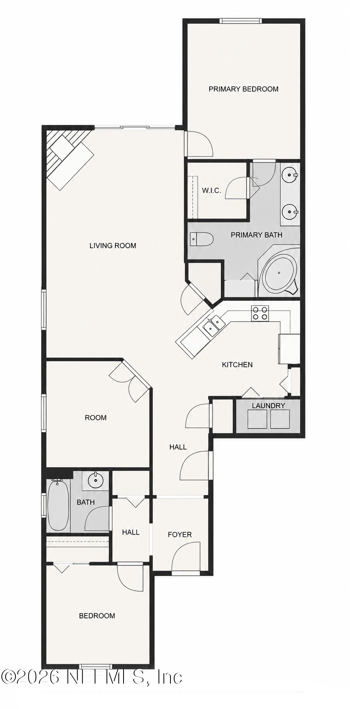
$289,900
Active
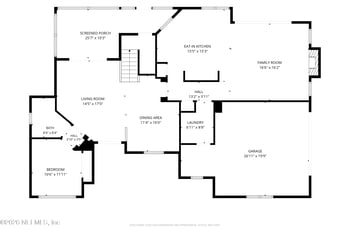
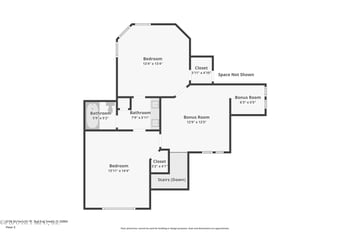
3
Beds
2
Baths
1340
Sqft
0.18
Acres
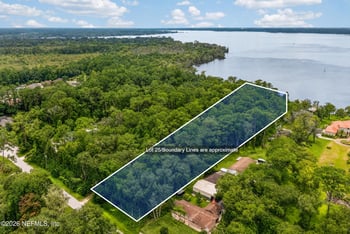
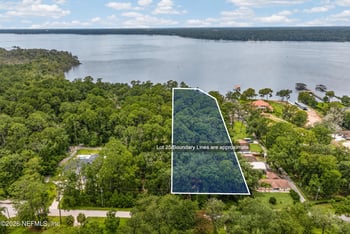
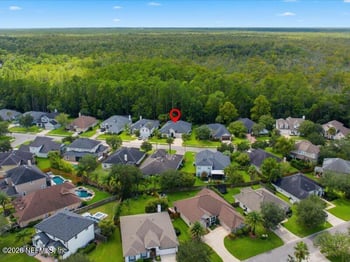
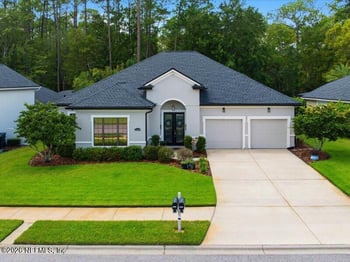
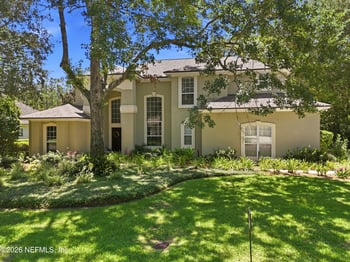
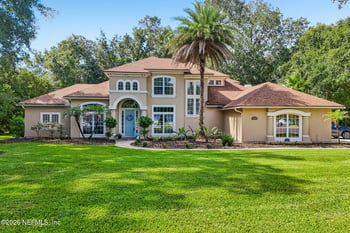
1836 Winter Pines Ct, Fleming Island, FL 32003
MLS#: 2162503



When orders come in for NAS Jacksonville or NS Mayport, most military families have 30 days or less to land on a neighborhood before the move date locks in. Arlington and Fleming Island keep coming up as the two most practical options — but the comparison rarely gets specific enough to be useful. Which base you're assigned to changes everything about which area actually works, and the home price is only part of the cost picture.
This comparison breaks it down by base assignment, commute reliability, school-day logistics, and total monthly cost — the four variables that actually determine whether a neighborhood fits your life, not just your budget.
The gap between a 15-minute drive and a 40-minute drive doesn't sound dramatic until you're doing it five days a week with a school drop-off in the middle. Base assignment can make one area feel entirely practical and the other feel genuinely too far — and that line runs directly between NS Mayport and NAS Jacksonville.
East Arlington is the area that suits Mayport families most directly. The Caroline neighborhoods and communities near Hidden Hills and Fort Caroline Cove sit 6 to 12 miles from the Mayport gate — a 15 to 18-minute drive on a normal morning. That's short enough to run a 6:45 AM school drop-off, get back on the road, and still arrive at the gate before muster without a margin-of-error problem.
For NS Mayport assignments, Fleming Island is a different calculation entirely. Getting from Fleming Island to Mayport means crossing the Buckman Bridge, navigating I-295 north through the Orange Park interchange, and continuing across Jacksonville — a route that runs 40 or more minutes under normal conditions and longer when I-295 backs up near the Ortega interchange. Traffic is critical in Jacksonville in a way that doesn't show up in Google Maps estimates at 10 AM on a Sunday.
For NAS Jacksonville, the math flips. Fleming Island sits roughly 20 to 30 minutes from the NAS Jax gate via I-295 southbound — a direct shot that's popular for military families despite the longer drive from some parts of the island. The route is predictable enough that families can build a consistent morning routine around it.
East Arlington to NAS Jacksonville runs 21 to 33 miles and takes 30 to 44 minutes depending on where in Arlington you're starting and which gate you're using. That's not unworkable, but it adds up — and it means the commute-friendly advantage Arlington holds for Mayport families doesn't transfer to NAS Jax assignments.
Area: East Arlington
To NS Mayport: 15–18 min (6–12 miles)
To NAS Jacksonville: 30–44 min (21–33 miles)
Area: Fleming Island
To NS Mayport: 40+ min via I-295 north
To NAS Jacksonville: 20–30 min via I-295 south
The commute question doesn't end at drive time, though. Whether the route holds up when school starts — and what happens when it doesn't — is what actually shapes the daily routine. That's where bridge and traffic reliability become the real variable.
Parents comparing school-day logistics often realize too late that bridge traffic can turn a manageable commute into a late-arrival problem. The Arlington Expressway and Buckman Bridge are not backup-free corridors — they're the two chokepoints that define morning reliability for families in both areas, and they behave differently depending on which direction you're traveling and what time you leave.
For a family in the Caroline neighborhoods or near Fort Caroline Cove, a typical school morning might look like this: drop the kids at school by 7:15 AM, take the Arlington Expressway toward I-295, and reach the Mayport gate by 7:40 or 7:45. That sequence works most days. Where it breaks down is when there's an incident on the expressway or the bridge approach backs up — and when it does, there's no clean alternate route that doesn't add significant time.
The friction point is real: bridge and traffic reliability are a daily stressor in Jacksonville, and the Arlington Expressway is not immune. Families who've done this commute consistently say the route is reliable enough for NS Mayport, but it requires leaving a buffer — the kind of buffer that gets compressed when a kid misses the bus or needs to be signed in late.
Fleming Island's school-day routine is built around I-295 southbound, which runs to NAS Jacksonville without a bridge crossing. The commute is more predictable in that sense — there's no single chokepoint the way the Buckman Bridge creates one for northbound traffic. But the I-295 interchange near Orange Park does back up during peak hours, and families in Eagle Harbor or Fleming Island Plantation who are also running a school drop-off inside the community add 10 to 15 minutes to the front end of the morning before they even reach the highway.
A military family that chooses Fleming Island because the schools feel worth the extra drive typically adjusts the entire morning routine — earlier wake times, earlier drop-offs, and tighter margins. That adjustment is manageable, but it's real, and it's worth building into the decision rather than discovering it after move-in.
The commute math matters — but so does what you're commuting toward. For many military families, the school district question is what actually tips the decision between these two areas, and the Clay County versus Duval County distinction is more specific than "better schools" language usually suggests.
Families feel the trade-off between better schools in Clay County and the burden of a longer commute from Fleming Island — and that tension is real, not just perceived. But "good schools" without district specifics isn't useful for a family making a housing decision on a 30-day PCS timeline.
Fleming Island sits in the Clay County School District. Families in Eagle Harbor and Fleming Island Plantation are generally zoned for Fleming Island High School, which has a strong local reputation and consistently draws families who are prioritizing schools over proximity to base. Clay County as a whole performs above the Florida state average on standardized assessments, and the district's elementary and middle schools in the Fleming Island area reflect that.
The non-obvious detail: school zoning in Clay County is address-specific, and two streets in the same community can feed different schools. Verifying the exact school assignment for a specific address — not just the general neighborhood — matters before you sign a lease or make an offer. If you want to understand how Clay County's planned communities compare on school zoning specifically, how school zones and commute routes actually differ between Fleming Island and Orange Park is worth reviewing before you narrow your search.
East Arlington falls under Duval County Public Schools, which is a larger, more variable district. School quality in Arlington ranges considerably by specific school and zone — the University of North Florida area and the neighborhoods near Fort Caroline Cove have access to some of the district's stronger options, but Arlington as a whole doesn't carry the same uniform school reputation that Clay County does in the Fleming Island area.
For families where school quality is the primary driver, Arlington may not match Fleming Island's school reputation — and that's the honest version of the trade-off. For families where base proximity is the primary driver and school quality is secondary, Arlington's Duval County schools are workable, and the commute savings are significant.
School district is one part of the monthly cost picture. The other parts — rent, HOA fees, CDD assessments, and commute-related expenses — add up differently in each area and can shift the real affordability comparison significantly from what the home price alone suggests.
A PCS move forces a decision between a cheaper home in Arlington and a higher-cost but more family-oriented setup in Fleming Island — and the gap is larger than most families expect when they first start comparing listings. Monthly cost pressure goes beyond home price, with rent, taxes, and commute-related expenses changing the real affordability picture in ways that don't show up on Zillow.
East Arlington's median home value runs around $281,500 based on 2019–2023 owner-occupied data. Fleming Island's median sold price hit $485,000 in April 2025 — up 14% year over year. That's roughly a $200,000 gap in purchase price, which translates to a meaningful difference in monthly mortgage payment regardless of BAH rate.
On the rental side, East Arlington median gross rent runs around $1,464 historically, with more recent figures closer to $1,945. Fleming Island house rentals average around $1,439 per the April 2025 data, but all-type rental averages climb to $2,185 as of May 2025. The rental market in both areas moves quickly, and Duval County's faster sales pace means available inventory in East Arlington can disappear before a family arriving on PCS orders has time to visit in person.
Fleming Island's planned communities — Eagle Harbor and Fleming Island Plantation specifically — carry HOA and CDD fees that add a layer of monthly cost that doesn't appear in the home price or rent figure. CDD fees in Northeast Florida's planned communities typically run $100 to $300 per month depending on the community and the amenities it maintains. Those fees cover the infrastructure and amenity upkeep that makes these communities feel polished, but they're a real line item in the monthly budget.
If you're evaluating whether the amenities in a planned community justify the fee structure, how CDD fees actually break down in Northeast Florida communities gives you a framework for what you're paying for and when it's worth it.
East Arlington doesn't carry the same fee layer. Older neighborhoods like those near Hidden Hills or Fort Caroline Cove may have HOA fees, but they're generally lower than what Fleming Island's planned communities charge, and many Arlington neighborhoods have no HOA at all. The trade-off is that older housing stock in Arlington can carry higher maintenance costs — a different kind of monthly expense, but one that's less predictable.
Lower home prices in Arlington can be offset by other monthly costs, and the commute is one of them. A family assigned to NAS Jacksonville living in East Arlington is driving 30 to 44 minutes each way — roughly 60 to 88 minutes of daily driving, five days a week. At Jacksonville fuel and vehicle wear rates, that adds up across a 2- or 3-year tour. Fleming Island's shorter NAS Jax commute reduces that cost, which partially offsets the higher housing price for some families.
For NS Mayport families, the math runs the other direction: the shorter Arlington commute saves both time and fuel cost compared to the 40-plus-minute Fleming Island route.
Cost Category: Median home price
East Arlington: ~$281,500
Fleming Island: ~$485,000 (Apr 2025)
Cost Category: Median rent (recent)
East Arlington: ~$1,945
Fleming Island: ~$2,185 (all types)
Cost Category: HOA / CDD fees
East Arlington: Low to none in most areas
Fleming Island: $100–$300/mo in planned communities
Cost Category: Utilities (monthly est.)
East Arlington: $140–$220
Fleming Island: Similar; higher in larger planned homes
Cost Category: County
East Arlington: Duval
Fleming Island: Clay
Fleming Island's higher housing costs may buy a better perceived lifestyle fit — the planned community feel, the school district, the quieter streets — but that perception has a specific dollar figure attached to it. Whether BAH at your rank covers that figure, or whether the gap comes out of pocket, is the calculation that makes this decision concrete rather than abstract.
Commute times and cost tables tell part of the story. The other part is what it's like to live there on a Tuesday — not just on a weekend when everything is easy.
East Arlington is an established Duval County neighborhood with access to the St. Johns River, proximity to Regency Square (for everyday errands), and a mix of older single-family homes and some newer construction. It's not a planned community — there's no central amenity package, no community pool maintained by a CDD, and no neighborhood-wide aesthetic standard. What it offers instead is a shorter drive to Mayport, lower monthly overhead, and a more urban Jacksonville feel than Fleming Island's suburban Clay County character.
North Beach and the Intracoastal West areas give families quick access to the beach corridor — a genuine lifestyle feature for families assigned to Mayport who want proximity to Atlantic Beach or Neptune Beach on weekends. That beach access comes without the Ponte Vedra Beach price premium, which is a real distinction for military families working within BAH limits.
Fleming Island is peaceful and family-friendly in a way that's observable and specific: the streets in Eagle Harbor and Fleming Island Plantation are quiet, the amenities are maintained, and the community is built around family routines rather than nightlife or commercial density. Families describe it as a place where the infrastructure works — the parks are clean, the schools are close, and the neighbors are largely in similar life stages.
The trade-off is that Fleming Island is not close to much outside of itself. Orange Park is the nearest commercial hub, and getting to downtown Jacksonville or the beaches adds significant drive time. For families who spend most of their time between home, school, and base, that insularity isn't a problem. For families who want more access to Jacksonville's broader amenities — Mandarin's shopping corridors, the Ortega waterfront, or the Riverside and San Marco neighborhoods — Fleming Island's location requires intentional planning rather than spontaneous access.
If you want a fuller picture of what the daily routine in Fleming Island actually involves — including how the drive-time trade-off plays out across a week — what daily life in Fleming Island is actually like, including the drive-time reality covers the specifics that listing descriptions skip.
There's no universal answer here, but the decision does narrow quickly once you apply the right filters in the right order.
For families comparing Fleming Island to other Clay County options — including Orange Park, which sits between Fleming Island and the I-295 interchange — how Fleming Island and Orange Park compare on commute routes, schools, and traffic patterns adds another layer to the decision if you're not locked into Fleming Island specifically.
And if you're trying to understand how Clay County fits into the broader Northeast Florida picture alongside Duval and St. Johns, how Jacksonville, Clay County, and St. Johns County compare for families choosing between them gives you the regional context that base-specific comparisons don't cover.
A 30-day PCS timeline creates pressure to decide fast, but a few specific verifications can prevent the most common post-move regrets.
For families evaluating Fleming Island's growth trajectory and whether road projects will affect the I-295 commute over a 2- to 3-year tour, what Fleming Island's road and growth projects mean for traffic over the next few years is worth a read before you commit to a long-term lease or purchase.
If you're also weighing Middleburg as a lower-cost Clay County alternative to Fleming Island — which comes up for NAS Jacksonville families stretching BAH — how Middleburg and Fleming Island compare on commute, schools, and daily errands covers that specific trade-off in detail.
The right area for your family is the one that holds up across the full week — not just on the days when traffic cooperates and everyone leaves on time. Base assignment narrows the field. School priority and monthly budget close it.